

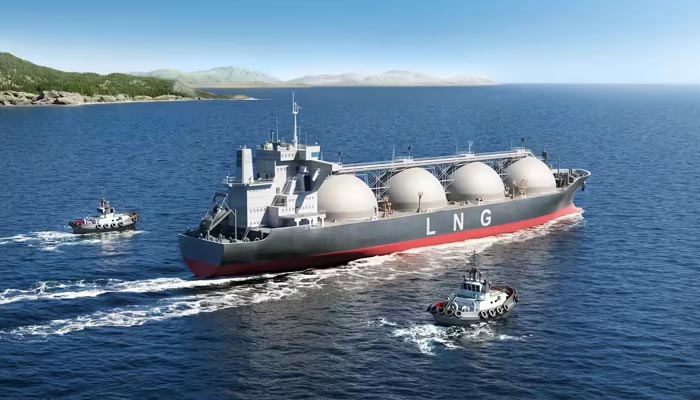
India’s energy security has come under renewed focus after QatarEnergy halted liquefied natural gas (LNG) production following an Iranian strike amid rising tensions in West Asia.
The development is significant for India, which depends heavily on Qatar for LNG supplies. In a statement posted on X, QatarEnergy said it had suspended LNG production and related operations after attacks targeted key industrial facilities. The company also invoked force majeure, a contractual clause that allows obligations to be paused when extraordinary circumstances prevent fulfilment of agreements.
The declaration affects buyers linked to facilities including Ras Laffan Industrial City, one of the world’s largest LNG export centres.
Qatar’s importance in India’s energy mix
Trade data from the Directorate General of Commercial Intelligence and Statistics (DGCIS) shows Qatar ranks among India’s top six suppliers of crude oil and petroleum products in FY 2025–26 (April–December).
During the fiscal year so far, India has imported about $8.3 billion worth of crude and petroleum products from Qatar. While countries such as Russia, Iraq and the United Arab Emirates dominate India’s crude import basket, Qatar remains strategically important due to its LNG supplies.
Nearly half of India’s LNG comes from Qatar
According to DGCIS data, Qatar accounts for around 46.8% of India’s LNG imports in FY 2025–26, representing nearly half of the country’s imported gas supply.
In value terms, India has imported about $4.74 billion worth of LNG from Qatar during the fiscal year so far. The United States and the United Arab Emirates follow at a considerable distance, contributing roughly 11.6% and 10.9%, respectively.
This concentration means that any prolonged production halt in Qatar could directly affect India’s gas availability, particularly for sectors dependent on imported LNG such as power generation, fertiliser production, city gas distribution and industrial fuel.
Dual exposure through crude and LNG
India’s exposure to Qatar extends beyond LNG to crude oil and petroleum products. Over the past five fiscal years, India’s combined imports of crude and LNG from Qatar have ranged between $8 billion and $14 billion annually, peaking in FY 2022–23.
Even in FY 2025–26 (April–December), LNG imports from Qatar stand at $4.74 billion, while other crude and petroleum imports are valued at about $3.54 billion, highlighting the scale of India’s reliance on Qatari energy supplies.
India monitoring developments
The Ministry of Petroleum and Natural Gas said it is closely monitoring developments in West Asia and assessing their potential impact on India’s energy supplies.
Officials noted that diversification of import sources and maintaining strategic reserves remain part of India’s broader energy security strategy. However, any prolonged disruption in Qatari LNG production could tighten global gas markets and push up spot LNG prices, potentially raising India’s import bill.
Global market implications
The halt has already tightened global LNG markets, increasing competition for alternative cargoes across Asia and Europe. If the disruption continues, India may need to rely more heavily on spot purchases, which are typically more expensive.
The episode underscores how closely India’s energy security remains tied to geopolitical stability in West Asia. With nearly half of its LNG imports sourced from Qatar, even temporary supply disruptions have the potential to ripple through domestic energy markets and industrial demand.
Comments are closed.