
IND-PAK match possible if Bangladesh reinstated at T20 World Cup: ex-PCB chief

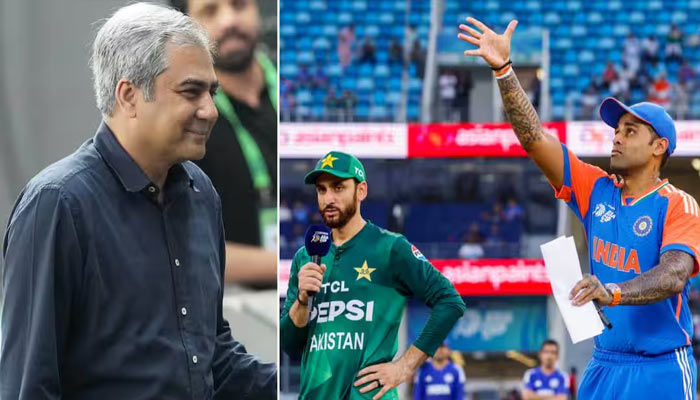
The fate of the much-anticipated India–Pakistan clash at the T20 World Cup remains uncertain, with former Pakistan Cricket Board (PCB) chairman Najam Sethi suggesting the marquee fixture could still take place if Bangladesh are reinstated into the tournament.
Sethi’s remarks add a new dimension to Pakistan’s threat of a boycott — a move that has already prompted warnings of sanctions from the International Cricket Council (ICC).
Pakistan’s position, conveyed through an official government statement, is widely being interpreted as a political protest rather than a purely sporting decision. The stance is linked to Bangladesh’s removal from the tournament after the ICC rejected its request to shift matches from India to Sri Lanka, citing security concerns.
The standoff has placed the tournament under strain, with the India–Pakistan fixture — the biggest commercial draw in world cricket — now hanging in the balance.
The ICC has reportedly cautioned the Pakistan Cricket Board that any boycott of the high-profile match could invite punitive sanctions. While the world body has not outlined specific penalties, it has underlined that such a move would not serve the broader interests of the game, given the sporting and financial weight attached to an India–Pakistan encounter.
Sethi suggests a compromise
Sethi believes the impasse is still resolvable. “From my point of view, if Bangladesh can be invited to Sri Lanka, it’s not too late. There are many matches being played there,” he said in an interview with India Today, pointing to what he views as a workable compromise.
He added that if Bangladesh were to decline participation even after such an offer, other unresolved issues would then need to be addressed. “I’m hoping good sense prevails. Everyone wants to see India versus Pakistan. It’s the gold standard,” Sethi said.
Sethi also revealed that the current PCB leadership has weighed its options carefully. “They’ve consulted lawyers here and abroad. They’re comfortable with the decision,” he said, suggesting Pakistan’s stance is not impulsive.
Why Pakistan is pushing back now
Responding to questions about the timing of Pakistan’s protest — given that Bangladesh is the directly affected party — Sethi shifted focus to the Board of Control for Cricket in India (BCCI).
“The issue is the BCCI’s attitude,” he said, accusing the Indian board of consistently exerting disproportionate influence. “At every stage, they have bullied other boards. Earlier, Pakistan was isolated — one among ten — and everyone sided with India. Now that’s changing.”
Lessons from past disputes
Sethi revisited Pakistan’s opposition to the “Big Three” model, which concentrated power and revenue among India, Australia and England. “Nine boards signed up; we stood alone because it was inequitable,” he said.
Although revisions were later made and India eventually agreed to a bilateral series with Pakistan, Sethi recalled how that deal collapsed abruptly. “A year later, on the eve of the series, the BCCI pulled out without even meeting us in Mumbai. That was a huge insult,” he said.
According to Sethi, the current dispute marks a shift. “Now Bangladesh has also been snubbed. Together, Pakistan and Bangladesh represent 400 million people. This is the moment to stand up,” he said.
Sethi acknowledged the risk of short-term losses, including the possibility of losing cricket’s biggest rivalry, but framed the protest as part of a broader objective. “There may be short-term losses, but the goal is a reformed ICC,” he said.
Legal action remains an option
Sethi conceded that if no resolution is reached, the matter could escalate legally. “Worst-case scenarios end up in courts, and that’s where lawyers have their day,” he said.
As the ICC weighs its next steps and pressure builds on all sides, the future of the India–Pakistan clash — and wider questions around governance and balance of power in world cricket — remain unresolved.
Comments are closed.