
India Successfully Conducts Trial of Indigenous Anti-Submarine Rocket System

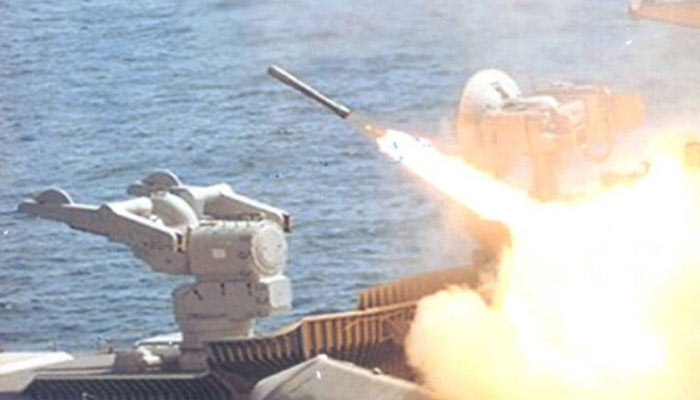
India’s Indigenous ERASR System Clears Trials, Set to Bolster Naval Anti-Submarine Capability.
India has successfully completed user trials of its indigenously developed Extended Range Anti-Submarine Rocket (ERASR), marking a significant leap in the Indian Navy’s underwater warfare capabilities. The trials, conducted from warship INS Kavaratti between June 23 and July 7, demonstrated the rocket system’s accuracy, consistency, and full operational potential.
Defence Minister Rajnath Singh lauded the Defence Research and Development Organisation (DRDO), Indian Navy, and domestic industry partners for their role in developing and trialling the system. In a post on X, Singh stated that the successful induction of ERASR would “boost the striking power of the Indian Navy.”
The ERASR system is entirely homegrown and features a twin-rocket motor configuration, designed to engage enemy submarines across a wide range of distances. According to the Navy, the system is equipped with advanced guidance mechanisms and high-precision electronic time fuzes, ensuring reliable performance in active combat conditions.
During the extensive trial phase, 17 ERASRs were successfully launched at various ranges, validating key performance parameters such as trajectory stability, fuze functionality, and warhead effectiveness. All mission objectives were met, confirming the system’s readiness for deployment.
With its induction, ERASR is expected to become a vital component of India’s anti-submarine warfare arsenal, offering the Navy enhanced flexibility and deterrence in increasingly contested waters.
Comments are closed.