

Fidelity Investments is one of the world’s most powerful investment firms, managing trillions in assets and serving millions of customers in the United States.
But its rise has been shaped as much by family dynamics as by financial success. In 2005, tensions within the Johnson family erupted into a high-stakes leadership crisis that threatened to destabilise the firm.
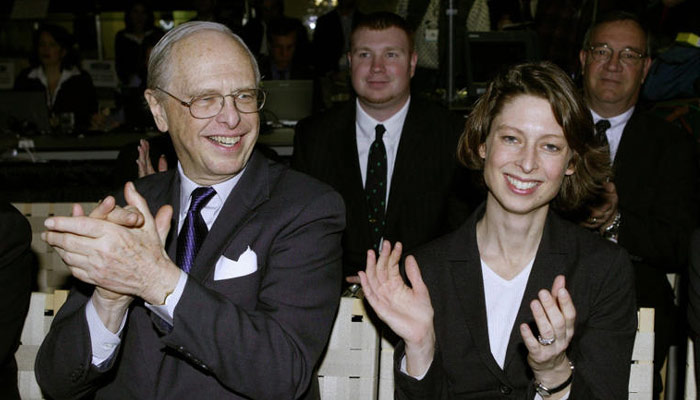
At the centre was Abigail Johnson, daughter of then-chairman Edward C. Johnson III. She was leading Fidelity’s flagship mutual funds division at the time, but her tenure was under pressure amid weak fund performance, investor outflows and the fallout from a trading scandal, according to a Wall Street Journal report.
Concerns had been building among senior executives and trustees. The situation came to a head when trustee Marvin Mann confronted Abigail at her home, telling her she wasn’t doing a good job. Days later, her father informed her she would be removed from the role, with a proposed shift to oversee philanthropy — widely seen as a demotion.
Abigail’s response was blunt: “I quit.”
But the standoff soon shifted. Within days, Ned Johnson offered her leadership of Fidelity Employer Services Company (FESCO), the firm’s fast-growing 401(k) business. Abigail accepted, stepping into a division built by his deputy Bob Reynolds, who was reportedly sceptical of her leadership.
Behind the scenes, tensions persisted. Disagreements emerged over Fidelity’s long-term direction, including the possibility of a sale — an idea Abigail strongly opposed, fearing it would end decades of family control.
In a bold move, she signalled that, as one of the company’s largest shareholders, she could withhold support for board re-elections. Executives grew concerned she might be mobilising backing to challenge her father’s leadership.
The conflict peaked at a board meeting in April 2005. But before it could spiral further, the family reached a compromise.
A decision to issue additional stock reshaped voting power, strengthening Ned Johnson’s control and defusing the immediate crisis.
In the aftermath, Abigail continued to lead FESCO. Over the following years, she rose through the ranks and eventually succeeded her father as chairman, steering Fidelity through a period of significant expansion.
Today, she leads one of the world’s largest investment firms — a testament to a turbulent chapter that ultimately reshaped the company’s future.
Comments are closed.