
Israel Strikes Iranian Nuclear and Missile Facilities, Explosions Reported Across Tehran

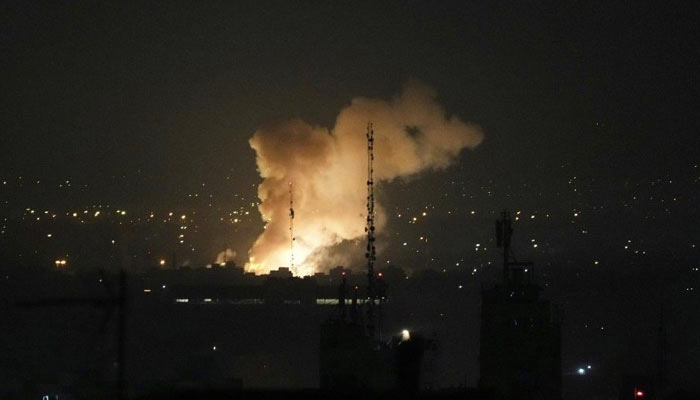
Israel Launches Major Strikes on Iran, Targets Nuclear, Military Sites; Top Commanders Killed.
In a dramatic escalation of tensions in the Middle East, Israel launched a major military assault on Iran early Friday, striking key nuclear and military sites across the country, including the capital Tehran. The operation marks one of the most significant attacks on Iran since its war with Iraq in the 1980s.
Iranian state media confirmed the deaths of two senior military leaders — Revolutionary Guard chief Gen. Hossein Salami and Armed Forces Chief of Staff Gen. Mohammad Bagheri — in the strikes. Black smoke was seen rising from Iran’s nuclear enrichment facility at Natanz, one of several sites targeted.
The Israeli military later announced that it had also destroyed dozens of radar installations and missile defense systems in western Iran.
The assault follows growing Israeli concerns over Iran’s rapidly progressing nuclear program. Prime Minister Benjamin Netanyahu defended the attack as a preemptive measure against what he called an “imminent threat” of Iran developing nuclear weapons. “This is a clear and present danger to Israel’s survival,” he said.
Iran’s Supreme Leader Ayatollah Ali Khamenei vowed “severe punishment” in response, with Iran launching over 100 drones toward Israel in retaliation. Jordan and Iraq both reported intercepting multiple drones and missiles that had violated their airspace.
The United States, which had previously advised Israel to exercise restraint, said it was not involved in the operation. US Secretary of State Marco Rubio confirmed the strikes were carried out unilaterally by Israel, adding, “Our top priority is protecting American forces in the region.”
The conflict’s regional impact was swift. Brent crude oil prices surged nearly 8% amid fears of broader instability, and both Iran and Israel temporarily shut their airspace. Israel also closed its main international airport and warned its citizens to prepare for possible retaliatory strikes.
The International Atomic Energy Agency (IAEA) had just censured Iran for its lack of cooperation, prompting Tehran to announce plans for expanded uranium enrichment and upgraded centrifuges. Despite longstanding concerns, US intelligence assessments continue to hold that Iran does not currently have an active nuclear weapons program.
Observers say Netanyahu, whose government has faced domestic criticism over the prolonged war in Gaza, may use the Iran operation to consolidate political support. However, any prolonged conflict — especially if Israeli civilians are targeted — could quickly shift public sentiment.
As the geopolitical stakes escalate, President Donald Trump is set to convene a National Security Council meeting. He had earlier said he urged Netanyahu to delay any military action, fearing it could derail ongoing nuclear negotiations.
“This could very well spiral,” Trump had warned, acknowledging the fragility of the moment.
Comments are closed.