
Market Today: Sensex Slides Over 550 Points, Nifty Drops Below 23,250 as Crude, Bond Yields Weigh

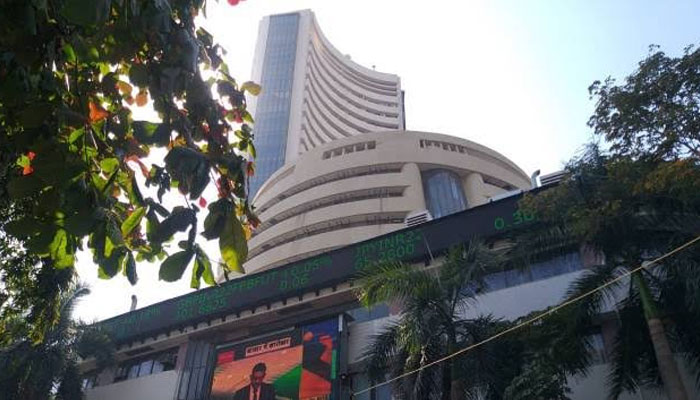
Stock Market Today, September 24: Sensex, Nifty Open Sharply Lower Amid Global Headwinds
Indian equity markets opened sharply lower on Thursday, September 24, as weak global cues, elevated crude oil prices and rising bond yields weighed on investor sentiment. Renewed uncertainty over the US-Iran diplomatic process also added to market concerns.
At 9:16 am, the BSE Sensex was down 551.60 points, or 0.74%, at 74,276.65. The Nifty declined 207.65 points, or 0.89%, to 23,239.15.
Crude Prices, US-Iran Tensions Weigh on Sentiment
Ponmudi R, CEO of Enrich Money, said the rebound in crude prices, coupled with uncertainty around the US-Iran diplomatic process and higher US Treasury yields, could trigger profit-taking after the market’s recent gains.
WTI crude was trading around $91-$92 a barrel, while Brent crude remained above $100 a barrel. The weakness followed a sharp decline on Wall Street, while Asian markets opened mixed.
Ponmudi said uncertainty surrounding the geopolitical situation remained elevated. Although recent diplomatic discussions have raised hopes of de-escalation, conflicting statements from Iranian officials over the Strait of Hormuz and the wider conflict continue to keep investors cautious.
According to him, the lack of clarity could weigh on global risk appetite and keep crude oil prices highly sensitive to fresh geopolitical developments.
Global Markets Remain Under Pressure
Asian equities were mixed in early trade as investors assessed developments in the Middle East, movements in global bond yields and the outlook for US-China talks.
Japan’s Nikkei 225 rose 1.73%, while the MSCI Asia ex-Japan index declined 0.64%. Australia’s S&P/ASX 200 fell 1.2%.
Bond yields remained a major focus for investors following a sharp rise in global borrowing costs. Japan’s 10-year government bond yield climbed to 3.06%, its highest level since August 1996.
The US 10-year Treasury yield was around 5.11% after touching its highest level since 2007.
Markets are also tracking upcoming US economic data and comments from Federal Reserve officials for further signals on the future path of interest rates.
Crude, Gold and Currency Markets
Oil prices remained volatile amid continuing geopolitical uncertainty.
Brent crude was trading at $102.05 a barrel, down 1%, while WTI crude declined 0.74% to $91.48. Spot gold gained 0.35% to $4,301.89 an ounce.
In currency markets, the Dollar Index was marginally lower at 101.09, while the Japanese yen strengthened 0.24% to 157.91 per dollar.
Banks, Financial Stocks Lead the Decline
The sell-off was broad-based during early trading, with banking and financial stocks among the major drags.
The Nifty Bank index fell 1.29%, while Nifty Financial Services declined 1.85%. The Nifty Midcap Select index dropped 1.54%.
Nifty Financial Services Ex-Bank was the biggest sectoral laggard, falling 2.96%, followed by Nifty MidSmall Financial Services, which declined 2.17%.
Nifty Private Bank slipped 1.43%, while Nifty Metal fell 1.10%. Auto, IT, FMCG and Oil & Gas stocks were also trading in negative territory.
Pharma stocks remained relatively stable. Nifty Pharma was largely flat, while Nifty MidSmall Healthcare gained 0.16%. The Nifty Healthcare Index was marginally lower by 0.17%.
India VIX Rises Over 7%
Market volatility increased sharply during the opening session. The India VIX rose 7.22% to 11.09, compared with 10.35 in the previous session, reflecting heightened nervousness among investors.
V K Vijayakumar, chief investment strategist at Geojit Investments Ltd, said the rise in Brent crude above $102 a barrel and the US 10-year Treasury yield reaching 5.11% were likely to weigh on the domestic market.
He said the persistence of these two global factors would remain important for the market’s near-term direction.
Vijayakumar also highlighted the continued interest in mid- and small-cap stocks. According to him, growth stocks in these segments have continued to attract buying despite elevated valuations.
He attributed the resilience of mid- and small-caps largely to strong domestic liquidity, while noting that large-cap stocks have remained relatively subdued despite more reasonable valuations.
The trend, he said, could eventually change, with the timing likely to depend significantly on movements in crude oil prices and global bond yields.
Comments are closed.