
Meenakshi Natarajan Nomination Controversy: An Explainer On The Rules Involved

If you want to make the story more neutral, analytical and less dependent on one side’s legal interpretation, you can recast it as an explainer focused on the competing arguments rather than extensively quoting a single former official. Here’s a tighter approach:
What Happens Next After Meenakshi Natarajan’s Nomination Rejection?
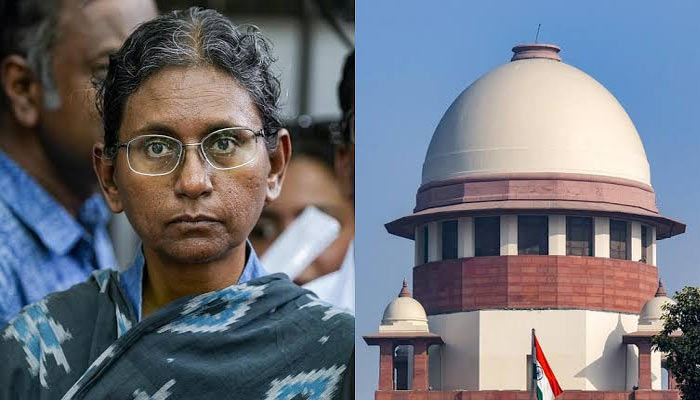
The rejection of Congress leader Meenakshi Natarajan’s Rajya Sabha nomination from Madhya Pradesh has sparked a legal and political debate over the powers of a Returning Officer during scrutiny of nomination papers and the extent to which defects in election documents can justify rejection.
While the Supreme Court declined to intervene, observing that courts generally avoid interfering once the election process has commenced, it indicated that the appropriate remedy lies in filing an election petition after the election process is completed.
What Is An Election Petition?
An election petition is the statutory mechanism through which the validity of an election can be challenged.
Under Section 80 of the Representation of the People Act (RP Act), 1951, an election can be questioned only through an election petition. Section 80A gives High Courts jurisdiction to hear such matters, while Section 81 requires petitions to be filed within 45 days of the election of the returned candidate.
Section 100(1)(c) of the Act further provides that an election may be declared void if a court finds that a nomination was improperly rejected.
This means the Congress can still challenge the outcome before the Madhya Pradesh High Court through an election petition.
Why Was Natarajan’s Nomination Rejected?
The controversy arose after objections were raised before the Returning Officer alleging that Natarajan failed to disclose details of proceedings pending before a Hyderabad court in the affidavit accompanying her nomination papers.
After examining the objection and relevant records, the Returning Officer concluded that the matter had been taken cognizance of by the court and that the candidate had not disclosed information that ought to have been included in Form 26. On that basis, the nomination was rejected.
The Congress, however, disputes both the factual and legal basis of that conclusion.
The Debate Over Election Commission Guidelines
A key issue in the controversy is the interpretation of the Election Commission’s handbook for Returning Officers.
One set of provisions emphasizes that incomplete affidavits may result in rejection of nomination papers if deficiencies remain unrectified despite opportunities being provided to the candidate.
At the same time, other provisions caution Returning Officers against rejecting nominations for defects that are merely technical or not of a substantial nature. The guidelines also stress that nomination papers are generally presumed valid unless the contrary is clearly established.
The dispute essentially revolves around whether the alleged non-disclosure constituted a substantial defect warranting rejection or a curable defect that should not have resulted in disqualification.
The Role Of Section 33A
Another important legal question concerns Section 33A of the RP Act, which governs disclosure of criminal antecedents by candidates.
The provision requires candidates to disclose criminal cases in specified circumstances, including where charges have been framed in offences punishable with imprisonment of two years or more, or where a candidate has been convicted and sentenced to imprisonment of one year or more.
The Congress argues that the Hyderabad proceedings did not fall within the category of cases that required disclosure under Section 33A. The party therefore maintains that there was no omission in the affidavit.
Those supporting the Returning Officer’s decision contend that the information was material and should have been disclosed to ensure transparency before voters and elected representatives participating in the Rajya Sabha election.
BJP And Congress At Odds
The BJP has defended the rejection, arguing that transparency in the electoral process is paramount and that candidates are expected to disclose all relevant information.
The Congress, meanwhile, maintains that the Returning Officer misapplied the law and election guidelines, resulting in an improper rejection of Natarajan’s nomination.
What Happens Now?
With BJP candidates Tarun Chugh, Rajneesh Aggarwal and Mahesh Kewat already declared elected unopposed to the three Rajya Sabha seats from Madhya Pradesh, the immediate election process has concluded.
The remaining legal avenue available to the Congress is an election petition before the Madhya Pradesh High Court, where the central questions are likely to be whether the alleged non-disclosure attracted Section 33A, whether the defect was substantial enough to justify rejection, and whether the Returning Officer acted in accordance with the RP Act and Election Commission guidelines.
Comments are closed.