
Nepal Glacier Collapse Raises Fresh Concerns Over Emerging Climate Risks

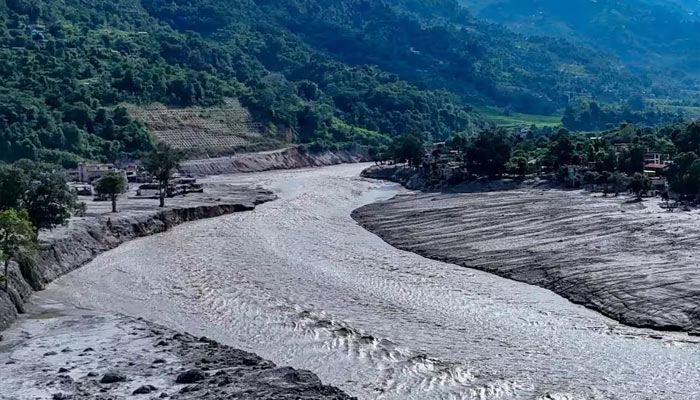
The deadly glacier collapse in the Nepalese Himalayas has raised fresh questions about whether a warming climate is creating new and increasingly dangerous risks in high-mountain regions.
Scientists That while the disaster highlights the growing vulnerability of mountain communities, it is too early to directly attribute this particular event to climate change.
More Collapses Could Follow
Nepal issued an alert on Friday over the threat posed by a large body of water that formed in Tibet, China, after part of a glacier collapsed two days earlier. The disaster killed at least 584 people, while more than 2,400 remained missing, according to the information available.
Scientists warned that the collapse of one section of a mountain or glacier can potentially destabilise nearby areas.
Simon Cox, principal scientist at New Zealand’s GNS Science, said the removal of a large section could leave neighbouring material unstable, creating the possibility of another collapse.
According to the US Geological Survey, the initial glacier collapse was powerful enough to generate energy equivalent to a magnitude 5.2 earthquake. It also triggered numerous landslides and unleashed destructive floodwaters.
A Growing Mountain Hazard
Experts say similar high-mountain disasters cannot be ruled out in other parts of the world.
Etienne Berthier, a glaciologist at France’s National Centre for Scientific Research, said the scale of such events in the Himalayas is influenced by the region’s steep terrain and high tectonic activity.
Other areas, including Alaska, also have highly dynamic glaciers, although many potentially dangerous events occur far from populated areas.
Tristram Hales, a professor of environmental hazards at Cardiff University, said extremely hazardous flows have become increasingly prominent globally over the past decade, pointing to incidents in both the Himalayas and Switzerland.
Scientists note that climate change can increase the risk of several related hazards. Rising temperatures contribute to the thawing of permafrost, while changes in glaciers and snow cover can affect the stability of mountain slopes.
Rockfalls and landslides triggered by earthquakes, warming temperatures or permafrost thaw are considered more common hazards than the complete collapse of a mountain section. Their impact can nevertheless be devastating when communities, roads and tourist destinations lie nearby.
Some Risks Can Be Monitored
Not every glacier-related disaster can be predicted in advance. Berthier said the Nepal event may have been particularly difficult to anticipate, and scientists will need to study rock movements to determine whether there were warning signs in the weeks or months before the collapse.
The danger is easier to assess when meltwater accumulates behind glaciers and forms large lakes. Such lakes can suddenly release huge volumes of water in events known as glacial lake outburst floods, or GLOFs.
In the Alps, scientists closely monitor glacial lakes and assess the possibility of overflow or sudden drainage. Monitoring systems can provide valuable warnings when signs of instability emerge.
Is Climate Change To Blame?
Scientists have urged caution before directly linking the Nepal disaster to global warming.
The International Centre for Integrated Mountain Development said climate change is altering glaciers, snow conditions, permafrost and mountain slopes across the Hindu Kush Himalayas. However, it said it was too early to determine how much climate change contributed to this particular event.
A formal attribution study would be needed to establish whether the disaster was made more likely or more severe by today’s warmer, fossil-fuel-driven climate compared with conditions before industrialisation.
The Nepal tragedy therefore serves as a stark warning about the hazards facing increasingly fragile mountain environments, while scientists continue to investigate the precise causes behind the collapse.
Comments are closed.