
Piyush Goyal says India deserves lower tariffs than neighbours; MEA to address Russian oil

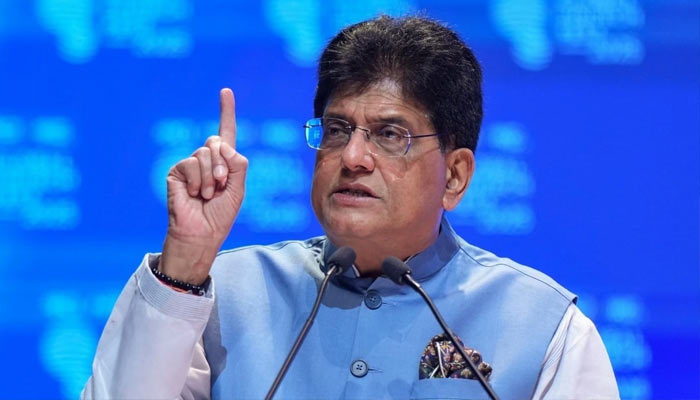
Commerce Minister Piyush Goyal on Saturday said India faces lower tariffs from the United States than competing economies, asserting that the interim trade agreement between the two countries does not hurt Indian farmers, contrary to Opposition claims.
Briefing the media, Goyal said the revised tariff structure places India in a more favourable position than its neighbours and regional competitors. “The 18 per cent tariff is better than what our neighbouring countries face,” he said, noting that China is subject to 35 per cent tariffs, while Vietnam and Bangladesh face 20 per cent and Indonesia 19 per cent. He added that several Indian exports would enter the US market duty-free. “Smartphones, for example, can be exported without any tariff,” Goyal said.
Russian oil question left to MEA
Under the interim framework, the United States has reduced the reciprocal tariff on Indian goods to 18 per cent from 25 per cent and withdrawn the additional 25 per cent duty imposed on India for continuing to purchase Russian oil.
US President Donald Trump had earlier claimed that India would stop buying Russian oil as part of the deal. However, the Indian government has not issued any official confirmation on the matter. Goyal declined to comment on oil imports, saying the Ministry of External Affairs would address the issue.
While the joint statement released by New Delhi and Washington early Saturday makes no reference to Russia, a separate executive order issued by the White House does. The order — titled “Modifying duties to address threats to the United States by the government of the Russian Federation” — states that the US lifted the additional tariff on Indian goods imposed as a penalty for India’s continued purchase of Russian oil amid the Ukraine war.
Government sources had earlier that India would maintain a “people-first approach” on energy imports. “We will continue to buy oil from markets offering the best deal and from non-sanctioned entities. Our strategy will be driven by market prices,” the sources said.
Farmers ‘fully protected’
Goyal said the government had ensured that sensitive agricultural sectors remain outside the scope of tariff concessions.
He said no reduced tariffs would apply to genetically modified crops, meat, poultry, dairy products, soyabean, maize, rice, wheat, sugar, or millets such as jowar, bajra, ragi and amaranth. Fruits including bananas, strawberries, cherries and citrus fruits have also been excluded from concessions.
In addition, products such as green tea, kabuli chana, moong, oilseeds, groundnuts, malt and malt-based products, non-alcoholic beverages, starch, ethanol and tobacco have not been given any tariff relief, the minister said.
At the same time, several Indian agricultural exports will enjoy zero-duty access to the US market, including spices, tea, coffee, coconuts, coconut oil, cashews, and a range of fruits and vegetables.
Attack on Opposition
Taking aim at the Opposition, Goyal accused critics of attempting to mislead farmers.
“There are some people in this country who are anti-farmer and try to spread misinformation,” he said, adding that no concessions had been made on core agricultural products under the agreement.
Rejecting Opposition demands for a parliamentary debate on the deal, Goyal said decisions on what is discussed in Parliament rest with the Speaker and the Chairman. “Not every issue needs to be read out in Parliament. Some matters must be communicated directly to the people,” he said.
He reiterated that there was “no compromise whatsoever” on the dairy sector or other key agricultural areas.
Boost for exporters
Calling the agreement a positive development for the economy, Goyal said the deal had generated optimism across sectors.
“The world’s largest economy, worth nearly $30 trillion, is opening up further to Indian exporters with most-favoured-nation status,” he said, adding that the agreement balances export growth with protection for farmers.
“The deal benefits exporters, safeguards agriculture, creates employment opportunities and accelerates economic growth. It is dedicated to India’s exporters, farmers and micro, small and medium enterprises,” the minister said.
Comments are closed.