
PM Modi Embraces Gen Z Lingo, Drops ‘OG’, ‘Dhurandhar’ and ‘Naaraaz Fufa’ References

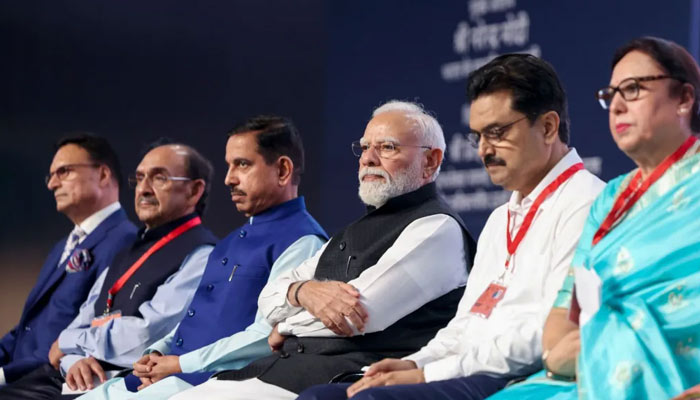
In 2013, Shri Ram College of Commerce (SRCC) was the stage where Narendra Modi addressed students.
As a prime ministerial challenger, with his speech coming at a time when the UPA government was struggling and the “Modi wave” was beginning to take shape. Nearly 13 years later, Modi returned to the college on Saturday as Prime Minister for a third term, speaking to students against the backdrop of major youth protests in the capital that had put his government under pressure and contributed to the resignation of the Union Education Minister.
The setting gave Modi’s address a clear generational focus. He was speaking to students at one of Delhi’s most selective colleges, many of whom will be first-time Lok Sabha voters in 2029 and were barely old enough to remember his 2013 visit. At the same time, his message appeared aimed at a wider group of young people who had recently expressed dissatisfaction through protests, challenging the political dominance his party has enjoyed since coming to power in 2014.
Modi repeatedly drew a contrast between India in 2013 and the country today. He told SRCC students that they were too young at the time to fully understand the problems facing the country and urged them to look back at newspaper headlines from that period.
The Prime Minister used the comparison to argue that the past 13 years had brought improvements in governance and progress across multiple sectors. He also sought to distinguish young protesters critical of his government from what he portrayed as a more entrenched opposition. Referring to critics as “naaraaz fufa” — or “angry uncle” — he suggested that such negativity was disconnected from the aspirations of today’s youth.
The remark also appeared to be an attempt to separate student protesters from his long-standing political opponents. Modi had earlier said he “forgave” the young protesters and suggested that their anger had been intensified after he used the phrase “dimagi Naxal” in his Red Fort address.
At SRCC, Modi leaned into Gen Z vocabulary while speaking about the college’s alumni. Recalling his earlier interactions with students, he described their seniors as “OG”, or “original gangster”, a term commonly used by Gen Z to refer to someone from an older generation who commands respect.
He urged students to aim high as India works towards becoming a developed nation by 2047.
“In your language, the alumni from here are OG. They have spread the name of SRCC across the world,” Modi said.
He also referred to the recent hit film Dhurandhar while talking about the college and its alumni. “Dhurandhar na ho, lekin dhoom to machayi hai,” he said, encouraging students to make their own mark even if they were not “Dhurandhar”.
Modi also remembered former Union minister Arun Jaitley, an SRCC alumnus, and spoke about his deep connection with the institution. He recalled how Jaitley frequently shared stories from his college days and noted that SRCC had produced prominent figures across economics, the arts, politics, law and the judiciary.
The Prime Minister praised the ambition of today’s students, saying that ambition cannot simply be taught through coaching but develops in an environment that encourages people to dream big.
He pointed to the aspirations of young Indians to launch startups, build unicorns, work in areas such as space and drones, develop advanced artificial intelligence solutions and drive innovation in agriculture.
Modi said such ambitions would have been difficult for students to imagine 13 years ago. According to him, the difference today is not just in the aspirations of young people but also in the ecosystem that supports them.
“Today’s India has also created an ecosystem that supports those dreams,” he said, urging students to set bigger goals and work towards achieving them.
The Prime Minister then returned to his broader comparison between 2013 and the present, citing internal security, terrorism, the economy and India’s position in the world.
He claimed that terrorism was now on the back foot and said India’s forces had demonstrated their willingness to strike across borders in response to attacks from Pakistan. He also pointed to improved security in Jammu and Kashmir and the Northeast and claimed that the backbone of Maoist terrorism and Naxalism had been broken.
Modi contrasted the international perception of India’s economy and policymaking in 2013 with what he described as the country’s current “policy dynamism”.
He also invoked major crises from the previous decade to underline his argument. Referring to the 2013 Kedarnath disaster, he said the government at the time had struggled to respond effectively. He also cited the 2008 global financial crisis, arguing that the banking system had been pushed to the brink and that the government lacked the resolve to confront the problem.
Modi further recalled the 2008 Mumbai terror attacks, claiming that the government of the time had come under international pressure and lacked the political will to take strong action against Pakistan.
Throughout the address, the Prime Minister returned to the same central theme: the contrast between the India of 2013 and the India of today, using that comparison to tell a new generation of students that the opportunities before them are greater — and that they should think bigger about the country’s future.
Comments are closed.