
‘Resign, Balen’: Nepal Students, Opposition Rally Against PM Over India Territory Remark

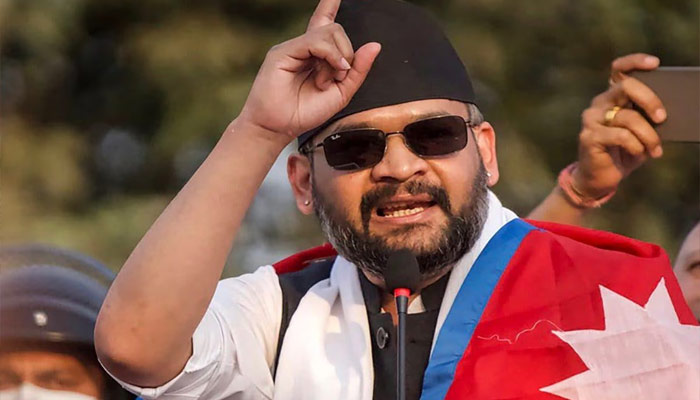
Why Nepal PM Balen Shah’s Border Remarks Triggered Protests And A Political Storm
Nepal Prime Minister Balendra Shah is facing mounting political pressure after remarks on the India-Nepal border dispute sparked protests, parliamentary disruptions and demands for his resignation.
The controversy erupted after Shah told Nepal’s Parliament that border encroachments were not a one-sided issue and suggested that Nepal, too, may have crossed into Indian territory at certain points along the frontier. His comments quickly drew criticism from opposition parties, student groups and sections of the public, who accused him of weakening Nepal’s long-standing position on disputed territories.
What Did Balen Shah Say?
During a parliamentary discussion on the border dispute, Shah argued that the issue should be resolved through historical research, technical surveys and diplomatic engagement rather than political rhetoric.
He reportedly called for greater reliance on historians, survey experts and official records to determine the facts surrounding contested areas. Shah also referred to diplomatic exchanges between the two countries and suggested that historical documents could help clarify the dispute.
His remarks were interpreted by critics as an acknowledgment that Nepal may also have been responsible for certain border-related issues, triggering a political backlash.
India Rejects Third-Party Role
India responded by reiterating its long-standing position that all boundary-related matters with Nepal must be resolved bilaterally.
The Ministry of External Affairs stated that existing mechanisms between the two countries remain the appropriate channel for addressing border issues and ruled out any role for third parties in the process.
New Delhi has consistently maintained that the areas of Kalapani, Lipulekh and Limpiyadhura are integral parts of India and that its position on the matter remains unchanged.
Protests Break Out Across Nepal
The Prime Minister’s remarks sparked immediate protests in Kathmandu.
Student organisations gathered at Maitighar Mandala, accusing Shah of making statements that undermined Nepal’s sovereignty claims. Demonstrators carried banners and chanted slogans demanding that the government stand firmly by Nepal’s territorial position.
Political opposition also joined the criticism. Youth wings linked to major opposition parties organised protests and accused the Prime Minister of making irresponsible remarks on a sensitive national issue.
The controversy soon reached Parliament, where opposition lawmakers disrupted proceedings and demanded both an apology and the removal of Shah’s comments from official records.
Foreign Ministry Attempts Damage Control
As criticism intensified, Nepal’s Foreign Ministry issued a clarification aimed at containing the fallout.
The ministry said the Prime Minister had been referring to practical border-management issues in no-man’s-land areas and locations affected by changes in river courses rather than making any concession on Nepal’s claims over disputed territories.
Officials stressed that technical teams from both countries continue to work on boundary-related matters through established diplomatic channels.
However, the clarification did little to calm political tensions, with opposition parties continuing to demand accountability from the government.
The Kalapani-Lipulekh Dispute Explained
At the heart of the controversy lies a decades-old territorial dispute involving Kalapani, Lipulekh and Limpiyadhura, a strategically important region near the India-Nepal-China tri-junction.
The disagreement stems from differing interpretations of the 1816 Treaty of Sugauli, which defined the Kali River as Nepal’s western boundary.
Nepal argues that the river originates at Limpiyadhura, placing the disputed territories within Nepal. India maintains that the river’s source lies elsewhere and administers the region as part of Uttarakhand, citing historical records, surveys and long-standing administrative control.
The issue gained renewed attention in 2020 after India inaugurated a road to the strategically important Lipulekh Pass, a route used for trade and pilgrimages to Mount Kailash in Tibet.
A Political Test For Balen Shah
The controversy presents one of the biggest political challenges yet for Shah, who rose to prominence as an anti-establishment figure before becoming Nepal’s prime minister.
Known for challenging traditional political elites, the former rapper, engineer and mayor built his popularity on promises of change and accountability. Now, he finds himself confronting the kind of public protests and political opposition that once fuelled his own rise.
As tensions continue, the episode highlights the sensitivity of border issues in Nepal and the delicate balancing act required in managing relations with India, Nepal’s largest neighbour and key economic partner.
Comments are closed.