

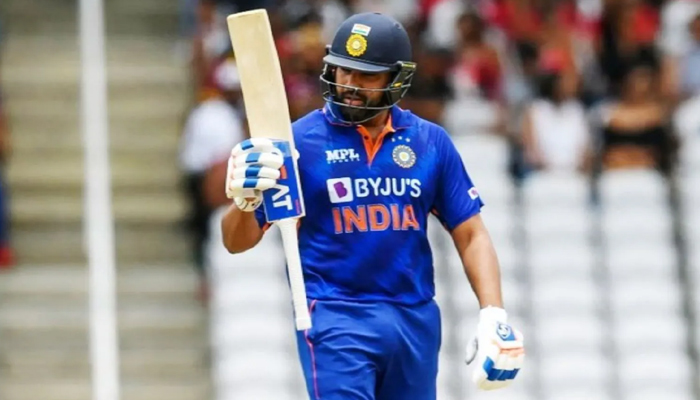
Rohit Sharma 3.0: Leaner, Smarter, and Ready to Go the Distance at 38.
Rohit Sharma’s unbeaten 121 in Sydney was a reminder of his 2019 World Cup brilliance — calm early, commanding later, and utterly in control. At 38, the former India captain showed that hunger and fitness can still align for one more World Cup dream in 2027.
For a while, though, that version of Rohit had vanished — by his own choice.
Over the last four years, the opener’s life in ODIs had been simple: walk in, go hard, unsettle the opposition, and walk back. Ever since India’s 2022 T20 World Cup heartbreak, Rohit had redefined himself as an aggressor. Playing safe, he decided, was no longer an option.
At 36, when most veterans slowed down, Rohit sped up. His intent at the top gave India a new white-ball identity — fearless, proactive, and relentless. Under him, India rediscovered their dominance, reaching the 2023 ODI World Cup final, winning the 2024 T20 World Cup, and lifting the 2025 Champions Trophy.
But somewhere in that transformation, Rohit lost a part of himself — the elegant accumulator who once built innings with patience and poise.
That man resurfaced in Sydney. His fluent century alongside Virat Kohli powered India to a nine-wicket win against Australia, marking not just a return to form but a reawakening of the old Rohit — the craftsman who once ruled ODI cricket.
A Captaincy Snub, A Silent Comeback
After India’s golden run, the selectors passed the leadership baton to Shubman Gill. Rohit could have walked away, as he had from Tests. But ODIs were personal — this was the format that had shaped his identity.
For four years, doubts had grown around his fitness and reflexes. Critics said his attacking bursts came in patches, that he was blocking a spot for a younger player.
Rohit didn’t argue. He went to work.
“I never had four to five months just to prepare for a series,” Rohit said recently. “I wanted to do things in my own way, on my own terms — and that helped me understand what I needed for the rest of my career.”
He spent those months rebuilding — physically and mentally. Fitter, leaner, and mentally sharper, he returned determined to prove he could still bat long.
The Return of the Accumulator
The early part of his comeback wasn’t smooth. In the series opener in Perth, Rohit perished early trying to dominate Josh Hazlewood and Mitchell Starc. But instead of frustration, that failure triggered a reset.
Rohit turned to the formula that had once made him unstoppable — the patient, steady builder.
Between 2015 and 2019, Rohit averaged over 63 in ODIs, facing 100-plus balls in 20 innings. He hit 11 hundreds in 40 matches between 2017 and 2018 — nine of them after batting more than 100 deliveries.
Since taking over as captain, he’d done that just once. Until Sydney.
In Adelaide, Rohit battled tough conditions for a gritty 73 off 97 balls. In Sydney, he was back to full flow, facing 112 deliveries for his 33rd ODI hundred. It wasn’t just the runs — it was the method. A fitter Rohit ran hard, rotated strike, and batted deep, matching Kohli’s intensity stride for stride.
Built for the Long Haul
At 38, most players fight to stay relevant. Rohit is fighting to reinvent. Once the aggressor by necessity, he has now become the craftsman by choice.
Abhishek Nayar, his long-time friend and coach, explained the shift:
“His preparation was built around batting for 50 overs — not just striking, but sustaining. We focused on longevity, on pacing an innings, on finding the balance between aggression and control, just like the old days.”
Sydney proved that work had paid off. Rohit’s calm body language, his assured footwork, his hunger to bat deep — all pointed to a player rediscovering his rhythm. Now, with another ODI World Cup on the horizon, Rohit’s goal isn’t to reinvent Indian cricket. It’s simpler — to bat long, build big, and guide India one more time.
For all the talk about age and decline, Rohit Sharma 3.0 feels like a man reborn — leaner, wiser, and once again, utterly in love with the grind. If this truly is the final chapter of his ODI journey, it promises to be a fitting epilogue — written in patience, passion, and quiet defiance.
Comments are closed.