
Rubio doubts diplomatic path with Cuba as Trump renews military action threat

President Donald Trump and America’s top diplomat renewed warnings on Thursday about possible US action against Cuba, remarks that gained added significance a day after the administration announced criminal charges against former Cuban leader Raúl Castro.
Trump said past US presidents had considered taking action against Cuba for decades, suggesting he may be the one prepared to act.
“Other presidents have looked at this for 50, 60 years, doing something,” Trump told reporters during an environmental event at the Oval Office. “It looks like I’ll be the one that does it.”
Separately, Secretary of State Marco Rubio said Cuba has long posed a national security concern due to its ties with US adversaries, while stressing that Washington would still prefer a diplomatic solution.
Trump administration says diplomacy remains preferred path
Rubio, whose family emigrated from Cuba and who has long advocated a tougher approach toward Havana, said Washington still favors a peaceful resolution but expressed doubts about the prospects for meaningful negotiations with Cuba’s current leadership.
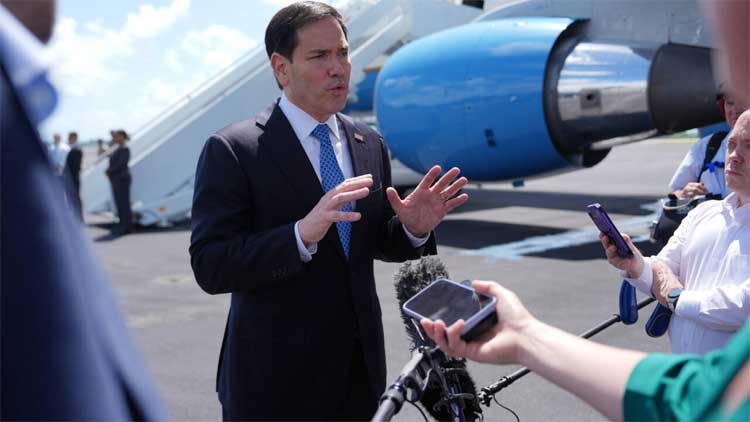
“Trump’s preference is always a negotiated agreement that’s peaceful,” Rubio told reporters in Miami before departing for NATO-related meetings and a visit to India.
“I’m just being honest with you — the likelihood of that happening, given who we’re dealing with right now, is not high,” he added.
Senior Trump administration officials, including Rubio and intelligence leaders, have reportedly held talks with Cuban representatives in recent months to explore improving relations. However, US officials have indicated dissatisfaction with those discussions, leading to additional sanctions against the Cuban government.
When asked whether military force remained an option, Rubio reiterated that diplomacy remained the preferred route but added that the president retains authority to act in what the administration views as US national interests.
Castro indictment fuels speculation
Federal prosecutors on Wednesday unveiled an indictment accusing Castro of ordering the 1996 shootdown of civilian aircraft operated by Miami-based Cuban exiles. The charges include murder and destruction of an aircraft.
Cuban President Miguel Díaz-Canel condemned the indictment as politically motivated, calling it an attempt to justify possible aggression against Cuba.
The development has sparked comparisons with the Trump administration’s approach toward Nicolás Maduro and Venezuela, particularly after Maduro’s detention earlier this year in connection with US criminal charges.
The US military also announced the arrival of the aircraft carrier USS Nimitz and accompanying vessels in the Caribbean for regional maritime exercises.
Escalating pressure on Havana
The administration has intensified pressure on Cuba in recent months through sanctions, including measures targeting military-linked business conglomerate GAESA. Rubio also announced action against relatives of Cuban military-linked figures residing in the United States.
Rubio argued that Cuba represents a security challenge because of its links with China and Russia, as well as relationships with governments viewed by Washington as adversarial.
China responded by criticizing US pressure on Cuba, saying it supports Cuba’s sovereignty and opposes external interference.
Comments are closed.