
Sharad Pawar’s Hospital Stay Fuels Speculation Over NCP’s Possible Alliance With NDA In Maharashtra

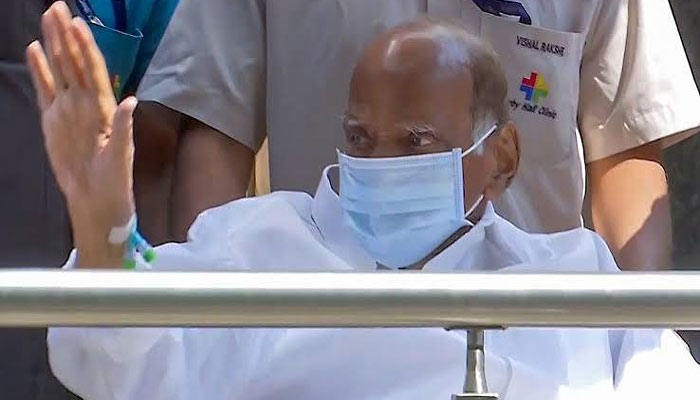
Sharad Pawar’s Next Political Move Keeps Maharashtra On Edge Amid NCP Merger And NDA Speculation
Even while recovering in a Mumbai hospital, veteran Maharashtra politician Sharad Pawar has once again become the centre of intense political speculation. The Nationalist Congress Party (Sharadchandra Pawar) chief, who was admitted to Breach Candy Hospital with a chest infection, has triggered fresh discussions about a possible reunion with the rival NCP faction and a potential shift towards the BJP-led National Democratic Alliance (NDA).
The speculation gained momentum following Pawar’s meeting with Praful Patel, a senior leader of the Ajit Pawar-led NCP faction that split from the original party in 2023 and subsequently secured its name and election symbol. The meeting has prompted questions about whether the two factions could eventually reunite.
Earlier, Prime Minister Narendra Modi had also spoken to Pawar when the latter was initially admitted to a hospital in Pune. According to reports, Modi advised him to rest and leave political responsibilities to his daughter, Supriya Sule, and other leaders. The conversation has also fuelled speculation about Pawar’s possible political realignment, although no formal decision regarding an alliance with the NDA has been announced.
A Political Career Marked By Strategic Alliances
Over nearly six decades, Sharad Pawar has established himself as one of Maharashtra’s most influential and politically unpredictable leaders. His ability to negotiate across party lines and reshape political equations has repeatedly influenced the state’s government formation.
In 2019, Shiv Sena leader Sanjay Raut famously remarked that understanding Pawar’s political thinking would require a hundred lifetimes. His political decisions have often surprised both allies and opponents, particularly during periods of government formation.
Following the 2019 Maharashtra Assembly elections, Pawar played a crucial role in bringing together the Shiv Sena, Congress and NCP to form the Maha Vikas Aghadi (MVA) government. The alliance was particularly significant because the Shiv Sena and BJP had parted ways despite contesting the elections together.
Pawar had also surprised political observers in 2014 when he extended unconditional support to the BJP after the Assembly elections. The BJP had emerged as the single-largest party but was short of a majority. Pawar said his decision was intended to prevent another election, while his party’s MLAs later walked out during the trust vote, helping the BJP government demonstrate its majority.
Sharad Pawar’s Political Equation With Narendra Modi
Despite being part of opposing political camps at different times, Pawar and Prime Minister Narendra Modi have maintained a public relationship marked by occasional expressions of mutual respect.
During Modi’s visit to Baramati in 2015, the Prime Minister described Pawar as his political mentor. Two years later, the Centre conferred the Padma Vibhushan, India’s second-highest civilian honour, on the NCP leader.
Pawar’s political influence was again evident during the November 2019 crisis, when his nephew Ajit Pawar briefly joined hands with the BJP and took oath as deputy chief minister in a government led by Devendra Fadnavis. The arrangement collapsed within days after Sharad Pawar rallied support among the NCP legislators.
The subsequent Maha Vikas Aghadi government was formed with Uddhav Thackeray as chief minister and Ajit Pawar as deputy chief minister.
However, the political equation changed dramatically in July 2023 when Ajit Pawar led a major rebellion within the NCP and joined the BJP-led Maharashtra government. The split resulted in a prolonged battle over the party’s name and election symbol.
Following the 2024 Assembly elections, Devendra Fadnavis returned as chief minister, with Eknath Shinde and Ajit Pawar serving as deputy chief ministers.
Political Challenges Facing The Sharad Pawar Faction
The possibility of another political realignment has gained attention amid the organisational and electoral challenges facing the Sharad Pawar-led faction.
The party’s electoral performance and the loss of several influential leaders have raised questions about its future political strength. There are also concerns that more legislators and MPs could shift towards the ruling alliance, further reducing the faction’s influence.
Joining the ruling establishment could offer political and organisational advantages, including participation in government and greater bargaining power. However, such a move would also require a significant reassessment of the party’s existing alliances.
In an interview with an English newspaper last year, Pawar acknowledged that some leaders within his faction favoured reunification with the Ajit Pawar-led NCP. He indicated that the final decision could involve younger-generation leaders, including his daughter Supriya Sule.
This has placed Sule in an important position in discussions about the party’s future, particularly regarding whether the two NCP factions should reunite or continue operating separately.
Supriya Sule And The Future Of The NCP
The question of leadership remains central to the possible reunification discussions. While Sharad Pawar has continued the legal and political battle over the NCP’s identity, there have been indications that sections of both factions may be open to reconciliation.
Following Ajit Pawar’s death in a plane crash in January 2026, his wife Sunetra Pawar took charge of the faction and became Maharashtra’s deputy chief minister. Their son Parth Pawar, who entered the Rajya Sabha earlier this year, has also emerged as an important figure in the party’s political affairs.
Reports of internal dissatisfaction over Parth’s growing influence have added another dimension to the leadership debate. Some party functionaries are said to favour a reunion under the guidance of an experienced leader such as Sharad Pawar.
However, these internal differences and the future leadership structure remain matters of political discussion rather than confirmed developments.
What An NCP Reunion Could Mean For Maharashtra Politics
A possible reunion of the two NCP factions, particularly if accompanied by an alliance with the NDA, could significantly alter Maharashtra’s political landscape.
The development would have implications for the Maha Vikas Aghadi, comprising the Congress, Shiv Sena (Uddhav Balasaheb Thackeray) and NCP (Sharadchandra Pawar), as well as the broader INDIA opposition bloc.
Sharad Pawar was among the key political figures involved in bringing these opposition formations together. A decision to move towards the BJP-led alliance would therefore represent a major shift in the political equations he helped establish.
For now, the meetings, political conversations and statements surrounding Pawar’s hospitalisation have fuelled speculation, but neither a formal NCP merger nor a decision to join the NDA has been announced. His eventual position, along with the role of Supriya Sule and the leadership of the rival faction, will be crucial in determining the NCP’s next chapter.
Comments are closed.