
Supreme Court Rejects Tamil Nadu’s Plea Seeking 11 TMC Additional Cauvery Water From Karnataka

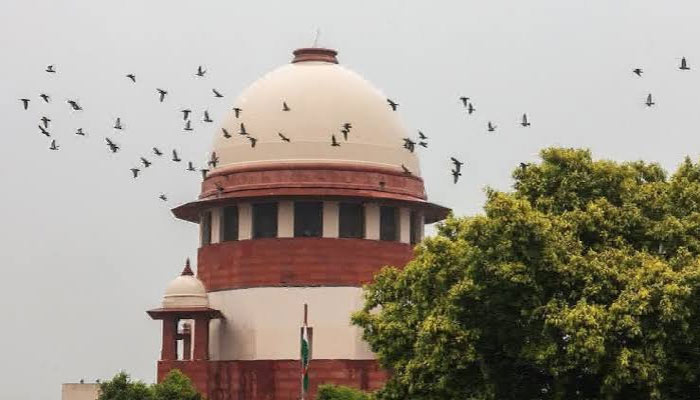
Supreme Court Turns Down Tamil Nadu’s Demand for Additional Cauvery Water From Karnataka
The Supreme Court on Friday rejected Tamil Nadu’s request for additional Cauvery river water from Karnataka, declining to issue directions to the neighbouring state over an alleged deficit in water releases.
A bench comprising Justices Vikram Nath and Aparesh Singh dismissed two applications filed by Tamil Nadu, which had sought the release of an additional 11 thousand million cubic feet (TMC) of water to compensate for the claimed shortfall.
Tamil Nadu told the court that it had faced a deficit of 11.719 TMC in Cauvery water inflows at the Billigundulu measuring station on the Karnataka-Tamil Nadu border until October 6. The state alleged that Karnataka was deliberately restricting water releases despite having sufficient water reserves.
According to Tamil Nadu, it was entitled to receive 64 TMC under the applicable water-sharing arrangement but had received only 14 TMC by October. It also highlighted that four major reservoirs in Karnataka’s Cauvery basin collectively held 77.537 TMC of water as of August 3.
The state further argued that the Cauvery Water Management Authority’s earlier direction to Karnataka to release 3,500 cusecs daily for 15 days was insufficient to address its requirements.
Water Release Directions Issued in November
The Cauvery Water Regulation Committee, during its November 6 meeting, directed Karnataka to maintain a daily discharge of 3,000 cubic feet per second (cusecs) at the Biligundlu measuring station for 15 days beginning November 7.
The prescribed release amounted to approximately 3.88 TMC of water. The recommendation was subsequently approved by the Cauvery Water Management Authority, which oversees the implementation of the inter-state water-sharing arrangement.
Understanding the Cauvery Water Dispute
The Cauvery dispute involves Karnataka, Tamil Nadu, Kerala and Puducherry, all of which depend on the river for irrigation, drinking water and other requirements.
The Cauvery Water Disputes Tribunal announced its final award in 2007, allocating 419 TMC to Tamil Nadu and 270 TMC to Karnataka out of the total utilisable water availability of 740 TMC. The award also established a monthly water-release schedule for Karnataka during a normal rainfall year.
In February 2018, the Supreme Court modified the allocation, increasing Karnataka’s share to 284.75 TMC and reducing Tamil Nadu’s allocation to 404.25 TMC. The order also allowed Tamil Nadu to draw 10 TMC of groundwater.
Mekedatu Project Adds to Inter-State Differences
Another major source of disagreement between the two states is Karnataka’s proposed Mekedatu balancing reservoir project near the state’s border with Tamil Nadu.
The proposed facility in Ramanagaram district is designed to have a storage capacity of 48 TMC, with an estimated investment of Rs 6,000 crore.
Karnataka maintains that the project will primarily address Bengaluru’s drinking water requirements, support groundwater recharge and generate hydropower without changing the existing water-sharing allocations.
Tamil Nadu, however, has raised concerns that the proposed upstream reservoir could provide Karnataka with greater control over the timing and volume of Cauvery water reaching downstream areas. The state fears that this could affect its water availability, particularly during periods of inadequate rainfall.
The latest Supreme Court decision comes amid continuing disagreements between the two states over the implementation of the Cauvery water-sharing framework and the management of the river’s resources.
Comments are closed.