
Trump Calls on Putin to Halt Military Aggression Across Europe, Pushes for Swift Ukraine Peace Deal

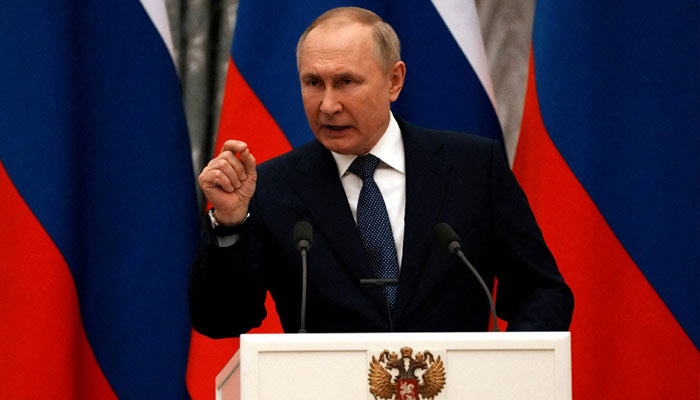
Trump Urges Putin to End Military Actions Across Europe, Says Ukraine Peace Deal Could Be Near
US President Donald Trump has said he urged Russian President Vladimir Putin to halt military aggression across Europe during their recent meeting in China, expressing confidence that the appeal could help secure a swift end to the war in Ukraine.
In a post on Truth Social on Thursday, Trump revealed that he had spent considerable time discussing the issue with Putin during their meeting last week. He said he wanted the Russian leader to withdraw military aggression from European territories, hoping the move would pave the way for an agreement between Moscow and Kyiv.
Trump described a peace deal as a strong possibility and said he wanted negotiations to move forward quickly. However, he did not clarify which European territories he was referring to or explicitly mention Ukraine.
His remarks came a day after he met NATO Secretary General Mark Rutte at his Mar-a-Lago estate in Florida. Following their discussions, the two leaders issued a joint statement urging Russia to avoid any actions that could deliberately or inadvertently widen the conflict in Ukraine.
European countries have expressed growing concern over what they see as Russian provocations. These concerns intensified after three Russian cruise missiles reportedly landed in NATO member Poland last week.
Unlike his earlier criticism of Ukrainian strikes on targets deep inside Russian territory, Trump did not ask Kyiv to exercise similar restraint in his latest statement.
Speaking to reporters on Thursday, Trump also said he was uncertain whether Putin would attend the G20 summit scheduled to take place in Miami next month. However, he added that the Russian president would be welcome if he decided to participate.
Trump Defends His Approach to Putin
Trump’s latest comments appeared to mark a change in tone from his interaction with Putin in China’s Shenzhen last week. During the meeting, which also involved Chinese President Xi Jinping, Trump warmly greeted the Russian leader and referred to him as his “friend”.
The friendly exchange had raised concerns in Ukraine and several European capitals that Washington might once again be moving closer to Moscow’s position.
Asked whether his approach toward Putin had become tougher, Trump questioned the suggestion and pointed to his administration’s earlier decision to approve Javelin anti-tank missile sales to Ukraine during his first term. He has repeatedly argued that the weapons helped Kyiv resist Russia’s initial offensive.
Meanwhile, Trump’s special envoys for the Ukraine conflict, Jared Kushner and Steve Witkoff, have faced criticism over allegations that their approach to negotiations has been too accommodating toward Moscow.
In an interview with Germany’s MD Meets Podcast on Wednesday, Kushner said Putin had demonstrated “restraint” by agreeing not to use nuclear weapons. He also described the Russian president as a “grandmaster of politics” and characterised the Ukraine conflict as a proxy war in which European nations were financing and arming Kyiv against Russia.
Kushner acknowledged, however, that territorial disputes in eastern Ukraine remained a major obstacle to an agreement. Based on his discussions with Putin and Russian officials, he said the territorial question had reached a deadlock.
He also cautioned that the conflict could escalate dramatically if either side made a serious miscalculation, warning that only a small trigger might be enough to intensify the war.
Comments are closed.