
Trump Says Iran Deal to Extend Ceasefire, Reopen Hormuz Could Come Within a Week

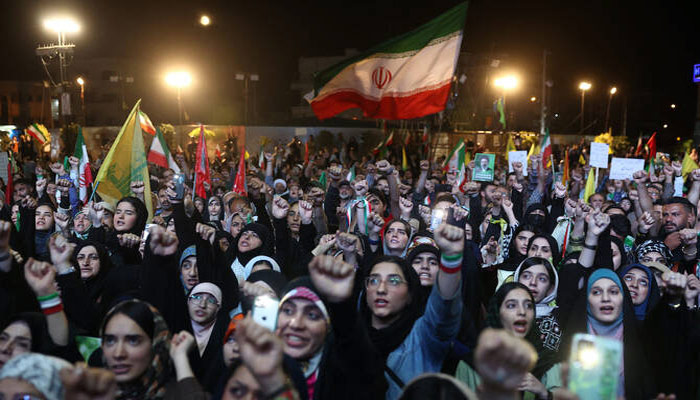
Trump Says Iran Ceasefire, Hormuz Deal Possible Within a Week Despite Mixed Signals
US President Donald Trump said on Monday that he believes Washington and Tehran could reach an agreement within the next week to extend the ceasefire and reopen the Strait of Hormuz, even as conflicting reports emerged over the status of ongoing negotiations.
Speaking to ABC News, Trump said he expected a deal “over the next week” and later insisted that discussions with Iran were continuing despite reports that Tehran had suspended indirect talks with the United States.
“Talks are continuing, at a rapid pace, with the Islamic Republic of Iran,” Trump wrote on Truth Social.
Earlier, Iran’s state-affiliated news agency Tasnim reported that Tehran had halted indirect negotiations with Washington through mediators, citing Israel’s military actions in Lebanon as the reason for the decision.
Asked about the report in separate interviews, Trump said the US had not been officially informed of any suspension.
“They haven’t informed us of that,” he told NBC News, adding that a period of silence between the two sides would not necessarily be negative.
“I think we’ve been talking too much. Going silent would be very good, and that could be for a long time,” Trump said.
The US president also stressed that a pause in talks would not automatically trigger military action against Iran, although American restrictions on Iranian ports would remain in place.
In an interview with CNBC, Trump appeared less concerned about the future of negotiations, saying, “I don’t care if they’re over, honestly. I couldn’t care less.” Hours later, however, he reiterated that talks were still moving forward.
Iran Links Negotiations to Lebanon Conflict
According to Tasnim, Iran’s negotiating team decided to stop exchanging messages with Washington following renewed Israeli military operations in Lebanon, where tensions with the Iran-backed Hezbollah movement have escalated alongside the broader regional conflict.
Iranian Foreign Minister Abbas Araghchi warned that developments in Lebanon could affect ceasefire efforts across the region.
“Violation on one front is a violation of the ceasefire on all fronts. The US and Israel are responsible for the consequences of any violation,” Araghchi said in a post on X.
The reported suspension of talks added fresh uncertainty to diplomatic efforts aimed at ending months of fighting. Markets reacted swiftly, with oil prices jumping more than $5 per barrel following the Tasnim report.
Strait of Hormuz Remains Key Flashpoint
The conflict, launched by the US and Israel on February 28, has resulted in thousands of deaths across Iran and Lebanon and disrupted global energy markets. Iran’s restrictions on traffic through the Strait of Hormuz — a critical route for global oil and liquefied natural gas shipments — have amplified concerns over energy supplies.
Tasnim reported that Iran and allied groups within the so-called Resistance Front, including partners in Yemen, Lebanon and Iraq, were considering broader measures that could include maintaining pressure on the Strait of Hormuz and potentially expanding disruptions to other strategic waterways.
One area of concern is the Bab-el-Mandeb Strait, a key maritime corridor connecting the Red Sea to the Gulf of Aden and serving as a gateway to the Suez Canal. Analysts have long viewed the route as vulnerable to attacks by Iran-aligned groups, including Yemen’s Houthi movement.
Military Tensions Continue Despite Ceasefire
Although a ceasefire has largely been in place since April, military exchanges have continued.
The US military said it struck Iranian air-defense systems, a ground-control station and two drones over the weekend after what it described as aggressive Iranian actions, including the downing of an American drone over international waters.
Iran’s Islamic Revolutionary Guard Corps later said it had targeted a US air base in retaliation for attacks on southern Iran.
While Tehran did not identify the facility, Kuwait activated its air defenses and condemned missile and drone activity in the region, warning that such actions threatened efforts to reduce tensions.
The US military said American forces intercepted two Iranian ballistic missiles aimed at US personnel stationed in Kuwait late Sunday, adding that no casualties were reported.
Comments are closed.