
Wildfires Rage Across France, Spain; 30,000+ Forced to Evacuate

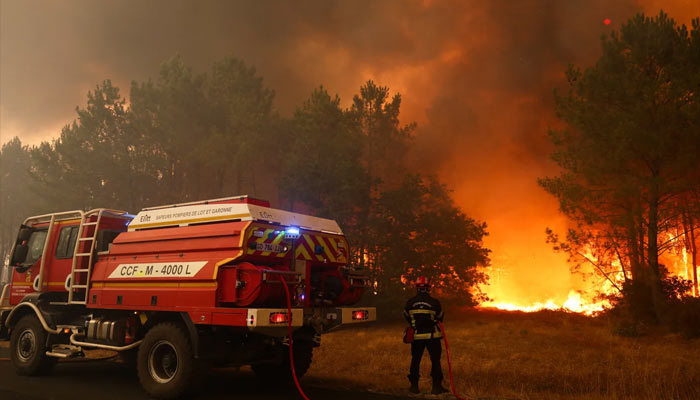
Wildfires Ravage France, Spain as Heatwave Intensifies; Over 30,000 Evacuated
Wildfires fueled by scorching temperatures and powerful winds continued to rage across parts of western Europe on Friday, forcing more than 30,000 people to evacuate in France and Spain and prompting Paris to seek emergency assistance from the European Union.
France invoked the EU’s civil protection mechanism as firefighters, aided by water-bombing aircraft, battled multiple blazes threatening homes, forests and popular tourist destinations. President Emmanuel Macron described the situation as “very intense”, while the European Union deployed three firefighting planes to support French authorities.
Around Bordeaux, more than 20,000 people—mostly tourists staying at campsites and holiday accommodations—have been evacuated since Wednesday as flames swept through coastal pine forests. Firefighters are working house by house to protect the tourist area of Lege-Cap-Ferret, though officials said parts of the wildfire remain uncontrolled.
The crisis has been deadly. Three firefighters have lost their lives in recent days, including two near Bordeaux and one in Sicily, Italy, where crews continue battling multiple fires. Authorities in southeastern France also reported that around 25 homes have been destroyed by wildfires near the historic village of Cotignac.
In Spain, the government declared a state of emergency in the Madrid region after fast-moving wildfires forced more than 10,000 residents to flee. Emergency alerts were issued in towns west of Madrid, while hundreds of firefighters and military personnel continued efforts to contain major blazes in Guadalajara province.
Officials warned that soaring temperatures above 40°C and strong winds are making fires increasingly difficult to control. Spain’s civil protection chief Virginia Barcones said some blazes have become so intense that firefighters “stand no chance” despite large-scale aerial and ground operations.
According to the European Forest Fire Information System (EFFIS), the total area burned across EU countries this year is already the second highest on record.
Scientists say human-driven climate change is increasing the frequency and intensity of extreme heat, drought and wildfires across southern Europe, creating conditions that allow fires to spread faster and become more destructive.
Comments are closed.