

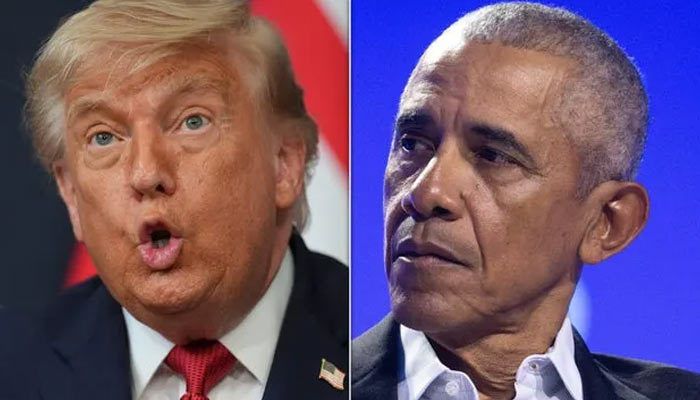
From Obama’s Nuclear Deal to Trump’s 2026 Iran MoU: What’s Different?
When US President Donald Trump withdrew from the 2015 Iran nuclear deal in May 2018, he called it a “horrible, one-sided deal” that had failed to deliver peace or stability in the Middle East.
Eight years later, Trump is championing a new agreement with Tehran — the Islamabad Memorandum of Understanding (MoU), signed on Wednesday after more than three months of conflict in the region. The White House has described it as a stronger and more effective framework than the Obama-era accord Trump once dismantled.
The comparisons are inevitable. Both agreements seek to curb Iran’s nuclear ambitions in exchange for sanctions relief, but the similarities largely end there.
Framework vs Final Agreement
The biggest difference lies in the nature of the two documents.
The 2015 Joint Comprehensive Plan of Action (JCPOA) was a detailed, legally negotiated agreement running over 150 pages, complete with technical annexes, inspection mechanisms and clearly defined nuclear restrictions. It involved not only the United States and Iran, but also China, Russia, France, Germany, the United Kingdom and the European Union.
The Islamabad MoU, by contrast, is a 14-point framework that outlines a ceasefire and sets a 60-day timeline for negotiating a comprehensive settlement. Many of the technical details remain unresolved and are expected to be addressed during follow-up talks.
US officials have also stressed that, unlike under the JCPOA, military pressure remains an available option should negotiations fail.
Nuclear Weapons Commitment
Both agreements contain an explicit commitment by Iran not to pursue nuclear weapons.
The JCPOA reaffirmed that Iran would “under no circumstances” seek, develop or acquire nuclear arms. The new MoU contains similar language, with Tehran pledging not to procure or develop nuclear weapons.
The difference is that the JCPOA established detailed verification procedures and enforcement mechanisms, while the MoU leaves these issues to future negotiations.
- Uranium Enrichment
- The most contentious issue remains unresolved.
Under the JCPOA, Iran agreed to cap uranium enrichment at 3.67 per cent, drastically reduce its stockpile and limit enrichment activities to designated facilities under strict international monitoring. Most of its enriched uranium was shipped out of the country.
The MoU merely states that both sides will determine how existing stockpiles should be handled. It identifies downblending enriched uranium under International Atomic Energy Agency supervision as a minimum requirement but provides no specifics regarding centrifuge limits, enrichment caps or the future of Iran’s nuclear infrastructure.
The challenge is significantly greater than it was in 2015. Iran now possesses uranium enriched to 60 per cent purity — far closer to weapons-grade levels than when the original nuclear deal was signed.
No Sunset Clauses — Yet
One of the major criticisms of the JCPOA was that many of its restrictions were temporary, expiring after 10 to 15 years.
The Islamabad MoU contains no such provisions, though that may simply reflect its status as a preliminary framework. Whether a final agreement includes time-bound restrictions remains uncertain.
Sanctions Relief
Both agreements envision sanctions relief in return for Iranian compliance.
Under the JCPOA, sanctions were lifted in phases following verification by the IAEA and approval through international mechanisms involving multiple countries.
The MoU similarly proposes a phased easing of sanctions but is currently a bilateral arrangement between Washington and Tehran. How European governments and other countries with sanctions regimes will respond remains unclear.
One notable difference is that the MoU allows waivers for Iranian oil and petroleum exports immediately upon signing, even before a comprehensive agreement is reached.
The $300 Billion Reconstruction Proposal
A striking addition in the MoU is a provision calling for the development of a reconstruction and economic development plan worth at least $300 billion for Iran.
No comparable commitment existed under the JCPOA.
The proposal has already generated controversy, although Trump has denied that the United States is obligated to provide any funding directly, insisting Washington is not committing taxpayer money to Iran.
Ballistic Missiles And Regional Influence
Critics of the JCPOA frequently argued that it ignored Iran’s ballistic missile programme and its support for armed groups across the Middle East.
The new MoU largely avoids those issues as well.
There are no provisions restricting Iran’s missile capabilities, nor does the framework address Tehran’s relationships with regional militias or broader human rights concerns.
What Happens Next?
The memorandum gives negotiators 60 days to reach a final agreement, with the possibility of an extension if both sides agree. Any comprehensive settlement would ultimately be backed by a binding United Nations Security Council resolution.
For now, the Islamabad MoU remains a roadmap rather than a completed deal.
While the JCPOA offered a detailed blueprint with clear obligations from the outset, Trump’s new agreement leaves many of the most difficult questions unanswered. Whether those gaps can be bridged over the next two months will determine whether the framework becomes a durable accord or joins the long list of unfinished diplomatic efforts between Washington and Tehran.
Comments are closed.