
UK, Norway Launch Joint Operation to Track Russian Submarines, Say ‘Won’t Take Eyes Off Putin’

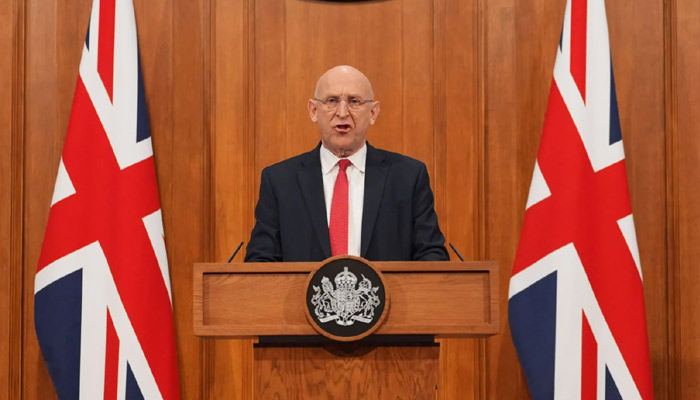
The United Kingdom and Norway have carried out a month-long joint operation involving a warship, surveillance aircraft and hundreds of personnel to track suspected Russia submarine activity near critical undersea infrastructure in the North Atlantic.
The mission, revealed by the UK military, focused on monitoring submarines operating close to key cables and energy pipelines — assets considered vital to global communications and energy security.
UK Defence Secretary John Healey said there were signs of “malign activity” involving a Russian attack submarine and two specialist spy submarines north of the UK. He added that the vessels withdrew following the sustained tracking effort.
Calling Russia the primary security threat to Britain and its allies, Healey accused Vladimir Putin of attempting to divert global attention. “Putin would want us to be distracted by the Middle East,” he said, adding, “We will not take our eyes off Putin.”
Issuing a direct warning, Healey said the UK had made it clear that any attempt to interfere with undersea infrastructure would not be tolerated. “We see your activity over our cables and pipelines,” he said, stressing that such actions would carry serious consequences.
According to UK officials, the Russian deployment included an Akula-class attack submarine along with two specialised vessels linked to Moscow’s Main Directorate for Deep Sea Research (GUGI), a unit often associated with deep-sea intelligence and infrastructure operations.
British authorities have also pointed to a broader strategic overlap between conflicts in West Asia and the ongoing war in Ukraine, alleging that Moscow has been supporting Iran with military components, including drone technology.
In a related move, London signalled a tougher posture in late March, stating that its forces are now prepared to intercept and seize ships suspected of being part of Russia’s so-called “shadow fleet” — vessels used to transport oil in обход of sanctions imposed after the Ukraine invasion.
The shift marks a more assertive role for the UK, which had previously limited its involvement to supporting allies like France and the United States in surveillance operations before boarding actions.
Comments are closed.