
Ukraine’s Allies Oppose ‘Yalta-Style’ Deal as Trump Prepares to Meet Putin, Raises Fears Over Territorial Division

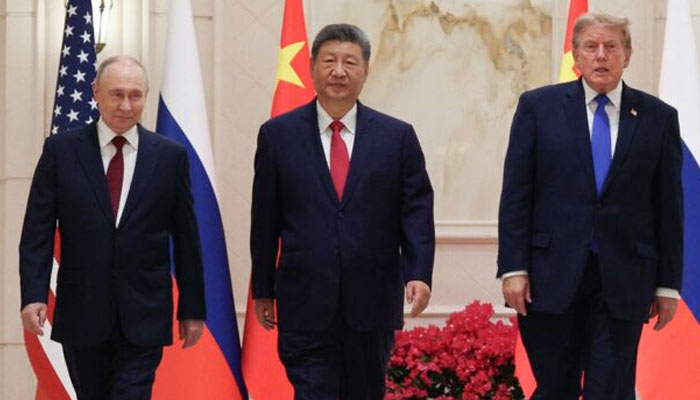
Europe Pushes Back Against Ukraine Peace Deal Without Its Involvement, Warns of ‘New Yalta’
European leaders have reiterated that no agreement to end the Russia-Ukraine war should be reached without their participation, warning against a repeat of the 1945 Yalta-style arrangement in which major powers decided the fate of smaller nations. The warning came during a meeting of Ukraine’s key allies in Berlin, following US President Donald Trump’s warm engagement with Russian President Vladimir Putin at a summit with Chinese President Xi Jinping in Shenzhen.
The meeting of the Coalition of the Willing brought together the leaders of Germany, France, Britain, Poland and Italy, along with NATO representatives and US special envoys Steve Witkoff and Jared Kushner. The discussions focused on securing Europe’s role in US-led diplomatic efforts to end the war and establishing long-term security arrangements for Ukraine.
In a joint statement following the meeting, the leaders of Germany, France, Britain and Ukraine said Russia would not be able to outlast the continued support of Kyiv’s major international partners.
British Prime Minister Andy Burnham described the discussions as an important step towards bringing Washington and European capitals onto the same page after months of differences over the conflict.
Europe Rejects Another Yalta-Style Agreement
Trump’s meeting with Putin and Xi in Shenzhen had raised concerns among European governments that decisions concerning Ukraine and European security could be taken without their involvement.
The summit drew comparisons with the 1945 Yalta Conference, where the United States, Britain and the Soviet Union discussed the post-World War II political order and their respective spheres of influence.
German Chancellor Friedrich Merz rejected the possibility of a similar arrangement, saying that a Yalta-style format would not deliver peace.
“A ‘Yalta’ format will not bring peace,” Merz told reporters, adding that European leaders would not accept the division of the continent through an agreement negotiated by major powers.
He also played down the significance of the Shenzhen summit, describing it largely as a photo opportunity.
Merz stressed that Washington recognised the importance of European participation in negotiations. He said the prospects for peace would improve if the United States and Europe worked together.
Kushner Says Trump Wants Europe Alongside US
Trump joined the Berlin discussions by phone and maintained that all sides were interested in reaching an agreement.
Speaking to Reuters aboard Air Force One, he said his message to the participants was that Putin wanted a deal, Ukraine wanted a deal and everyone should work towards achieving one.
Trump also denied reports that he had criticised European countries over their spending on the four-and-a-half-year-old war. He said the allies should focus on reaching an agreement and directing more resources towards their own countries.
Standing alongside Merz, US special envoy Jared Kushner said Trump wanted Europe to be part of the peace process and claimed that Russia had agreed to participate in multilateral discussions involving European countries.
Kushner added that Trump had returned from his engagement with Putin and Xi believing that peace was achievable.
He also indicated that the US President was open to providing Ukraine with security guarantees modelled on Article 5 of NATO’s founding treaty, which establishes the principle of collective defence.
According to Kushner, such a commitment would represent a significant step by Washington. He also suggested that Russia had become comfortable with the possibility.
Zelensky Seeks Clarity on NATO-Style Security Guarantees
Ukrainian President Volodymyr Zelensky stressed that European countries must have a place at the negotiating table, arguing that any settlement would directly affect the continent’s security.
However, he expressed uncertainty about the proposed security guarantees based on NATO’s Article 5.
Zelensky said there was still no clear understanding of how such an arrangement would operate in practice. He insisted that the commitments must be explained not only to Ukraine’s international partners but also to its citizens and investors.
For Kyiv, a security arrangement that offers protection against future Russian military action remains a key element of any potential peace agreement.
European Leaders Question Trump’s Warm Approach Towards Putin
Trump’s engagement with Putin has also exposed differences between Washington and several of its traditional European allies, particularly over the future of Western support for Ukraine.
Polish Prime Minister Donald Tusk directly challenged Trump’s description of Putin as a friend, declaring that the Russian leader was not and would never be a friend of Poland.
Danish Prime Minister Mette Frederiksen also questioned the US President’s decision to meet Putin, warning that the Russian leader could emerge from the diplomatic engagement feeling more confident.
In the United States, Senate Democratic leader Chuck Schumer described the Shenzhen summit as a historic embarrassment.
When journalists asked Zelensky about Trump greeting Putin as his friend, the Ukrainian President shrugged before walking away.
NATO Secretary General Mark Rutte, meanwhile, defended the diplomatic engagement, saying meetings between major nuclear powers were normal. He also praised Trump’s efforts to negotiate an end to the war.
Russia Invites European Representatives to Moscow
European governments have been concerned about their limited involvement in Washington’s direct negotiations with Moscow, despite providing substantial assistance to Ukraine.
Representatives from several European countries attended discussions in Abu Dhabi the previous week. However, Russian officials indicated that Moscow had not agreed to repeat the same format.
Putin, speaking after his meeting with Trump and Xi, said Russia, China and the United States shared several interests in resolving regional conflicts, including the war in Ukraine.
He also proposed that European representatives travel to Moscow to explain their positions before decisions are made about the format of future peace negotiations.
The proposal comes as Russia continues to face Ukrainian attacks, including strikes affecting the road bridge connecting Crimea with mainland Russia.
With Washington pursuing negotiations and European governments demanding a direct role, the question of who will shape the terms of a possible peace agreement remains central to diplomatic efforts to end the conflict.
Comments are closed.