
UN climate ‘lifeline’ resolution faces growing pressure amid global divisions

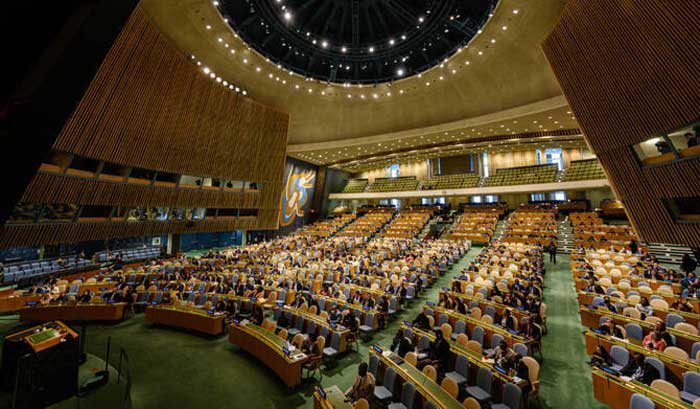
The United Nations General Assembly is set to consider a resolution on Wednesday aimed at reinforcing countries’ obligations to tackle climate change, in a move supporters describe.
As a major step toward translating international legal principles into action. However, the proposal has been significantly diluted following resistance from some of the world’s largest greenhouse gas emitters.
“We can’t take any more disaster and destruction. We all have a right to a future, and this UN resolution is the lifeline — we need to grab it,” said 17-year-old Vanuatu climate advocate Vepaiamele, who testified before the International Court of Justice (ICJ) in 2024.
The effort stems from a campaign led by the Pacific island nation of Vanuatu, which asked the ICJ in 2024 to issue an advisory opinion on whether states are meeting their climate responsibilities. Last year, the court delivered a stronger-than-expected opinion, ruling that failing to honor climate commitments was “unlawful” and suggesting that affected countries could potentially seek reparations.
Seeking to build on that non-binding opinion — one that courts worldwide can still use as guidance — Vanuatu introduced a draft resolution in January intended to help translate the ruling into practical action.
Climate campaigners initially viewed the proposal as a potentially transformative moment. “It could mark a turning point in the global climate fight,” said Alice Nell of Avaaz, which supported the campaign.
But after negotiations among member states, the text was substantially revised, with climate concerns often competing against national security and industrial priorities.
The current draft welcomes the ICJ ruling as “an authoritative contribution” toward clarifying international law and calls on countries to meet their obligations to protect the climate. It also reiterates the need to limit global warming to 1.5 degrees Celsius above pre-industrial levels, including through a transition away from fossil fuels in energy systems — reflecting a commitment endorsed by nearly 200 countries in 2023.
A key proposal, however, has disappeared from the latest version: an “International Register of Damage” intended to document climate-related loss and harm. Major emitting countries have long resisted mechanisms that could expose them to financial liability or compensation claims from nations suffering climate impacts.
The draft still notes the ICJ’s view that countries violating climate obligations may be required to provide “full reparation” to affected states, keeping the issue of accountability alive.
Despite the revised language, diplomats do not expect the measure to pass unanimously. Several countries have proposed additional amendments, with oil-producing nations including Saudi Arabia, Algeria, Nigeria and Iran seeking to remove references that strengthen the ICJ opinion’s role as a framework for climate action.
Vanuatu has urged countries not to weaken the proposal further. “The world is watching,” said Lee-Anne Sackett, Vanuatu’s special envoy for climate justice. “The question before us is not whether climate change is real or urgent, but whether the United Nations will collectively uphold the rule of law in the face of it.”
Comments are closed.