
US Places India in Lowest 10% Tariff Slab, Shields $87 Billion Exports from Extra Duties

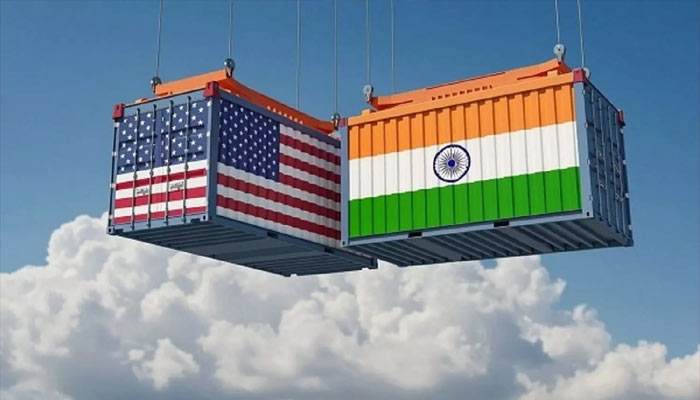
US Places India in Lower 10% Tariff Tier, Exempts $87 Billion Exports from Additional Duty
The United States has placed India in the lower 10% tariff tier under its Section 301 measures on alleged forced labour concerns, offering a relative advantage to Indian exports while exempting nearly $87.3 billion worth of shipments from the additional levy. The Centre on Saturday also reiterated its commitment to concluding the proposed India-US Bilateral Trade Agreement (BTA) at the earliest.
The final measures, announced by the US Trade Representative (USTR) on July 23 under Section 301 of the US Trade Act, 1974, impose an additional 10% import duty on certain Indian goods from July 24. The tariff is lower than the 12.5% duty initially proposed by Washington and replaces the temporary 10% tariff that had been in effect since February.
According to the Commerce Ministry, India’s sustained engagement with the USTR through written submissions, consultations and public hearings helped secure placement in the lower tariff bracket.
Nearly Half of India’s Exports Exempt
The ministry said exports worth $87.31 billion in 2025-26—around 45% of India’s shipments to the US—will remain outside the scope of the additional duty. Exempted products include generic pharmaceuticals, smartphones and other specified goods that already enjoy zero additional tariffs.
Products already covered under Section 232 tariffs, such as steel, aluminium and auto parts, will also not face the new Section 301 duty, although they continue to attract separate US tariffs.
The remaining 55% of Indian exports to the US will be subject to the additional 10% levy, which is imposed over and above existing US import duties.
Textile Industry Flags Concerns
The Confederation of Indian Textile Industry (CITI) has expressed concern over the new tariff regime, particularly because India has not been included in the textile and apparel tariff-rate quota (TRQ) programme announced by the US.
The TRQ scheme offers concessional tariff access to specified textile exports from Bangladesh, Cambodia, Indonesia and Malaysia, provided they use US-origin cotton and fibre. Industry representatives fear the move could reduce demand for Indian cotton and textile intermediates, especially from Bangladesh, one of India’s key export markets.
The US remains India’s largest destination for textile and apparel exports, with annual shipments valued at around $11 billion.
Why India Received the Lower Tariff
The USTR launched its Section 301 investigation earlier this year into countries’ policies on forced labour. While India was initially proposed for a 12.5% tariff, it amended its Foreign Trade Policy in July to prohibit imports of goods produced using forced labour. The US subsequently placed India in the lower 10% tariff category, citing the policy changes.
Trade Talks Continue
The government said it will continue working with Washington to conclude the India-US Bilateral Trade Agreement, announced earlier this year. Both countries have already agreed on a framework for the first phase of the pact, with India seeking improved market access and more competitive tariff treatment compared with rival exporting nations.
Separately, the US is yet to announce the outcome of another Section 301 investigation into excess industrial capacity, which could lead to additional tariffs on a broader range of industrial products.
Comments are closed.