
Weeks Before Air India Crash, Parliamentary Panel Raised Alarm Over Aviation Security Budget Cuts

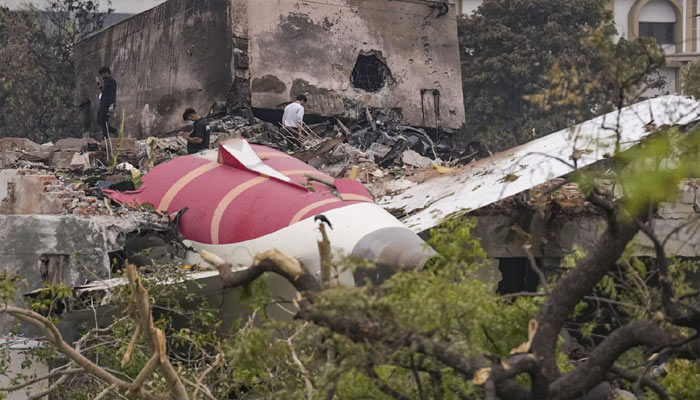
Air India Crash Highlights Gaps in Aviation Safety Funding: Parliament Panel
The recent Air India plane crash in Ahmedabad has turned the spotlight on a Parliamentary panel report that flagged critical underfunding of aviation security and accident investigation mechanisms in India.
Presented in the Rajya Sabha on March 25, 2025, the report by the Parliamentary Standing Committee on Tourism, Transport and Culture noted glaring disparities in budgetary allocations to key aviation bodies, despite India’s status as the world’s third-largest aviation market.
Underfunding of AAIB, BCAS
The committee expressed concern over the uneven distribution of the Rs 65 crore capital outlay in the 2025–26 Budget Estimate (BE), with the Directorate General of Civil Aviation (DGCA) receiving Rs 30 crore—nearly half the total—while the Aircraft Accident Investigation Bureau (AAIB) and Bureau of Civil Aviation Security (BCAS) were allotted only Rs 20 crore and Rs 15 crore respectively.
The AAIB is currently investigating the Ahmedabad tragedy involving Air India flight AI 171—a London-bound Boeing 787 Dreamliner that crashed into a medical college campus, killing 241 of the 242 people on board and 29 others on the ground, including five MBBS students.
Given the scale of the incident, the committee questioned whether the existing financial provisions were adequate to support thorough and timely investigations or to maintain robust security infrastructure.
Mismatch Between Growth and Resources
The report pointed out that while the DGCA’s regulatory role is vital, the rapid expansion of India’s aviation infrastructure demands greater investment in safety and security. The number of airports has doubled from 74 in 2014 to 147 in 2022, with the government targeting 220 airports by 2025.
“As aviation connectivity extends to Tier II and Tier III cities under schemes like UDAN, the security and investigative ecosystem must expand proportionately,” the committee noted.
Severe Staff Shortages
Beyond funding, the report highlighted a chronic shortage of skilled personnel. Based on data from the 375th Report on Demands for Grants (2025–26) of the Ministry of Civil Aviation:
DGCA has over 53% vacant posts
BCAS has 35% vacancies
Airports Authority of India (AAI) has 17% unfilled positions
The panel warned that such understaffing could compromise regulatory enforcement, safety audits, and accident responses.
Call for Reforms
The committee urged the Ministry of Civil Aviation to reassess fund allocations, fill key vacancies, and ensure balanced capacity-building across DGCA, AAIB, BCAS, and AAI. It emphasized that efficiency, transparency, and preparedness are non-negotiable in a sector where lapses can lead to catastrophic loss of life.
Comments are closed.