
WHO Tracks New COVID Variant PJ.2.1 With 24 Mutations Across 18 Countries

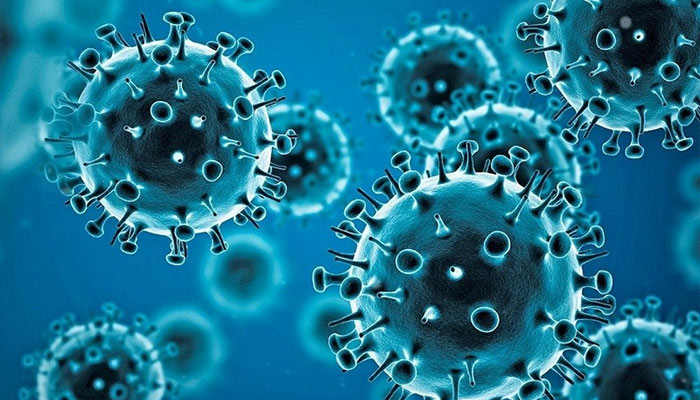
WHO Flags New COVID Variant PJ.2.1: 24 Spike Mutations, Spread Across 18 Countries
The World Health Organization (WHO) is keeping a close watch on a newly identified Omicron descendant, PJ.2.1, after its detection in 18 countries. The variant has attracted scientific attention because of its rapid rise in genetic changes and increasing representation in COVID-19 samples, particularly across North America.
Despite its genetic differences, the WHO has not identified evidence suggesting that PJ.2.1 poses a significantly greater threat to global health. In its November 19, 2026, assessment, the organisation categorised the additional public-health risk associated with the variant as low, while acknowledging that the available evidence is still limited.
Researchers are now examining its ability to spread, interact with human cells and respond to immunity developed through vaccination or previous infections.
What makes PJ.2.1 different from other COVID variants?
PJ.2.1 belongs to the JN.1 branch of the Omicron family and emerged from the MC.10.1.7 lineage. The earliest recorded genetic sequence of this variant dates back to May 25, 2026.
Its most notable feature is the presence of 24 amino-acid changes in the spike protein compared with its parent lineage. This protein enables the coronavirus to attach to human cells and initiate infection.
Because of the number of genetic changes, scientists have described PJ.2.1 as a saltation variant, referring to an evolutionary development involving multiple mutations over a relatively short period.
The WHO has placed it in the Variant Under Monitoring (VUM) category. This designation allows health authorities to track its spread and investigate its biological characteristics. It does not mean that the variant has been identified as more dangerous or that it meets the criteria for a Variant of Concern.
PJ.2.1’s presence expands across 18 countries
The variant’s growing representation in genomic surveillance data is one of the main reasons behind increased scientific interest.
By November 8, 2026, a total of 722 PJ.2.1 genetic sequences had been submitted to the GISAID database from 18 countries.
Its share of reported global COVID-19 sequences climbed from 1% during epidemiological week 33 to 11.6% in week 41. The increase was more pronounced in the Americas, where the variant represented 16.6% of available sequences.
Canada recorded a 25.7% share, while the United States reported 13.8% during the same period.
PJ.2.1 has also been identified in Europe and the Western Pacific, indicating that its circulation is not limited to North America.
However, genomic sequence percentages do not provide a complete picture of infection rates. Differences in testing practices, sequencing capacity and reporting timelines can influence the figures. Scientists therefore caution against interpreting the increase as definitive proof of higher transmissibility.
Why the 24 spike mutations matter
The spike protein is a major target for both the immune system and COVID-19 vaccines. Changes in this structure can influence how effectively the virus attaches to human cells and how antibodies recognise it.
Initial laboratory investigations have indicated that PJ.2.1 demonstrates stronger binding capability to the human ACE2 receptor than certain other circulating lineages, including XFG and NB.1.8.1.
This characteristic may offer one possible explanation for its increasing representation in genomic data.
Nevertheless, laboratory findings cannot independently establish how efficiently a virus spreads among people. Real-world studies are necessary to determine whether the observed growth is driven by biological advantages, existing immunity patterns or other population-related factors.
Do existing COVID vaccines provide protection?
The possibility of immune escape is another important area under investigation. However, the WHO’s initial assessment has not identified substantial additional antibody evasion by PJ.2.1 compared with the contemporary variants included in laboratory studies.
Research involving blood samples from recipients of updated COVID-19 vaccines has also produced encouraging findings.
In one investigation involving 36 recipients of an LP.8.1-adapted vaccine, antibodies retained neutralising activity against PJ.2.1. Another study involving 22 participants found increased neutralising antibody levels against the lineage after administration of an XFG-adapted mRNA vaccine.
These findings indicate that vaccine-generated antibodies can still recognise the variant.
However, laboratory neutralisation tests do not establish the actual level of protection against infection or severe illness. Further research is required to measure vaccine effectiveness under real-world conditions.
Is PJ.2.1 responsible for more severe infections?
There is currently insufficient clinical evidence to suggest that PJ.2.1 causes more serious illness than other circulating COVID-19 variants.
The WHO has not established whether infections involving this lineage result in increased hospital admissions, intensive-care requirements or deaths.
Health experts distinguish between a variant’s ability to become widespread and its capacity to cause severe disease. These are separate characteristics, and an increase in the proportion of infections does not necessarily indicate a rise in disease severity.
The clinical impact of PJ.2.1 will become clearer as more patient data and comparative studies become available.
Symptoms: What should people look out for?
No unique set of symptoms has been established for PJ.2.1. Its infections may produce symptoms commonly associated with other Omicron descendants and respiratory illnesses.
These include:
- Fever and chills
- Sore throat
- Persistent or occasional cough
- Runny or congested nose
- Headaches
- Tiredness and fatigue
- Muscle and body aches
Since these symptoms overlap with influenza and seasonal respiratory infections, identifying the specific variant through symptoms alone is not possible.
COVID-19 testing can confirm an infection, while genomic sequencing is required to determine the particular viral lineage.
Is the new variant a concern for India?
India’s situation remains an important point of observation as PJ.2.1 continues to circulate internationally.
The WHO’s November 19 assessment recorded detections across 18 countries, but India was not included in the country-level sequence data cited in the report.
This does not conclusively establish that PJ.2.1 is absent from the country. Limited sequencing and differences in genomic surveillance can leave some infections undetected.
Indian health authorities will need to monitor incoming genomic surveillance findings to determine whether the lineage has entered the country and whether its share of reported infections begins to increase.
For now, the WHO’s assessment does not recommend any special travel restrictions or additional public-health measures specifically for PJ.2.1.
Should people be worried about another COVID wave?
The emergence of PJ.2.1 highlights how SARS-CoV-2 continues to evolve, but its identification should not automatically be interpreted as the beginning of another major pandemic wave.
The WHO’s current assessment places its additional global public-health risk in the low category, although the organisation has emphasised the limited confidence in the available evidence.
Older adults, people with weakened immune systems and those with underlying health conditions should remain particularly cautious about respiratory infections.
Maintaining recommended vaccinations, ensuring adequate indoor ventilation, washing hands regularly and avoiding close contact with others when experiencing symptoms are sensible preventive steps.
Anyone developing breathing difficulties, chest pain or other serious symptoms should seek immediate medical attention.
For now, PJ.2.1 remains a variant requiring scientific surveillance rather than a confirmed major public-health threat. Its growing presence and 24 spike-protein mutations make continued research important, but its transmissibility, clinical severity and real-world immune escape potential still need to be established.
Comments are closed.