
Why the US, Russia and China Are Racing for Greenland’s Strategic Advantage
Rising geopolitical tensions, climate change and shifting global trade dynamics have placed Greenland at the centre of an intensifying battle over Arctic security, strategic resources and emerging shipping routes.

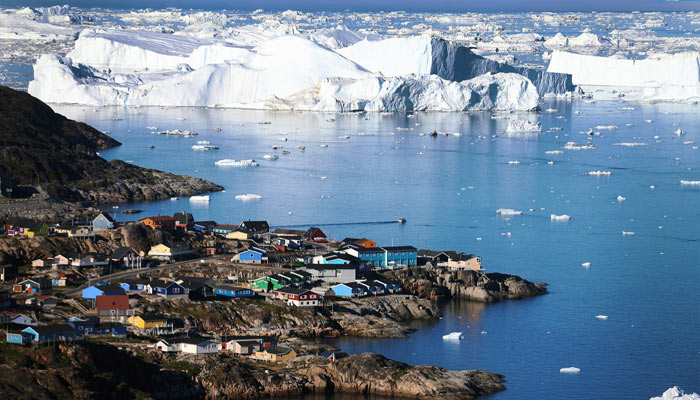
Why Greenland Has Become the Focus of a Global Power Struggle
Greenland, the world’s largest island, has emerged as one of the most strategically important territories as rising geopolitical tensions, climate change and the race for critical resources reshape global politics. Located largely above the Arctic Circle, the mineral-rich island has become a focal point in the growing competition among the United States, Russia and China for influence in the Arctic.
US President Donald Trump has repeatedly argued that Greenland is vital to American national security, saying Washington needs greater control over the region to counter the growing influence of Russia and China. His remarks have reignited debate over the island’s geopolitical importance and sparked concern among NATO allies.
Why Greenland Matters
Greenland occupies a crucial position between North America and Europe, making it a key gateway to the Arctic and the North Atlantic. Around 80 per cent of the island lies above the Arctic Circle, while its location allows control over vital air and sea routes linking the two continents.
During World War II and the Cold War, Greenland served as an important military outpost for the United States. Today, it remains home to the Pituffik Space Base, a major US military installation that supports missile warning, missile defence and space surveillance operations for both the US and NATO.
The island also overlooks the strategically important GIUK (Greenland-Iceland-United Kingdom) Gap, a key maritime corridor where NATO monitors Russian submarine and naval movements in the North Atlantic.
Climate Change Is Transforming the Arctic
Melting Arctic ice is rapidly changing Greenland’s strategic value. As global warming opens previously inaccessible sea routes, new shipping lanes could significantly reduce travel times between Asia, Europe and North America.
The changing Arctic landscape has also intensified competition over access to untapped oil, gas and mineral reserves, making Greenland increasingly important in the global economic and security landscape.
- US, Russia and China Compete for Influence
- The Arctic has become an arena of growing rivalry among major powers.
The United States views Greenland as critical to its missile defence network and Arctic security strategy. Trump has repeatedly insisted that control of Greenland is necessary to safeguard American and allied interests in the region.
Russia has expanded its military footprint across the Arctic by reopening Soviet-era bases, modernising airfields and strengthening its Northern Fleet, viewing the polar region as central to its long-term defence strategy.
China, meanwhile, declared itself a “near-Arctic state” in 2018 and has sought a greater presence in the region through its proposed Polar Silk Road, aimed at integrating Arctic shipping routes into its Belt and Road Initiative. Beijing is also interested in Greenland’s vast deposits of rare earth minerals that are essential for electric vehicles, renewable energy technologies and advanced electronics.
A Treasure Trove of Critical Minerals
Beyond its military significance, Greenland possesses substantial reserves of rare earth elements, graphite and other critical minerals used in semiconductors, batteries, smartphones and defence technologies.
As Western countries seek to reduce dependence on Chinese supplies of these strategic minerals, Greenland has attracted growing attention from governments and global mining companies.
However, harsh Arctic conditions, limited infrastructure and strict environmental regulations continue to slow large-scale mining projects.
Denmark and Greenland Reject Trump’s Push
Despite Trump’s repeated interest, Greenland remains a self-governing territory of Denmark, and both Copenhagen and Nuuk have firmly rejected any suggestion of a US takeover.
Greenland’s government has repeatedly stated that the island’s future will be decided solely by its people, while Denmark has reaffirmed its commitment to Greenland’s autonomy and territorial integrity.
Although Trump argues that Greenland is essential for US security, many defence experts believe Washington already enjoys broad military access through existing agreements with Denmark and gains little strategic advantage from seeking sovereignty over the island.
As climate change transforms the Arctic and geopolitical rivalries intensify, Greenland is expected to remain at the centre of the global contest for security, resources and influence in one of the world’s fastest-changing regions.
Comments are closed.