
Why Ullozhukku’s National Award Win Feels Personal for Women in Indian Cinema

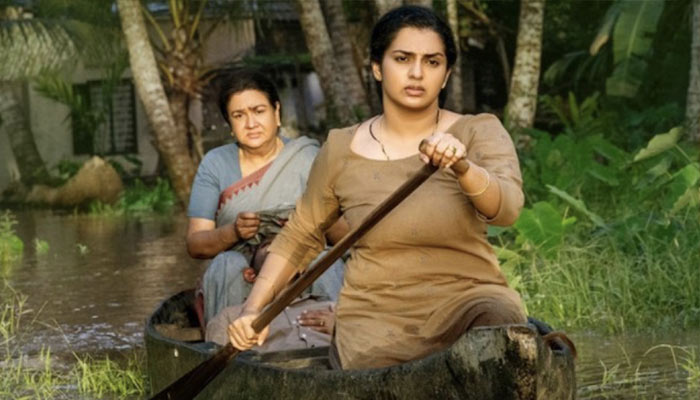
A Win for Sisterhood: Why Ullozhukku’s National Award Triumph Feels Personal.
In an industry where the portrayal of women has often leaned on tropes or sidelined nuance, Ullozhukku emerges as a stirring exception — a story that doesn’t just centre women but allows them the space to be complex, flawed, and ultimately, free. With its Best Malayalam Film win at the 71st National Film Awards and Urvashi taking home Best Supporting Actress, Ullozhukku’s victory feels more than well-earned. It feels personal.
Directed by Christo Tomy, Ullozhukku is a powerful character study wrapped in a tale of familial duty, personal betrayal, and emotional reckoning. Parvathy Thiruvothu and Urvashi deliver career-best performances as two women navigating the floodwaters of both a literal and metaphorical crisis.
Yes, the film critiques patriarchy and celebrates women’s agency — but at its heart, Ullozhukku is a film about sisterhood. A kind that’s not loud or performative but born from shared silences, buried grief, and the pain of being constantly relegated to the margins. Christo Tomy, in the film’s poignant climax, gives us two women who find strength not in confrontation, but in understanding — a moment that’s rare and radical in Indian cinema.
At a time when debates are raging about the credibility of awards and the merit of certain winners, Ullozhukku stands apart. It is a story that deserved to be told — and rewarded. Its theatrical release in June 2024 was met with glowing reviews, especially for its deft direction and the layered performances of the lead actors.
Set in a rain-drenched Alappuzha, Ullozhukku (meaning “undercurrent”) centres around Leelamma (Urvashi), her terminally ill son Thomaskutty (Prasant Murali), and his wife Anju (Parvathy). The dynamic between Leelamma and Anju is one we think we’ve seen before — the classic saas-bahu conflict. But Ullozhukku turns that expectation on its head.
Urvashi’s Leelamma isn’t a villain; she’s a mother, desperate and selfish, who conceals her son’s illness to ensure he gets married. Anju, on the other hand, is not a passive victim. She’s a woman caught in a loveless marriage, who dares to seek love outside it — all while caring for her dying husband. Both women are trapped, not by each other, but by the roles life has forced upon them.
Rather than cast judgement, the film offers empathy. It acknowledges the moral ambiguities of its characters and lets them exist in the grey. This, in many ways, is its quiet rebellion.
What Ullozhukku ultimately captures is the unspoken bond that grows between two women who might have been adversaries in another film. Stripped of familial facades, they confront each other — and themselves — with honesty. What emerges is not resolution, but recognition. A shared truth. A sisterhood forged in sorrow, not sentimentality.
In a cinematic landscape where female relationships are often oversimplified or sidelined, Ullozhukku gives us something rare: a story where two women, shaped by loss and resignation, find unexpected solidarity. It’s this authenticity — the lack of melodrama, the refusal to caricature — that makes the film’s National Award win feel like a collective validation for viewers who’ve long yearned for honest female narratives.
Beyond the accolades, Ullozhukku is a reminder that compelling cinema doesn’t need spectacle. Sometimes, all it needs is two women in a room, facing the truth, and choosing — perhaps for the first time — themselves.
Comments are closed.