
Wildfires Rage Across Portugal, Spain And Greece As Firefighters Battle Blazes

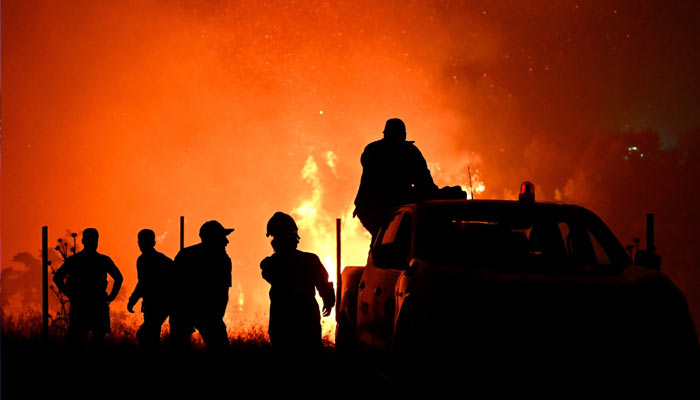
Wildfires continued to tear through parts of southern Europe on Sunday, stretching firefighting resources across.
Portugal and Greece as soaring temperatures, strong winds and dry conditions fuelled fast-moving blazes. While Portugal battled a massive wildfire that has burned for more than three days, authorities in Greece warned residents about hazardous smoke after a fire engulfed a recycling facility near Thessaloniki.
Portugal Battles Massive Wildfire
In central Portugal, more than 1,200 firefighters, backed by nearly 400 vehicles and 15 aircraft, remained locked in a battle to contain a wildfire in the Vouzela region that erupted on Thursday.
According to the European Union’s Copernicus satellite monitoring service, the blaze has already consumed nearly 12,000 hectares of land, making it one of the country’s largest wildfires this summer.
The scale of the emergency prompted international assistance under the European Union’s Civil Protection Mechanism. Spain dispatched 120 firefighters and 45 vehicles, while Spain and Italy also deployed firefighting aircraft to support Portuguese crews.
Toxic Smoke Sparks Health Alert In Greece
In northern Greece, authorities urged residents in parts of Thessaloniki to remain indoors after thick smoke from a wildfire at a recycling plant spread across nearby neighbourhoods.
The blaze broke out on Saturday evening near Oraiokastro and intensified rapidly due to strong winds, prompting evacuation alerts for three suburbs and a nearby facility housing 157 people with special needs.
Nearly 160 firefighters worked through the night to contain the fire before water-dropping aircraft joined operations on Sunday morning.
Police have arrested a 76-year-old man on suspicion of accidentally igniting the blaze after his vehicle allegedly set roadside vegetation on fire. He is expected to appear before prosecutors.
The incident comes only days after another wildfire in Greece claimed the lives of a 12-year-old boy and his father.
Climate Change Extending Fire Seasons
Greek authorities estimate that nearly 85 per cent of wildfires in the country are caused by human negligence, including discarded cigarettes, agricultural equipment and outdoor barbecues.
Like several Mediterranean countries, Greece faces increasingly destructive wildfire seasons as rising temperatures and prolonged drought linked to climate change create conditions that allow fires to spread more rapidly.
To strengthen its response, the country is expanding its wildfire monitoring network by integrating four newly launched low-orbit satellites, a move aimed at improving early detection and enabling faster emergency response.
Comments are closed.