

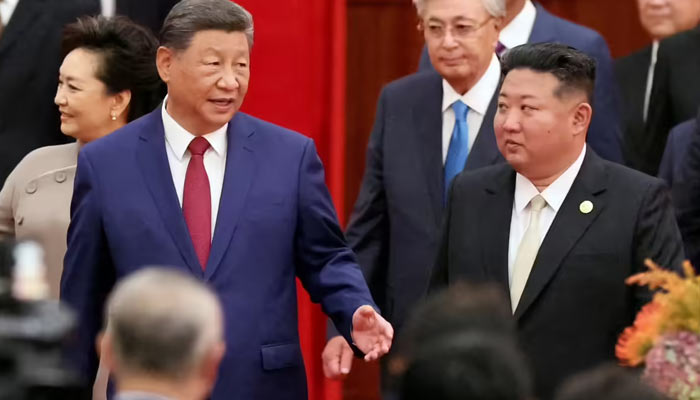
Xi Jinping to Visit North Korea for First Time Since 2019 Amid Shifting Regional Alliances
Chinese President Xi Jinping will travel to North Korea next week for his first visit to the country in nearly seven years, in a move that underscores Beijing’s efforts to reinforce ties with its nuclear-armed neighbour amid rapidly evolving geopolitical dynamics in Northeast Asia.
The visit, scheduled for Monday and Tuesday, was announced simultaneously by Chinese and North Korean state media on Friday. Xi’s last trip to Pyongyang took place in June 2019, months before the COVID-19 pandemic reshaped global diplomacy.
The high-profile visit comes at a time when North Korean leader Kim Jong Un has significantly deepened ties with Russia, including through military cooperation linked to Moscow’s war in Ukraine. Analysts view Xi’s trip as an attempt by Beijing to reaffirm its influence over Pyongyang as regional alliances continue to evolve.
“As North Korea builds closer ties with Russia, China seeks to use Xi’s trip to reassert its influence over Pyongyang and safeguard its strategic interests in northeast Asia,” William Yang, an analyst with the International Crisis Group, said.
Beijing Seeks to Strengthen Strategic Ties
China remains North Korea’s largest trading partner and principal source of economic assistance. While relations between the two countries have remained stable, Kim has increasingly cultivated closer ties with Russian President Vladimir Putin in recent years.
At the same time, Pyongyang has also sought to improve engagement with Beijing. Xi and Kim met in Beijing in September, where they pledged to deepen cooperation and reaffirmed their countries’ traditional friendship.
Xi’s upcoming visit follows a busy period of diplomacy for the Chinese leader, who recently hosted both US President Donald Trump and Russian President Vladimir Putin in Beijing within weeks of each other.
Nuclear Concerns Loom Over Visit
The visit comes against the backdrop of renewed concerns over North Korea’s nuclear programme.
Just one day before the announcement, North Korea unveiled what is believed to be a new uranium enrichment facility. South Korea’s military has assessed the site as a plant capable of producing material used in nuclear weapons.
During a visit to the facility, Kim called for the country’s nuclear forces to expand “at an exponential rate,” signalling that Pyongyang has no intention of slowing its weapons programme.
Experts believe the timing of the disclosure was significant, suggesting North Korea wanted to reinforce its status as a nuclear weapons state ahead of Xi’s arrival.
Kim has consistently argued that international sanctions imposed over North Korea’s nuclear and missile programmes should be lifted. Analysts believe Pyongyang ultimately hopes to secure recognition as a nuclear state and pursue future arms-control negotiations with the United States rather than complete denuclearisation.
China and Russia Back North Korea
North Korea’s weapons programme remains a major point of contention with the United States and its allies. The United Nations has imposed multiple rounds of sanctions on Pyongyang over its nuclear and ballistic missile activities.
However, China and Russia have frequently resisted efforts to tighten those sanctions. Both countries hold veto power on the UN Security Council and have increasingly aligned their positions on North Korea.
During talks in Beijing last month, Xi and Putin jointly criticised what they described as efforts to isolate North Korea through sanctions and military pressure.
The two leaders expressed opposition to policies that create security threats for Pyongyang, according to a statement released by the Kremlin.
Regional Implications
Kim has increasingly embraced a foreign policy centred on closer relations with countries that are at odds with the United States, framing global politics through the lens of a multipolar world order.
Meanwhile, Xi has significantly reduced his overseas travel since the pandemic. The Chinese leader, who once travelled extensively during his early years in office, has become more selective about international engagements. His most recent foreign trip was to South Korea last year for the Asia-Pacific Economic Cooperation (APEC) summit, where he also met Trump.
Xi’s visit to North Korea is expected to be closely watched by Washington, Seoul and Tokyo, as it could provide fresh indications of how Beijing intends to manage its relationship with Pyongyang at a time of growing regional tensions and deepening cooperation among China, Russia and North Korea.
Comments are closed.