
Rare Earths For Student Visas: Donald Trump Says US Has Finalised Trade Deal With China

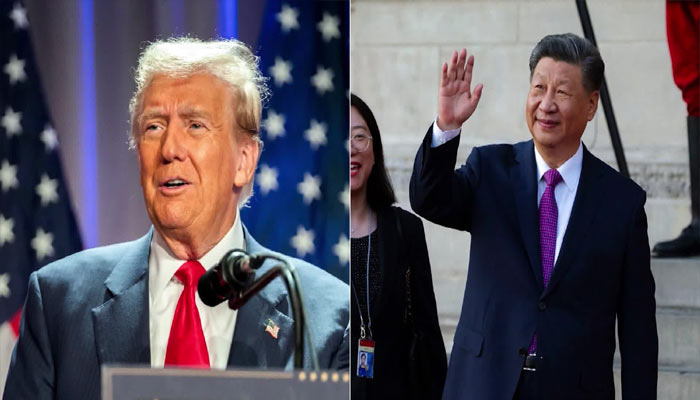
Trump Claims US-China Trade Deal Finalised, Includes Rare Earth Supply and Tariff Imbalance.
Former US President Donald Trump on Wednesday announced that a new trade deal with China has been finalised and is now pending final approval from Chinese President Xi Jinping. Taking to Truth Social, Trump said the agreement secures a complete supply of rare earth materials and magnets from China—resources critical for electronics, defence, and green energy sectors.
Trump claimed that in exchange, the US would allow Chinese students access to American universities, stating this has “always been good with me.” He also asserted that the US would impose a 55% tariff on Chinese goods, while China would apply only 10% in return—though no official details of the agreement have been released yet.
“OUR DEAL WITH CHINA IS DONE, SUBJECT TO FINAL APPROVAL WITH PRESIDENT XI AND ME,” Trump posted. “FULL MAGNETS, AND ANY NECESSARY RARE EARTHS, WILL BE SUPPLIED, UP FRONT, BY CHINA.”
The announcement follows a key round of negotiations held in London last week, where rare earth exports took centre stage. Access to these minerals had become an urgent concern for Washington amid growing supply disruptions. Earlier this year, US automaker Ford was forced to pause production of its Explorer SUV due to material shortages, a move that reportedly caught the attention of the White House.
Paul Triolo, a senior analyst at the Asia Society Policy Institute, noted that the rare earth issue had “overpowered the other parts of the trade negotiations” during an online seminar earlier this week.
Why Rare Earths Matter
Rare earth elements (REEs) are a group of 17 metals vital to manufacturing smartphones, electric vehicles, wind turbines, and military systems. While they are relatively abundant in nature, they are difficult and expensive to extract and process. China currently dominates the sector, producing the majority of the world’s refined output.
According to the International Energy Agency, China accounts for 92% of global refined rare earth production. Although countries like the US, Australia, and India have reserves, most depend on China for processing.
Geopolitical Pressure Mounts
As global demand for rare earths accelerates, nations are increasingly anxious about supply stability. Beijing’s grip on the market gives it significant geopolitical leverage—an issue that has grown more urgent amid escalating trade tensions with Washington.
In April, China implemented new export licensing rules for rare earths, requiring state approval before shipments could leave the country. The slow and opaque approval process has triggered supply concerns globally, especially in the automotive and tech sectors.
China’s Ministry of Commerce stated over the weekend that it has begun approving some export requests, reiterating its stance as a “responsible major country” and expressing openness to further dialogue.
Still, the current export bottleneck highlights Washington’s continued dependency on China for critical materials—even as both sides navigate an increasingly fraught economic and strategic relationship.
Comments are closed.