
10 Years After Paris Agreement, Experts Warn Global Efforts Have Failed to Curb Climate Warming

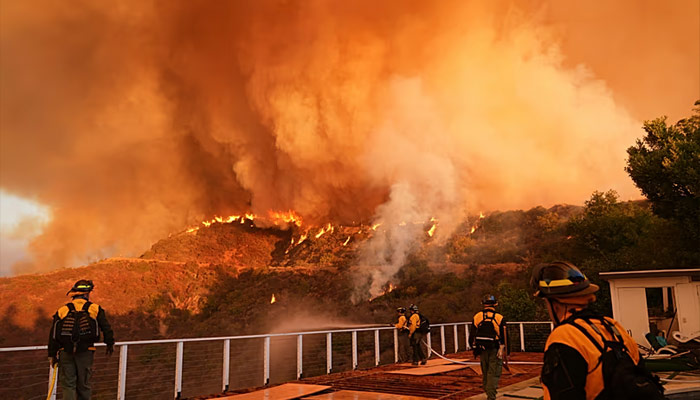
A Decade After the Paris Agreement, Experts Warn the World Has Failed to Halt Warming.
Ten years have passed since global leaders signed the landmark Paris Agreement, yet the world’s climate crisis has intensified faster than expected. Scientists and officials warn that despite some progress, the pace of action remains far too slow to prevent severe warming.
Earth’s temperature has risen roughly 0.46°C (0.83°F) since 2015 — one of the largest ten-year jumps on record — with this year likely ranking among the hottest ever. Heatwaves, wildfires, floods, and other extreme weather events have struck across the globe, from India and the Middle East to the Pacific Northwest and Siberia. The U.S. alone has endured 193 billion-dollar disasters in the past decade, totaling $1.5 trillion in damages.
Glacial ice loss has been staggering: over 7 trillion tons have melted from Greenland and Antarctica, and global sea levels have risen 40 millimeters (1.6 inches). Even the Amazon, once a carbon sink, is now emitting heat-trapping gases in some areas due to deforestation.
Despite these alarming trends, there have been notable achievements. Renewable energy has become cheaper than fossil fuels in many regions, and global electric vehicle sales jumped from 1 million in 2015 to 17 million in 2024. Nearly three-quarters of last year’s growth in electricity came from wind, solar, and other green sources.
Yet these gains are insufficient. Scientists, including Johan Rockström of the Potsdam Institute for Climate Research, argue that the world is failing to stay on track for the Paris goal of limiting warming to 1.5°C (2.7°F). Even optimistic projections put Earth on course for roughly 2.8°C (5°F) of warming — far beyond the safe threshold.
A recent report by the Bezos Earth Fund, Climate Analytics, ClimateWorks Foundation, and the World Resources Institute reviewed dozens of climate indicators. While 35 metrics show progress, the pace remains far too slow. Methane levels have increased 5.2% and CO₂ levels 5.8% since 2015. Emissions reductions in some developed countries have been offset by sharp increases in others: China’s rose 15.5%, and India’s 26.7%. The wealthiest 0.1% of the global population increased emissions by 3%, while the poorest 10% cut theirs by 30%, highlighting the stark inequities in responsibility and impact.
Former UN climate chief Christiana Figueres noted that while some progress has been made, it is outpaced by the acceleration of climate-related harms. UN Environment Programme Executive Director Inger Andersen echoed the concern, saying the world is “falling behind.”
“The Paris Agreement itself has underperformed,” said climate historian Joanna Depledge. “It is a half-full, half-empty situation — progress exists, but not nearly at the scale or speed needed.”
As diplomats gather in Belem, Brazil, for the annual UN climate negotiations, the urgent challenge remains clear: the world must accelerate action to avert catastrophic warming.
Comments are closed.