

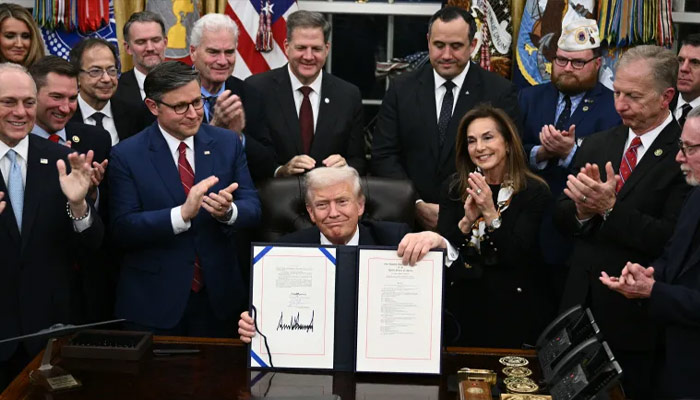
US President Donald Trump on Wednesday signed a government funding bill to officially end the record 43-day federal shutdown.
The longest in American history — bringing relief to thousands of unpaid workers and easing pressure on disrupted public services. Trump, surrounded by Republican lawmakers in the Oval Office, declared, “Today we are sending a clear message that we will never give in to extortion,” drawing applause from his supporters.
The bill, which passed the Republican-controlled House of Representatives by a narrow 222–209 vote and cleared the Senate earlier this week, will restore government operations starting Thursday. According to reports, federal employees furloughed since October 1 are expected to return to work immediately.
Funding Extended Until January 30
The legislation extends federal funding through January 30, temporarily averting another shutdown but adding to the ballooning $38 trillion national debt. It also reverses layoffs that occurred during the shutdown and ensures that all federal workers receive back pay.
The measure allocates $203.5 million for enhanced security for lawmakers and $28 million for Supreme Court justice protection. Additionally, it secures funding for food assistance programs through the rest of the fiscal year, ensuring that low-income families will not face benefit disruptions.
Shutdown Fallout and Recovery
The 43-day standoff had far-reaching consequences — delaying paychecks for over 800,000 federal workers, grounding flights, and clogging airports with record cancellations and delays. Food banks saw surging demand as households struggled to make ends meet.
Reuters reported that the shutdown’s end is expected to stabilize essential services, especially ahead of the Thanksgiving holiday travel rush. The resumption of key economic data releases will also restore transparency in tracking the US economy’s performance.
Economists say the reopening could give a short-term boost to consumer sentiment before the holiday season, though long-term fiscal concerns remain.
Comments are closed.