
Pope Hands Back Centuries-Old Artifacts to Indigenous Canadians in Landmark Move

The Vatican on Saturday returned 62 cultural artifacts to Indigenous peoples in Canada, marking a significant step in the Catholic Church’s effort to acknowledge and repair its role in suppressing Indigenous cultures across the Americas.
Pope Leo XIV personally presented the items and accompanying documentation to representatives of the Canadian Conference of Catholic Bishops during a special audience. In a joint statement, the Vatican and Canadian bishops called the restitution a “concrete sign of dialogue, respect, and fraternity.”
The objects come from the Anima Mundi ethnographic collection of the Vatican Museums, long at the centre of global debates about repatriating items taken during colonial-era missionary activity. Many of these artifacts were originally brought to Rome in 1925 by Catholic missionaries for a Vatican exhibition during the Holy Year celebrations.
While the Vatican maintains they were given as “gifts” to Pope Pius XI, Indigenous leaders and historians have questioned whether such donations were truly voluntary, pointing to the profound power imbalances of the time. Catholic orders also supported Canadian government policies aimed at forcibly assimilating Indigenous peoples—policies later described by Canada’s Truth and Reconciliation Commission as “cultural genocide.”
Confiscated ceremonial objects, including potlatch regalia, were frequently funneled into museums and private collections across North America and Europe.
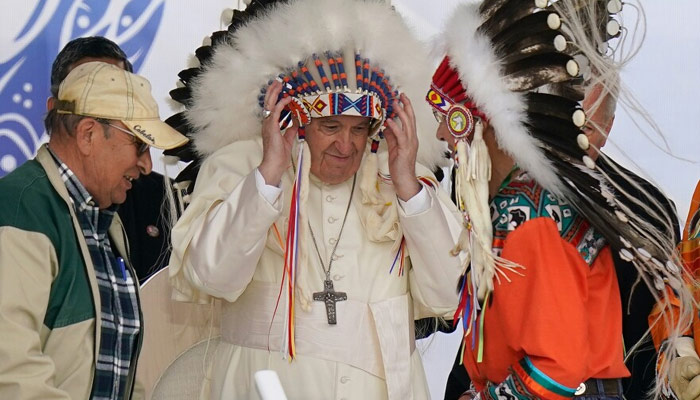
Momentum for repatriation accelerated after Pope Francis’s 2022 meetings with Indigenous delegations, during which he issued a sweeping apology for the Church’s role in residential schools. Leaders examined items such as an Inuit kayak, masks, war clubs, and wampum belts and formally asked for their return. Pope Francis later endorsed the idea of restituting objects on a case-by-case basis.
The Vatican said Saturday’s handover—timed to coincide with this Holy Year—comes exactly a century after the artifacts were first exhibited in Rome. The Canadian bishops have committed to safeguarding the items and ensuring that the Indigenous communities themselves retain ultimate custodianship.
Comments are closed.