
Beyond Brain-Eating Amoeba, Scientists Warn of Growing Global Health Threats

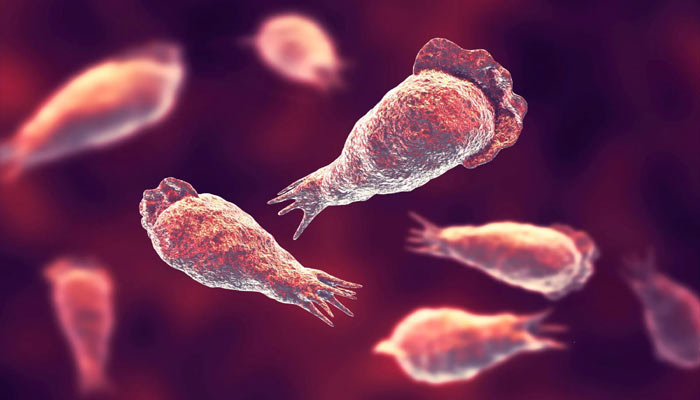
A group of environmental and public health scientists has warned that free-living amoebas (FLAs) are emerging as a significant and under-recognised global health threat, citing their ability to survive extreme conditions and evade conventional water treatment systems.
These microscopic protozoa occur naturally in soil and freshwater environments and are usually harmless. However, some species — most notably Naegleria fowleri, commonly known as the “brain-eating amoeba” — can cause rare but almost always fatal infections when contaminated water enters the nose during activities such as swimming or diving.
The warning carries particular relevance for India, where Naegleria fowleri is known to cause primary amoebic meningoencephalitis (PAM), a deadly brain infection that has seen repeated cases reported in states such as Kerala.
Climate change and water systems fuelling spread
In a recent perspective published in the journal Biocontaminant, researchers led by Longfei Shu of Sun Yat-sen University outlined how climate change, ageing water infrastructure and inadequate monitoring are enabling free-living amoebas to thrive in regions where they were previously uncommon.
Some species can tolerate high temperatures and resist disinfectants such as chlorine, making them difficult to remove from drinking-water systems and distribution networks. Warmer waters and longer summer seasons further promote their growth, increasing human exposure through both recreational and domestic water use.
What are free-living amoebas — and why they matter
Free-living amoebas are single-celled organisms that do not require a host to survive. While most are non-pathogenic, certain species can become opportunistic pathogens under specific conditions.
Naegleria fowleri infects humans when warm freshwater enters the nasal passages, allowing the amoeba to travel along the olfactory nerve to the brain, where it destroys tissue. Although infections are rare, PAM has a fatality rate exceeding 95 percent.
Other FLAs, including Acanthamoeba species and Vermamoeba vermiformis, are also of concern. Research shows they can harbour dangerous bacteria, such as Legionella pneumophila — the cause of Legionnaires’ disease — enabling these pathogens to survive treatment processes and later infect humans.
The “Trojan horse” effect
One of the most alarming findings highlighted by scientists is the so-called “Trojan horse” effect. Free-living amoebas can act as protective hosts, sheltering bacteria and viruses inside their cells and shielding them from disinfection.
Studies suggest pathogens such as norovirus and adenovirus can persist within amoebas long after standard treatment methods would normally inactivate them. This hidden reservoir complicates water safety efforts and raises fresh concerns about pathogen transmission through drinking and recreational water.
Public health concerns and calls for action
Researchers argue that current water quality standards and surveillance systems often fail to account for free-living amoebas and their microbial passengers. As a result, contamination may go undetected until severe or fatal infections occur.
Experts are calling for:
- Expanded monitoring of water systems for free-living amoebas
- Rapid diagnostic tools to detect infections early
- A One Health approach integrating environmental science, public health and water management
The rise of free-living amoebas highlights a growing challenge at the intersection of climate change, water safety and public health. Without improved surveillance, updated regulations and more advanced treatment strategies, scientists warn these resilient microorganisms could pose an increasingly serious threat to global health in the years ahead.
Comments are closed.