

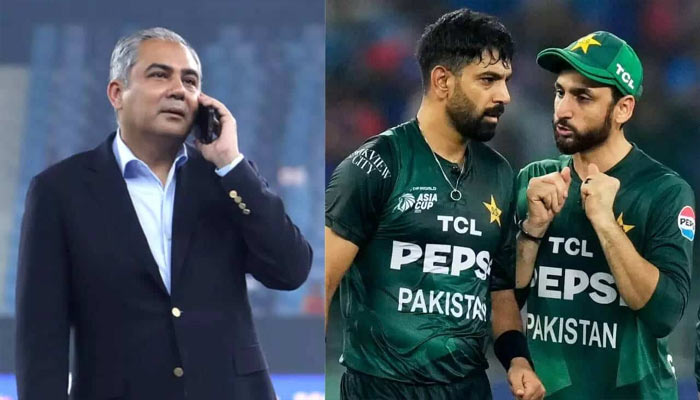
The Pakistan Cricket Board (PCB) is expected to clarify its position on a proposed boycott of its T20 World Cup 2026 group-stage match against India within the next 24 hours, following an extended meeting with senior International Cricket Council (ICC) officials in Lahore.
With the high-profile India vs Pakistan clash scheduled for February 15, the issue has rapidly emerged as one of the most sensitive and closely watched developments of the tournament. The meeting, held at Lahore’s Gaddafi Stadium, reportedly lasted over five hours and involved PCB chairman Mohsin Naqvi, ICC Deputy Chairman Imran Khwaja, and Bangladesh Cricket Board (BCB) president Aminul Islam.
The ICC is keen to avoid prolonged uncertainty around its marquee fixture, as any disruption could have far-reaching consequences for the tournament’s schedule, governance, and commercial commitments.
According to reports, the PCB is now likely to consult Pakistan’s federal government before taking a final decision. Officials believe the next 24 hours will be crucial as the board balances political considerations with the broader implications of withdrawing from cricket’s most-watched rivalry.
What was the ICC-PCB meeting about?
At the centre of discussions was Pakistan’s announcement on February 2 that it would skip its scheduled group-stage match against India on February 15 in Colombo. The move, made with the World Cup already underway, heightened tensions and prompted urgent talks with the ICC.
Bangladesh’s involvement added a new dimension to the negotiations. BCB president Aminul Islam arrived in Lahore shortly before the meeting, signalling growing coordination between the Pakistan and Bangladesh boards. Sources cited by India Today said both boards have aligned their positions as the ICC attempts to broker a resolution.
The ICC’s priority has been to prevent the situation from escalating into a full-scale crisis that could undermine the tournament’s integrity and operational stability.
Why does the ICC want an India vs Pakistan match?
No fixture in world cricket matches India vs Pakistan in terms of global reach and commercial value. The rivalry is the ICC’s single biggest revenue driver, underpinning broadcast rights, sponsorship deals, and advertising interest worldwide.
Broadcasters pay a premium largely because such marquee clashes are guaranteed to draw massive audiences. A Pakistan withdrawal would significantly dent the value of the ICC’s broadcast package, triggering ripple effects across the tournament’s financial structure.
Lower revenues could ultimately impact annual distributions to member boards, including Pakistan, Bangladesh, and India.
With the clock ticking and the World Cup in progress, the next 24 hours could determine whether cricket’s fiercest rivalry remains the centrepiece of the tournament—or becomes its most notable absence.
Comments are closed.