
Varanasi bullet train to slash New Delhi-Lucknow travel time to just 2 hours: Ashwini Vaishnaw

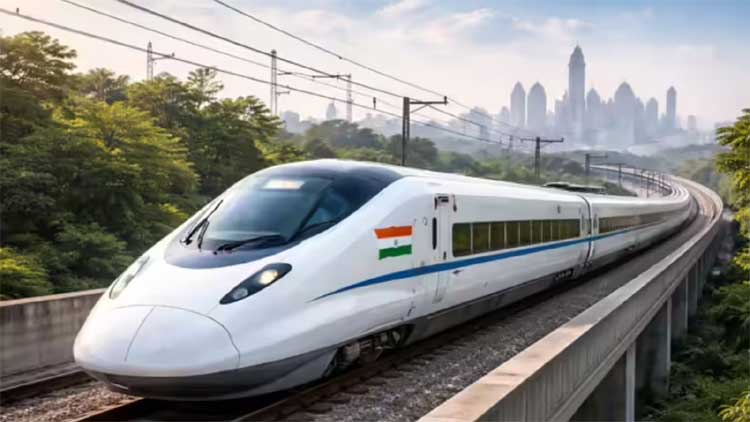
The proposed Delhi-Varanasi bullet train corridor passing through Lucknow is expected to drastically cut travel time between major north Indian cities, with the journey between New Delhi and Lucknow likely to take just two hours.
The high-speed rail project was announced by Nirmala Sitharaman in the Union Budget 2026-27 as part of India’s expanding bullet train network. The development comes as construction work continues on the country’s first high-speed rail corridor between Mumbai and Ahmedabad.
Delhi-Lucknow journey to shrink to 2 hours
Currently, the fastest rail services between Delhi and Lucknow — including the Vande Bharat Express and the Shatabdi Express — take over six hours to complete the journey.
Speaking at the CII Annual Business Summit 2026, Railway Minister Ashwini Vaishnaw said the Delhi-Varanasi bullet train would reduce travel time between Delhi and Varanasi to around three hours and 50 minutes, while Delhi to Lucknow would take approximately two hours.
Vaishnaw also said the high-speed corridor would help integrate the Varanasi-Lucknow and Varanasi-Patna regions into a single economic zone.
Bullet trains may replace short-haul flights
The railway minister said upcoming bullet train corridors are expected to become so efficient that passengers may increasingly choose rail over air travel.
He highlighted proposed routes such as Mumbai-Pune, where travel time could reduce to just 28 minutes, while Pune-Hyderabad may take one hour and 55 minutes, and Hyderabad-Bengaluru around two hours.
“So nobody will fly. These sectors will be 99 per cent dominated by railways,” Vaishnaw said while speaking about future transport trends.
Seven high-speed rail corridors under planning
In February, the government tasked National High Speed Rail Corporation Limited (NHSRCL) with accelerating work on seven proposed high-speed rail corridors announced in the Union Budget.
The Railway Board has directed the agency to revise Detailed Project Reports (DPRs) already prepared for these corridors.
Meanwhile, the Parliamentary Standing Committee on Railways, in its report on Demands for Grants 2026-27, advised the government to complete land acquisition and statutory clearances before sanctioning future projects to avoid delays and ensure financial viability.
“The Committee appreciate the forward-looking vision of Indian Railways in announcing new High-Speed Rail corridors in the Budget 2026–27,” the report stated.
Comments are closed.