

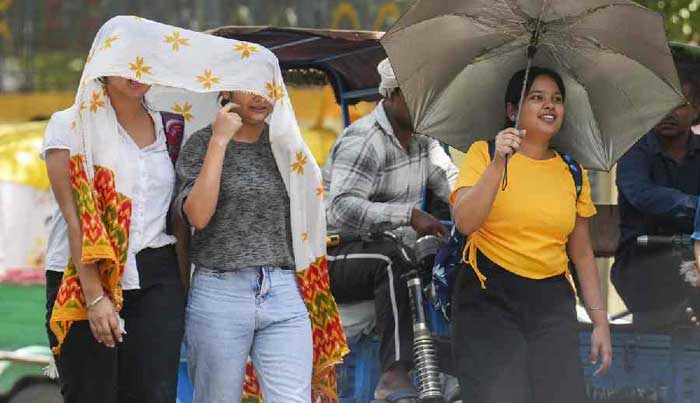
By 10 every morning, life in Banda begins to shut down under relentless heat. Shops stay open but roads empty out, work slows and people retreat indoors as temperatures climb to extreme levels.
Lakhan Gupta, a jeweller in Attara town, now begins his day before sunrise. He leaves home at 6am, finishes most of his work early and returns before the heat intensifies.
“Since April, I have sold almost nothing,” Gupta says. “After 10am, Banda becomes deserted. At first, you see one or two people outside. Then, as the day rises, there is only silence.”
The district has emerged as one of India’s hottest regions. On April 27 this year, Banda recorded 47.6°C — the highest temperature in the country that day and its highest April temperature since 1951. On Tuesday, temperatures climbed even further to 48.2°C, setting a new local record.
Researchers say Banda’s heat crisis goes beyond broader climate change and is being intensified by years of ecological degradation that have weakened natural systems once capable of moderating temperatures.
The impact is increasingly visible in daily life. Farmers have shifted fieldwork to nighttime under LED floodlights because daytime conditions have become unbearable. Contractors say many labourers now choose to forgo as much as 40% of their wages rather than work during peak heat hours between 10am and 5pm. Migration patterns have shifted earlier and businesses that once operated throughout the day increasingly open after sunset.
“The time has come to look at this seriously. Otherwise Banda will not remain liveable,” said Prahlad Valmiki of Bhadedu village, describing rising complaints over heat stress, water shortages and crop failures.
The strain has extended to infrastructure. Power officials said workers at 44 substations have been continuously cooling more than 1,300 transformers after multiple failures linked to extreme temperatures and heavy electricity demand.
Environmental researchers point to long-term ecological damage across the wider Bundelkhand region. Studies tracking changes in forest cover indicate substantial declines over recent decades, with mining and agricultural encroachment identified as key factors.
Arjun P Varma said large-scale mining and expansion into forest land have contributed significantly to the decline.
Experts say mining activity has accelerated river drying, weakened groundwater recharge systems and increased dust pollution. Deforestation has further reduced the landscape’s ability to retain moisture.
The damage is also visible in the Vindhyan Range, where environmental activists say extensive quarrying and blasting have altered natural formations that historically helped recharge groundwater reserves.
Banda’s rivers have faced similar pressures. The Ken River, which flows through nearly 100 kilometres of the district before joining the Yamuna River, has seen large-scale sand extraction, with activists warning that excessive mining is damaging natural water retention systems.
“Excessive extraction has stripped away natural river sand that helped retain water and recharge groundwater,” said social activist Uma Shankar Pandey.
Researchers have warned that continued environmental degradation could leave parts of Banda increasingly barren over the next two decades.
Dhruv Sen Singh said the district has effectively evolved into a heat island due to the combined loss of green cover, shrinking water bodies, declining moisture and expanding sand surfaces.
As evening falls, activity gradually returns. Markets reopen, motorcycles reappear on roads and customers slowly begin returning to shops. For residents like Lakhan Gupta, however, daily life increasingly revolves around avoiding the hours when the heat takes over the city.
Comments are closed.