
COP31 Climate Change Media Partnership Fellowship opens applications for journalists from developing countries

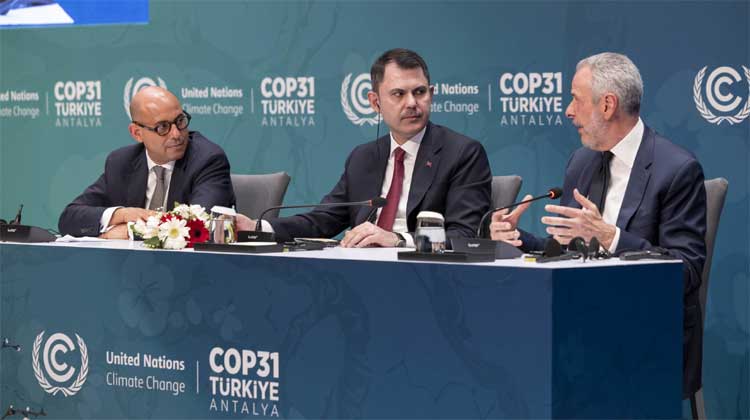
The Climate Change Media Partnership (CCMP), led by Internews’ Earth Journalism Network (EJN) and the Stanley Center for Peace and Security, has announced applications for the COP31 CCMP Reporting Fellowship Programme for journalists from low- and middle-income countries.
The fellowship will support journalists interested in covering the 31st United Nations Climate Change Conference of the Parties (COP31), which is scheduled to take place in Antalya, Türkiye, from November 9 to 20, 2026.
Fellowship enters 19th edition
Launched in 2007, the CCMP fellowship has supported more than 550 journalists from developing countries in attending and reporting on annual UN climate negotiations.
The programme aims to strengthen climate journalism globally by helping reporters cover climate negotiations for local audiences while gaining deeper insight into international climate diplomacy and policy.
This year marks a major expansion of the fellowship, with independent creator journalists becoming eligible for the first time. These applicants can include climate-focused digital creators who use journalistic practices and social media platforms to report directly to audiences, even if they are not affiliated with traditional media organisations.
Applications for the fellowship will remain open from May 27 to June 17, 2026, while selected candidates are expected to be notified in early September.
What the fellowship covers
Selected fellows will travel to Antalya for the full two-week duration of COP31.
The programme will cover economy-class airfare, accommodation, meals, local transportation, travel medical insurance and logistical support related to participation.
Organisers will also assist with press accreditation procedures and reimburse visa-related expenses, although obtaining the visa remains the fellow’s responsibility.
Participants are expected to receive editorial mentoring from senior climate journalists associated with EJN. Before COP31 begins, fellows will participate in virtual workshops and preparation sessions covering reporting opportunities and climate negotiation processes.
During the summit, fellows will attend orientation sessions, daily briefings and mentoring discussions with experienced climate reporters and experts. They will also receive access to reporting resources, collaborative communication platforms and opportunities to interview senior officials and subject experts attending the conference.
Networking events and cohort-building activities will also form part of the programme.
Eligibility requirements
Applicants must be professional journalists representing established media organisations in eligible low- and middle-income countries.
One key condition is that applicants must never have attended a UN climate COP in person before, whether independently or through another fellowship programme.
Candidates must demonstrate prior experience covering climate change or environmental issues and clearly explain the stories they plan to pursue during COP31.
Applicants are also required to:
- Submit an updated CV or resume
- Provide a two-minute video explaining their proposed COP31 coverage
- Share at least three climate-related journalistic work samples published between May 15, 2025, and June 15, 2026
- Submit a letter of support from an editor or media outlet confirming publication or broadcast of fellowship-related reporting
- Commit to attending all fellowship activities
Applications will only be accepted in English.
The organisers said freelancers are welcome to apply, provided they can submit a signed commitment from a media outlet willing to publish their work.
Focus on climate journalism and diversity
The CCMP said applicants will be assessed based on their climate reporting experience, clarity of reporting plans and ability to produce multiple stories during the summit.
The programme also aims to create a geographically and professionally diverse cohort representing different reporting formats and regions.
Organisers additionally warned that applicants must disclose any use of generative artificial intelligence tools during the application process. Undisclosed AI-assisted content may lead to disqualification.
Reporting expectations
Fellows will be expected to produce multiple stories during COP31 across formats including print, online, television, radio and digital platforms.
Stories can be published in any language, though fellows must provide English summaries and translate at least one story fully into English for wider distribution.
All published reports must acknowledge support from the fellowship using a specified attribution line referencing the Climate Change Media Partnership, Internews’ Earth Journalism Network and the Stanley Center for Peace and Security.
The organisers also noted that stories produced under the fellowship may be republished on EJN and Stanley Center platforms.
Applications submitted after the June 17 deadline will not be considered.
Comments are closed.