
Ebola outbreak prompts travel bans, airport screening and border restrictions worldwide

The United Nations’ health agency has raised its national-level risk assessment for the Democratic Republic of Congo (DRC) from “high” to “very high” amid the ongoing Ebola outbreak, although the World Health Organization (WHO) continues to assess the global risk as low.
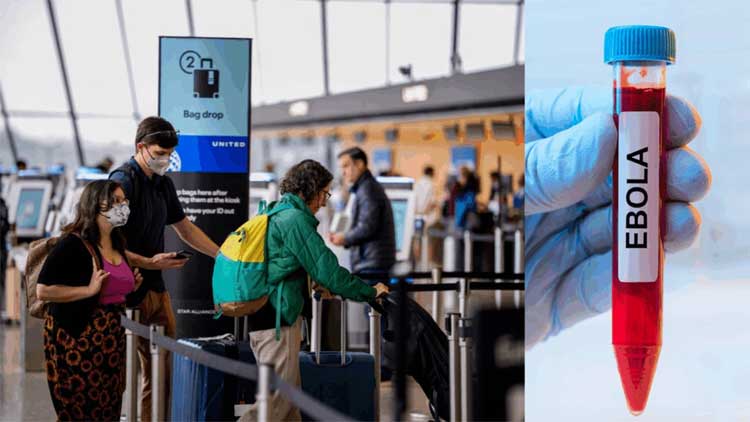
Despite that assessment, several countries have introduced travel bans, border controls and enhanced airport screening measures in an effort to contain the spread of the new Ebola strain.
Countries imposing travel restrictions
The Congolese Ministry of Transport and Communications this week suspended all flights to and from Bunia in eastern DRC, one of the 11 health zones affected by the outbreak.
Authorities said some humanitarian, medical and emergency flights may still operate with special approval from aviation and health officials.
Neighbouring Uganda has also tightened restrictions. The country suspended all direct flights to and from the DRC and halted bus and boat border crossings for four weeks. Weekly markets in border districts have also been suspended, although freight traffic, food supplies and essential goods are still being allowed to cross.
Beyond the immediate outbreak region, Canada and the Bahamas announced temporary entry bans for residents of the DRC, Uganda and South Sudan.
Canada said residents from the three countries would be barred from entering for 90 days starting Wednesday. Canadian citizens, permanent residents and foreign nationals who recently travelled through affected regions must undergo a 21-day quarantine from May 30, even if they show no symptoms.
The Bahamas imposed similar restrictions for an initial 30-day period, subject to review by the country’s health ministry.
Last week, the United States banned non-citizens who had travelled to the DRC, Uganda or South Sudan within the previous 21 days from entering the country. The US Centers for Disease Control and Prevention (CDC) later extended the restrictions to green card holders who had recently been in the affected countries.
US citizens returning from affected regions have been instructed to enter through designated airports equipped with enhanced health screening systems, including Washington Dulles International Airport, Hartsfield-Jackson Atlanta International Airport and George Bush Intercontinental Airport in Houston.
According to reports, the Trump administration is also considering deploying US public health personnel to Kenya to operate a quarantine facility for Americans exposed to or infected with the virus.
Jordan suspended entry for travellers arriving from the DRC and Uganda on May 19, while Bahrain imposed a 30-day ban on foreign travellers arriving from South Sudan, Uganda and the DRC.
No Ebola cases have been reported so far in Canada, the Bahamas, the United States, Jordan or Bahrain.
Countries step up airport screening
Several nations have also intensified health screening measures without imposing outright bans.
India introduced enhanced screening protocols at major international airports and issued travel advisories urging citizens to avoid non-essential travel to the DRC, Uganda and South Sudan.
New Delhi also postponed an India-Africa summit scheduled for this week and cancelled a meeting of the International Big Cat Alliance, a 95-country conservation grouping with significant African participation.
Thailand announced that travellers arriving from the DRC and Uganda would only be permitted entry through Bangkok’s Suvarnabhumi Airport after testing negative during arrival screening.
Mexico has also increased Ebola-related health checks at airports.
Can the virus be contained?
The current outbreak involves the Bundibugyo strain of the Ebola virus, a rare but highly fatal variant that causes severe haemorrhagic fever.
The virus spreads through direct contact with infected blood or bodily fluids, as well as contaminated objects. Health experts say limiting physical contact remains one of the most effective containment measures.
WHO Director-General Tedros Adhanom Ghebreyesus said response efforts currently include contact tracing, treatment centres and infection-control measures in both the DRC and Uganda.
However, he acknowledged that delayed detection allowed the outbreak to spread rapidly.
“We are urgently scaling up operations, but at the moment, the epidemic is outpacing us,” Tedros said this week.
“But we know this virus, and we know how to stop it. We have stopped every previous Ebola outbreak, and we will stop this one too,” he added.
Is air travel still safe?
The United Nations has urged governments and airlines to continue following aviation health protocols established during the COVID-19 pandemic by the International Civil Aviation Organization (ICAO).
These include electronic health declarations and contactless border processing systems.
The ICAO has stated that international air travel remains safe for now and advised countries against shutting borders or imposing unnecessary trade restrictions.
Instead, the agency recommended focusing on exit screening in affected countries, particularly checking departing passengers for fever or symptoms consistent with Ebola infection.
Comments are closed.