

PM Modi Announces High-Powered Exam Reform Task Force, Nandan Nilekani to Lead NTA Overhaul
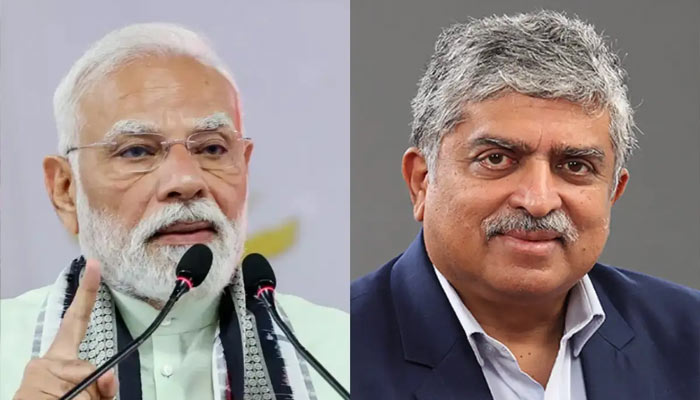
Prime Minister Narendra Modi on Sunday announced the formation of a high-powered task force headed by Infosys co-founder Nandan Nilekani to recommend sweeping reforms to India’s examination system, with a special focus on revamping the National Testing Agency (NTA).
In a video message posted on X, Modi said the Centre has taken several steps to protect students’ futures and ensure the integrity of public examinations. Referring to recent paper leak cases, he said those who “played with the future of students” are now behind bars.
The Prime Minister said the government has already introduced fast-track courts to deal with examination-related offences and is preparing to bring a tougher law in Parliament to crack down on cheating and irregularities.
Highlighting the need for systemic changes, Modi said the government aims to make the examination process more transparent, secure and technology-driven. The task force has been asked to submit its recommendations at the earliest, following which the government will implement reforms to strengthen the credibility of future examinations.
High-Level Panel to Drive NTA Reforms
The multidisciplinary task force has been constituted specifically to recommend reforms for NTA examinations, with an emphasis on technological safeguards and structural improvements.
Besides Nilekani, the panel includes former ISRO Chairman S. Somnath, former Intelligence Bureau Director Tapan Deka, IIT Madras Director V. Kamakoti, former Education Secretary Anita Karwal, and logistics expert Amrit Lal Meena.
Announcement Follows Education Minister’s Exit
The announcement comes a day after Dharmendra Pradhan resigned as Union Education Minister amid sustained nationwide protests over repeated examination paper leaks.
The demonstrations, led by the Cockroach Janta Party (CJP), began at Delhi’s Jantar Mantar on June 20 before spreading across the country. The movement intensified after police action against protesters on July 20 and later gained support from several student organisations and activists, including Sonam Wangchuk, who observed a prolonged hunger strike in solidarity with the protesters.
Government to Introduce Tougher Anti-Cheating Law
The Centre is also set to introduce the Public Examinations (Prevention of Unfair Means) Amendment Bill, 2026 in the Lok Sabha on Monday, July 27.
The proposed legislation seeks to strengthen the existing law by introducing stricter penalties for examination fraud, mandating time-bound investigations and trials, and establishing special fast-track courts to ensure speedy justice.
According to the government, the amendments are intended to curb organised examination-related malpractice, improve accountability, and restore public confidence in India’s examination system.
Comments are closed.