
Europe’s Danube River Falls to Record Low Water Levels Amid Heatwave

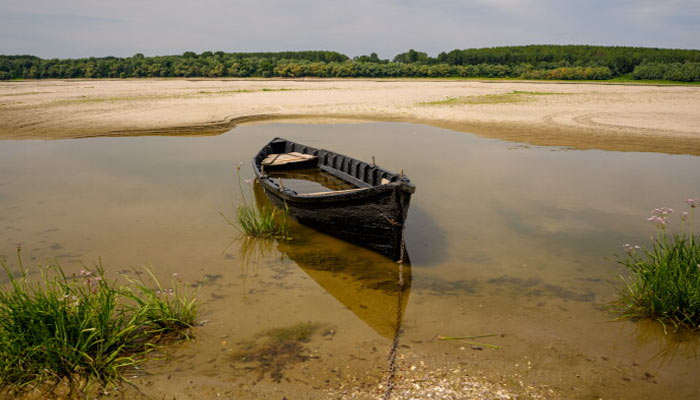
Danube River Reaches Record Low as Heatwaves Grip Europe
Relentless heatwaves sweeping across Europe have pushed water levels in the Danube River to historic lows, disrupting shipping, power generation and tourism across several countries along the continent’s second-longest river.
In the Romanian town of Corabia, once-busy tourist docks now sit deserted, with boats stranded in algae-filled shallows and blocked by expanding sandbars. Residents say the river has receded dramatically in just a year.
“Last year we could swim across, but now the water only comes up to our chests,” 71-year-old fisherman Doru told AFP. “In two years, we’ll probably be able to walk across.”
Stretching 2,850 kilometres from Germany’s Black Forest to the Black Sea, the Danube is experiencing one of the most severe droughts in its history after successive heatwaves scorched Europe since May.
Shipping and Power Supply Disrupted
The falling water levels have severely affected river navigation in Slovakia, Hungary, Romania and Bulgaria. Cargo vessels are being forced to reduce loads or wait for safer conditions, while ferry services between parts of Romania and Bulgaria have been temporarily suspended.
A cruise ship carrying nearly 200 passengers also ran aground in Bulgaria and had to be evacuated after becoming stranded in the shallow river.
Romanian authorities said water levels in some sections are already about one metre below the minimum required for safe navigation. Dredging operations are underway to keep a narrower shipping channel open.
- Energy Sector Under Pressure
- The drought is also affecting electricity production.
Hungary temporarily shut down its only nuclear power plant, which relies on Danube water for cooling, while Romania halted operations at both reactors of the Cernavoda Nuclear Power Plant for the first time due to critically low river levels. Serbia has also reduced electricity generation at its two largest hydroelectric plants.
Scientists from the World Weather Attribution group said the prolonged drought has been intensified by human-driven climate change, making an already severe dry spell significantly worse.
Communities Feel the Impact
The Danube is now at its lowest level on record in Hungary and at a 30-year low in Romania and Slovakia.
Along the Bulgaria-Romania border, fishermen say their boats have been left stranded on land, leaving many without work.
“I’ve been a fisherman for 39 years, and I’ve never seen a drought like this,” Bulgarian fisherman Aleksandar Angelov told AFP.
In Budapest, the Danube has fallen to its lowest level since records began, prompting water-use restrictions in several towns and forcing some river cruises to be suspended. At Slovakia’s Gabcikovo dam, slower lock operations have led to longer delays for commercial vessels.
No Relief in Sight
With high temperatures expected to persist, residents fear the situation could worsen.
In Corabia, pensioner Mitica Nicolae said he has never seen the river so depleted in his 25 years living there. The shrinking river has reduced fish catches and raised concerns about agriculture, even as irrigation restrictions have been introduced in parts of southeastern Romania.
On a newly exposed stretch of riverbank, a child waded through ankle-deep water near what was once the Danube’s shoreline, highlighting just how dramatically one of Europe’s most important waterways has receded.
Comments are closed.