
Trump Says Strait of Hormuz Is Cleared of Mines, Warns Iran Against Planting More

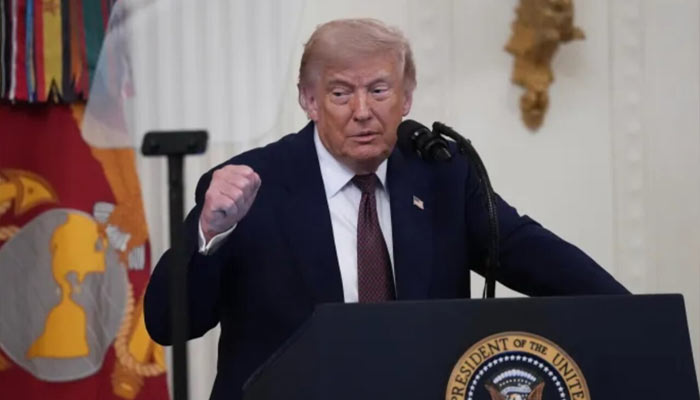
US President Donald Trump has claimed that mines in the international waters of the Strait of Hormuz have been removed or detonated, while warning Iran that any vessel found laying new mines would be destroyed.
In a post on Truth Social, Trump said the United States was monitoring the strategically important waterway through its Space Force, claiming it was watching “every square inch” of the strait.
“There is a Zero Tolerance policy on mine placement in full force and effect,” Trump said.
The Strait of Hormuz remains a crucial route for global energy supplies. Oil shipments through the waterway stood at around 5 million barrels per day on Monday, according to provisional Vortexa data, down sharply from more than 20 million barrels a day before the war. The current flow represents roughly one-fifth of global oil consumption.
The US and Iran have not carried out air strikes against each other’s military forces for several weeks, but attacks involving vessels in and around the strait have continued as tensions over control of the maritime passage persist.
Trump raises concerns over Iran executions
Trump also criticised Iran over a reported rise in executions linked to mass protests that erupted earlier this year before the Middle East war.
“The failing Islamic Republic of Iran is not paying large segments of their military, while at the same time killing protesters, even when they are not protesting, at levels not seen before,” Trump wrote.
He described the situation as a “humanitarian crisis of epic proportions” and called for it to be stopped immediately.
It was not immediately clear what prompted Trump’s remarks. However, reports indicate that executions have increased since the war began on February 28.
The US and Israel launched their joint strikes weeks after Iranian authorities violently suppressed widespread protests. The demonstrations began in late December over rising living costs before expanding into broader anti-government protests, reaching their peak on January 8 and 9.
Iranian authorities have reported more than 3,000 deaths and blamed the violence on alleged terrorist activities backed by the US and Israel. International rights groups have reported significantly higher casualty figures and accused Iranian security forces of using live fire against protesters.
Earlier this month, more than 30 countries signed a joint statement condemning Iran’s continued executions of protesters and use of the death penalty. The United States, which retains capital punishment, did not sign the statement.
At least three additional people have reportedly been executed in Iran on charges linked to the protests since then.
Iran threatens response to expanded US sanctions
Meanwhile, Iran has vowed to retaliate against expanded US sanctions announced by Washington, while expressing confidence that major trading partners will resist American pressure.
US Treasury Secretary Scott Bessent announced the new measures on Monday but stopped short of imposing the most severe sanctions. He warned that countries continuing to trade with Iran could eventually face exclusion from the US dollar-based financial system.
Bessent did not identify the countries that could face penalties or provide a specific implementation date, saying governments would be given time to comply.
The US Treasury separately announced sanctions targeting 60 individuals, entities and vessels. However, the list did not include Chinese financial institutions that have been accused of helping facilitate Iranian oil transactions.
Pakistan pushes for reopening of Hormuz
The United States and Iran had reached an interim agreement in June aimed at ending the conflict that began with US and Israeli strikes on Iran. However, the arrangement, known as the Islamabad memorandum, subsequently ran into difficulties.
Pakistan has continued its mediation efforts. The Pakistani military said on Tuesday that its latest discussions with Tehran had made “significant progress” on preventing further escalation and reopening the Strait of Hormuz.
Interior Minister Mohsin Naqvi, who travelled to Tehran alongside Army Chief Asim Munir, said Iranian President Masoud Pezeshkian had openly presented his government’s position and described the discussions as constructive.
With the Strait of Hormuz remaining a key pressure point in the conflict, efforts to restore safe maritime traffic could have major implications for global energy markets and the wider regional situation.
Comments are closed.