
Nepal-Tibet Floods: Death Toll Hits 691, Nearly 3,000 Still Missing As Rescue Efforts Continue

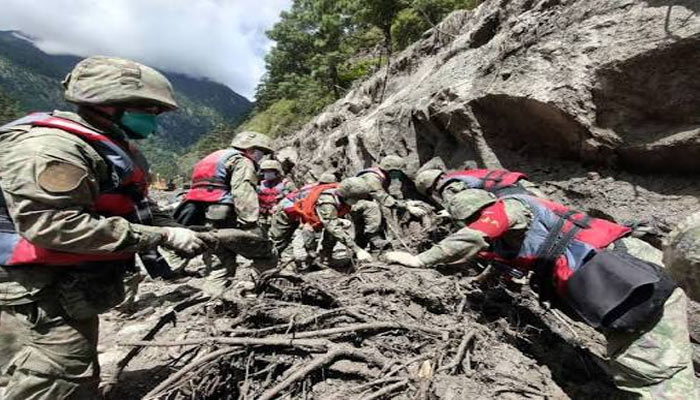
Rescue operations entered their fifth day on Sunday as teams continued searching for survivors and missing people after devastating flash floods and debris flows struck areas along the Nepal-China border.
The combined death toll in Nepal and China’s Tibet region has climbed to 691, while more than 3,000 people remain missing, according to the latest updates from authorities. Nepal has reported 675 deaths and 2,498 missing people, while Chinese authorities have recorded 16 deaths and 546 missing in Tibet’s Gyirong county.
More than 3,700 people have been rescued in Nepal so far.
The disaster began on August 26, when a massive debris flow and flash flood tore through the mountainous border region, destroying homes, roads, bridges and hydropower infrastructure. Difficult terrain, damaged roads, narrow gorges and unstable slopes have made rescue operations particularly challenging.
Rescue Efforts Intensify
Search and rescue operations resumed after adverse weather conditions temporarily disrupted efforts. Helicopters are being used to evacuate survivors and deliver essential relief supplies to communities cut off by the floods.
One of the key search sites is the Upper Trishuli-1 Hydropower Project in Rasuwa, where authorities believe more than 100 people may be trapped inside a tunnel filled with mud and debris. Search teams are also working around the badly damaged Gyirong border crossing on the Chinese side.
Nepal has requested specialised international support for complex tunnel rescues, survivor detection, forensic identification and DNA testing. An Indian tunnel-rescue reconnaissance team has arrived in the country, while China has also deployed specialists to support the search.
India has provided relief material, including food, medicines and blankets, and has offered technical assistance and prefabricated bridges to help reconnect areas where infrastructure has been washed away.
Glacier-Related Collapse Behind Disaster
The US Geological Survey (USGS) has said the disaster was likely triggered by a rapid slope failure involving a glacier in Nepal’s Langtang National Park near the Chinese border.
The resulting debris flow travelled nearly 100 km downstream through the Lende Khola and Trishuli Khola river systems, gathering water, rocks and other debris along the way and creating a destructive flood.
According to the USGS, the slope failure released energy equivalent to a magnitude 5.2 earthquake. However, scientists said it remains uncertain whether the initial event should technically be classified as a landslide involving part of a glacier or a glacial collapse.
Satellite imagery has also revealed significant changes around the Langtang Lirung glacier following the disaster. Analysis indicated that a section of the lower glacier broke away and crashed into the valley, triggering an avalanche of ice and rock that contributed to the devastating downstream flooding.
Risk From Newly Formed Lake Eases
Authorities have been closely monitoring a newly formed lake upstream along the Nepal-China border after concerns that another surge could threaten communities downstream.
The immediate threat had eased by Saturday, with Chinese authorities reporting that the water level had fallen and the lake was gradually shrinking. However, officials warned that the possibility of flooding could remain until the upstream water bodies drain completely.
Meanwhile, families across Nepal continue to search for relatives who remain missing. Authorities have warned that some recovered bodies are severely decomposed and may be difficult to identify visually. DNA samples are therefore being collected before burial to help establish victims’ identities.
With thousands of people still unaccounted for, rescue teams remain focused on locating survivors and recovering missing people, while authorities begin assessing the extensive damage to homes, roads, bridges, hydropower facilities and other critical infrastructure.
Comments are closed.