
Estonia Minister Resigns Amid Controversy Over Rs 769-Crore Arms Deal With Indian Firm

Estonia Defence Minister Resigns Over Controversial €70 Million Ammunition Deal Linked to Indian Firm
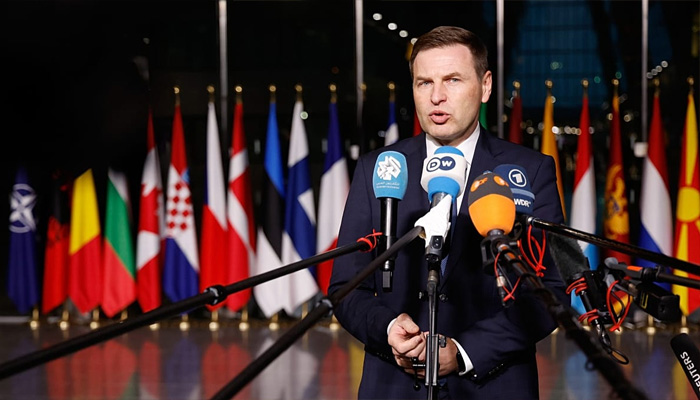
Estonia’s Defence Minister Hanno Pevkur has stepped down following controversy surrounding a €70 million (over Rs 768.50 crore) ammunition procurement deal intended to support Ukraine.
Pevkur, who has held the defence portfolio since 2022, announced his resignation on Wednesday after Estonia’s National Audit Office raised concerns over defence spending and procurement. He said he was accepting political responsibility for the wider defence sector and would hand over the post to Prime Minister Kristen Michal at an appropriate time.
The controversy centres on contracts signed in 2024 by Estonia’s Centre for Defence Investments (RKIK) with Datasel SRL, an Italy-registered company that had been acquired earlier that year by India’s Neco Defence Munitions.
The procurement was aimed at securing artillery ammunition for Ukraine amid severe shortages on the battlefield. Estonia reportedly used funding from the European Union’s European Peace Facility and made substantial advance payments to Datasel.
The first contract was signed in August 2024, followed by another in October and additional agreements later that year. By the end of 2024, advance payments had reportedly reached around €70 million.
The ammunition was expected to be delivered within months, but shipments were delayed amid reported production difficulties. When some supplies eventually arrived in 2025, reports said part of the ammunition failed to meet required quality standards.
DATASel DISPUTES ESTONIA’S ACTION
Datasel has challenged Estonia’s decision to terminate the contracts and has taken legal action against the state, with the dispute now moving to international arbitration.
The company claims it supplied ammunition worth around €59 million and received approximately the same amount in advance payments. Datasel disputes allegations that the ammunition failed to meet quality requirements and argues that Estonia’s decision to terminate the agreements was unjustified.
Through its lawyer, the company said it had suffered financial losses because of the contracts and maintained that it remained prepared to fulfil its obligations if Estonia met its own contractual responsibilities.
Estonia’s Centre for Defence Investments terminated the agreements last autumn and sought the return of the advance payments.
The Estonian authorities have subsequently taken the dispute to the European Arbitration and Mediation Centre in Strasbourg as they attempt to recover the money paid for the procurement.
Elmar Vaher, director general of the Centre for Defence Investments, acknowledged that the contract should not have been signed.
He compared the decision to hiring a company with no previous experience of constructing houses to build one, arguing that the lack of a proven track record should have raised concerns before the agreement was concluded.
AUDIT FUELS QUESTIONS OVER DEFENCE PROCUREMENT
Pevkur’s resignation comes amid wider scrutiny of Estonia’s management of defence spending.
An audit published by Estonia’s National Audit Office on August 28 identified shortcomings in the use of funds and the accounting of defence assets. Similar concerns had reportedly been raised previously.
The audit also warned that Estonia could ultimately have to bear the €70 million cost from its own budget if the EU funding cannot be recovered.
Pevkur defended the existing division of responsibilities, noting that the defence minister does not personally negotiate individual procurement contracts. However, he acknowledged that the findings raised broader questions about political accountability.
The European Commission has also engaged with Estonian authorities over the disputed funding. Brussels has said safeguards and recovery mechanisms are in place to protect EU funds and ensure that taxpayers’ money is properly accounted for.
ESTONIAN PM SAYS PEVKUR WAS NOT PERSONALLY RESPONSIBLE
Prime Minister Kristen Michal had previously indicated that he did not consider Pevkur personally responsible for the procurement problems, while acknowledging that political responsibility could still fall on the minister.
Pevkur said his resignation was not an admission that Estonia’s broader defence policy had been misguided. He pointed to the country’s substantial increase in defence spending since Russia launched its full-scale invasion of Ukraine in 2022.
He also argued that Estonia is now better prepared to defend itself than it was previously and stressed that continued support for Ukraine remains important for Estonia’s own security.
With a population of around 1.2 million, Estonia is a member of both NATO and the European Union and shares a border with Russia. The war in Ukraine has heightened security concerns across the Baltic region, with Estonia among Kyiv’s strongest supporters.
Comments are closed.