
Iran Claims Capture of US Submarine Drone in Hormuz After US Strikes 5 Oil Tankers

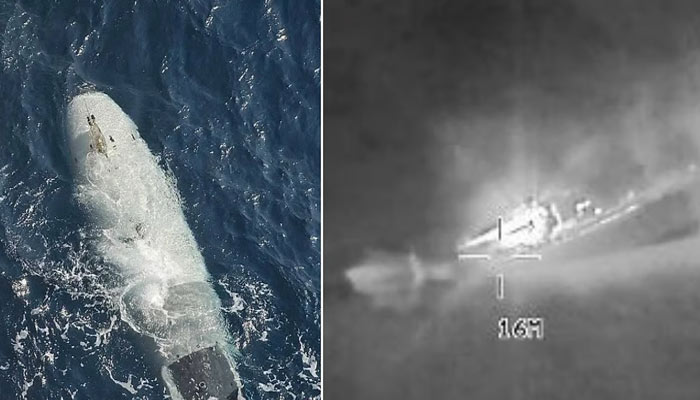
Iran has claimed that its navy captured a US unmanned underwater vehicle near the entrance to the Strait of Hormuz, escalating tensions between Tehran and Washington amid the ongoing conflict in the region.
In a statement carried by Sepah News, the official outlet of Iran’s Islamic Revolutionary Guard Corps (IRGC), the Iranian navy said it seized what it identified as a Dive-LD unmanned underwater vehicle during a “complex intelligence operation”.
Iran described the vehicle as one of the US military’s most advanced unmanned underwater systems and released footage that it said showed the captured submersible.
Iran Claims US Drone Shot Down
In a separate claim, the IRGC said Iranian air defence systems had also shot down a US MQ-9 Reaper drone over the Strait of Hormuz, according to Sepah News.
The claims came as military activity around the strategic waterway intensified following recent attacks involving US and Iranian forces.
US Says Underwater Drone Malfunctioned
The US military acknowledged that one of its underwater drones had malfunctioned more than a day earlier while conducting a survey of regional waters. However, it did not confirm that the malfunctioning vehicle was the same Dive-LD that Iran claimed to have captured.
A Pentagon spokesperson said the drone was supporting ongoing operations and described it as an older model. The spokesperson added that it did not collect sensitive information and was not carrying classified sonar or radar equipment.
The US has been expanding its use of unmanned naval technology, including underwater and surface vessels, to monitor large stretches of ocean, collect intelligence and track military activity without putting American personnel directly at risk.
According to Anduril, the manufacturer of Dive-LD, the autonomous underwater vehicle can remain operational for up to 10 days and is designed to reach depths of up to 6,000 metres (19,700 feet). US defence publication DefenseScoop reported in 2024 that each unit costs around $2.5 million.
US Says Five Iranian Tankers Destroyed
The confrontation has also extended to commercial shipping and oil supplies.
US Central Command (CENTCOM) said American forces had destroyed five Iranian crude oil tankers following attacks by Iran’s Revolutionary Guard on a US warship.
CENTCOM said the strikes came after Iran made two attempts over two days to target the American warship with ballistic missiles.
Meanwhile, the US Treasury Department has expanded sanctions against Iran’s aviation sector, adding 27 Iranian airlines to its Specially Designated Nationals list.
The Treasury accused Iranian commercial airlines of supporting activities by the Iranian government and alleged that the IRGC has used ostensibly private carriers to procure and transport weapons and move personnel.
Washington first sanctioned Iranian airline Mahan Air in October 2011 and subsequently targeted companies linked to its operations. The latest sanctions also target what the Treasury described as front companies, foreign intermediaries and deceptive transshipment networks allegedly used by Iran to obtain US-origin aircraft and sensitive technology.
Pezeshkian Vows Continued Resistance
Iranian President Masoud Pezeshkian, meanwhile, has vowed that Tehran will continue resisting what he described as aggression.
In a post on X, Pezeshkian reiterated Iran’s opposition to war but said the country would continue defending itself until the “aggressors are brought to complete regret”.
“The Islamic Republic of Iran has always been opposed to war,” Pezeshkian said, arguing that regional security and the interests of the people depend on avoiding further conflict.
He added that Iran would continue its resistance while defending what he called the rights of the Iranian people.
US-Iran Conflict
The latest escalation follows the outbreak of direct hostilities on February 28, when Israel and the United States launched attacks on Tehran and other Iranian cities. Iran responded with missile and drone strikes targeting Israel, US bases and American assets across the region, while also tightening its control over the Strait of Hormuz.
On June 18, the US and Iran signed a memorandum of understanding aimed at ending the conflict. The agreement envisaged negotiations within 60 days, with the deadline falling on August 17.
However, the prospects for a final agreement remain uncertain following the latest escalation and renewed military confrontation between the two countries.
Comments are closed.