
UN Warns: Global Water Cycle Growing Increasingly Unpredictable

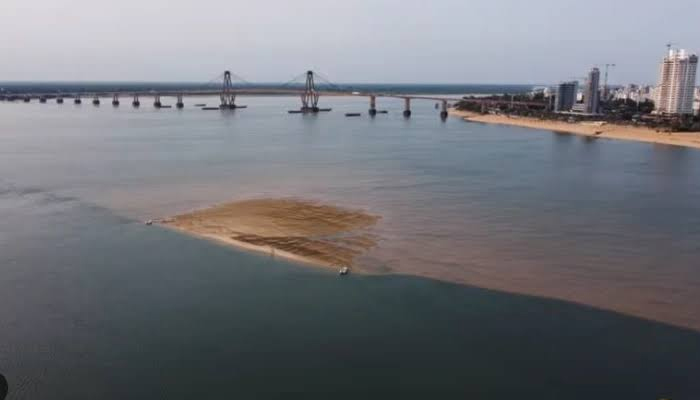
UN Warns Global Water Cycle Is Becoming Increasingly Unpredictable
The world’s water cycle is becoming increasingly unstable, with regions facing sharper swings between drought and excessive rainfall, the United Nations warned on Thursday. The World Meteorological Organization (WMO) said the trend is being reflected in declining river flows, shrinking glaciers and deteriorating groundwater reserves.
The warning comes as an unusually strong El Niño is expected to further disrupt global rainfall patterns, increasing the likelihood of drought in some regions and flooding in others.
Freshwater reserves continue to decline
The WMO’s latest State of Global Water Resources report found that 2025 was among the driest years for rivers recorded over the past three decades.
The year was also among the warmest on record, while glaciers lost ice across every region monitored by the agency. Groundwater levels, meanwhile, continued to decline in many parts of the world.
Taken together, the findings point to a continued deterioration in the planet’s freshwater storage.
Freshwater storage includes water held in groundwater, rivers, lakes, soil, vegetation, glaciers and snow. According to the report, the overall amount has remained on a downward trajectory for roughly a decade.
‘We are spending our reserves’
WMO Secretary-General Celeste Saulo expressed particular concern about what she described as the planet’s “slow reserves”—groundwater and glaciers.
Unlike rainfall and river flows, these reserves change relatively slowly and can provide a crucial buffer during dry periods.
Saulo compared them to a global savings account that helps societies withstand droughts and dry seasons.
- But that reserve is now being depleted.
- “We are spending our reserves,” she warned.
The concern is that continued depletion could reduce the ability of water systems to absorb future periods of extreme dryness.
Glaciers lose massive volumes of water
The decline in glaciers has become one of the clearest indicators of the changing water cycle.
According to the WMO, 2025 was the fourth consecutive year in which glaciers experienced significant ice loss across all regions.
Between 2023 and 2025, glaciers collectively lost an estimated 1,400 gigatonnes of water.
The report compared that amount with roughly 560 million Olympic-sized swimming pools, or around one-third of the world’s annual freshwater withdrawals.
The loss has implications not only for sea levels but also for communities that depend on glacier-fed rivers for drinking water, agriculture and hydropower.
- Groundwater also showing signs of stress
- Groundwater reserves are facing similar pressure.
The WMO said almost two-thirds of monitored wells worldwide recorded conditions outside their historical range in 2025.
Groundwater is particularly important because it provides a relatively stable source of water when rainfall is limited. Persistent declines can therefore increase pressure on communities during droughts.
The deterioration is occurring alongside a rise in water-related disasters, highlighting the increasingly uneven nature of the global water cycle.
- El Niño could intensify extremes
- The WMO also highlighted the potential impact of a strengthening El Niño.
El Niño is a naturally recurring climate phenomenon associated with unusually warm Pacific Ocean temperatures. It can alter atmospheric circulation and rainfall patterns across large parts of the world.
The current event is expected to be exceptionally strong compared with comparable records covering roughly the past four decades.
Saulo warned that its effects could be sharply different from one region to another.
Some areas could face greater drought risk, while others may experience increased flooding.
- Rivers already showing abnormal conditions
- The disruption is already visible in river systems.
The WMO said 2025 ranked among the three driest years for global river flows in the past 35 years.
For the seventh consecutive year, only a minority of the world’s river basins recorded what the organisation classified as normal conditions.
Around 36% of monitored basins had normal flows, while a similar proportion experienced below-normal discharge. Approximately 21% recorded above-normal flows.
The figures underline the growing imbalance between regions experiencing water shortages and those dealing with excess water.
Better data needed to manage water risks
The WMO stressed that understanding these changes requires reliable and timely water data.
However, significant gaps remain, particularly in regions already facing severe water stress or extreme weather events.
Saulo called for stronger international cooperation, including shared data, common standards and coordinated early-warning systems.
Water systems frequently cross national borders. A river may begin in one country and supply communities in another, while changes in glaciers and rainfall can affect entire downstream regions.
As Saulo noted, the consequences of a disaster in one country can extend far beyond its borders, making international cooperation increasingly important as the global water cycle becomes more unpredictable.
Comments are closed.