
Harmanpreet Kaur Gets Another Chance to Step Down as India Captain on a High

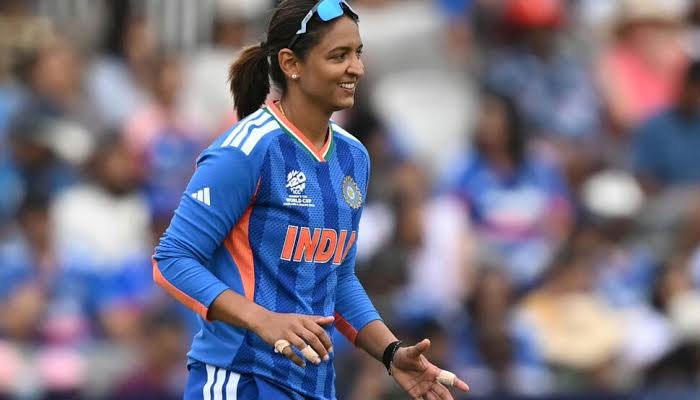
After guiding India to a second consecutive women’s cricket gold medal at the Asian Games, Harmanpreet Kaur once again finds herself at a natural crossroads in her captaincy career.
India defeated Sri Lanka by 147 runs in Tuesday’s final in Nagoya, with Smriti Mandhana’s 79 helping India post a commanding total. For Harmanpreet, the victory added another major achievement to a career that already includes India’s historic Women’s ODI World Cup triumph.
The latest gold medal also raises a familiar question: could this be the right moment for Harmanpreet to hand over the captaincy to Mandhana?
ANOTHER CHANCE TO PASS ON THE BATON
Harmanpreet had a similar opportunity last year after India finally won their first senior ICC women’s title. Having led the team through several near misses, she had reached the biggest milestone of her captaincy when India lifted the ODI World Cup.
India’s subsequent early exit from the Women’s T20 World Cup again brought the question of succession into focus, but Harmanpreet continued in the role.
The Asian Games gold now gives India another potential transition point. With the Los Angeles Olympics and the 2028 T20 World Cup still two years away, a leadership change would leave sufficient time for the next captain and the wider group to settle into their roles.
HARMANPREET HAS ALREADY LEFT A LASTING MARK
Harmanpreet’s contribution to Indian women’s cricket extends far beyond her captaincy record.
Her 171 against Australia in the 2017 World Cup semi-final remains one of the defining innings in the history of the women’s game in India. Years later, she led the team to ODI World Cup glory on home soil.
The latest Asian Games gold has added another significant achievement to that list. If Harmanpreet eventually decides to step away from the captaincy, it would come after a period filled with major milestones.
Former India captain Diana Edulji has argued that the transition should not be delayed indefinitely.
“We are holding back Smriti Mandhana for a long time. By the time the next World Cup comes along, Harman will be nearing 40, so let’s give a good run to Smriti and look at two youngsters as vice-captains,” Edulji told Mid-Day.
Her view also highlights the importance of looking beyond the immediate change. While Mandhana could be the next captain, India will eventually need another generation of players ready to take on leadership responsibilities.
MANDHANA HAS EXPERIENCE TO TAKE OVER
Mandhana appears well placed for a potential leadership role. She has been part of India’s leadership group for several years and has captained the national side when Harmanpreet was unavailable.
Her experience with Royal Challengers Bengaluru in the Women’s Premier League has also added to her leadership credentials. Mandhana has already guided RCB and understands the demands of leading a high-profile women’s team.
She has also publicly indicated that she is ready for the responsibility.
“Yes, of course. I am ready,” Mandhana said when asked about captaining India.
A transition to Mandhana would therefore involve an experienced member of the existing leadership group rather than an entirely new face taking charge.
NIKI PRASAD AND OTHERS REPRESENT THE NEXT GENERATION
While Mandhana could be considered for the immediate succession, India’s selectors will also need to identify potential future leaders.
Niki Prasad is one player who has already demonstrated leadership qualities. She captained India to the Women’s U19 T20 World Cup title and has since gained experience in the Women’s Premier League with Delhi Capitals.
Her recent performances for India A against Australia A have further strengthened her case. Prasad scored 54 from 31 balls in a T20 match in New Chandigarh and later made an unbeaten 32 in the opening one-day game, which India A won by four wickets.
Her ability to contribute with both bat and ball adds to her versatility, while her previous captaincy experience gives her an additional leadership dimension.
Vrinda Dinesh is another young batter who has attracted attention. She struck 69 off 41 balls against Australia A, displaying her ability to accelerate during the middle overs.
All-rounder Anushka Sharma is another player India could monitor as the squad develops. Her ability to contribute with both bat and ball could make her a useful option for the future.
For these younger players, however, regular exposure to strong opposition will be crucial. Performances at domestic and India A level need to be followed by opportunities in the senior side before their long-term potential can be properly assessed.
ZIMBABWE SERIES COULD HELP INDIA TEST OPTIONS
India’s upcoming home series against Zimbabwe could provide an opportunity to experiment with the squad. With the teams yet to be announced, selectors have room to assess combinations while also giving opportunities to emerging players.
The series could be used to test batting positions, bowling combinations and new faces without the immediate pressure of a major tournament knockout match.
Players who have impressed for India A could be brought into the senior setup, while workload management could also be considered for established members of the squad.
The matches may also offer an early indication of how India intend to build towards the 2028 T20 World Cup.
For Harmanpreet, the latest Asian Games gold has once again provided a significant moment to consider her future as captain. Whether she chooses to continue or eventually hand over the responsibility will be a decision for her and the team management.
What is clear is that India have time to prepare for the next phase. Harmanpreet can continue adding to her remarkable list of achievements, or eventually step away from captaincy with an ODI World Cup and two Asian Games gold medals among the highlights of her tenure.
For Indian women’s cricket, the larger challenge will be ensuring that the next generation gets enough opportunities to prepare for its own leadership era.
Comments are closed.