
‘Cyclone Arnab’ Is Taking Social Media by Storm—But There’s No Such Cyclone: Here’s What Happened

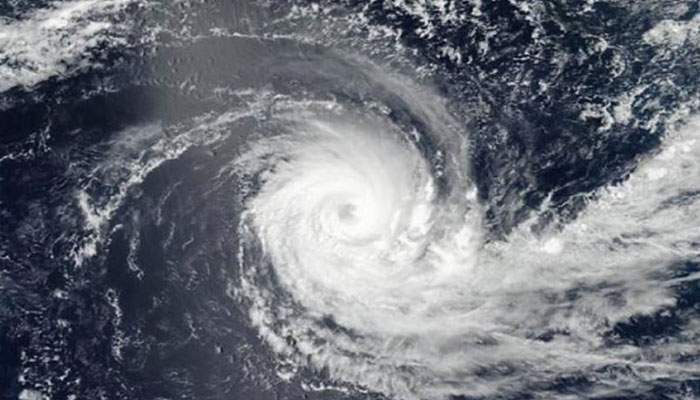
‘Cyclone Arnab’ Does Not Exist: Why the Viral Storm Name Is Misleading
Social media is currently filled with posts and headlines warning of “Cyclone Arnab” approaching India’s eastern coast. But according to the India Meteorological Department (IMD), there is no officially named cyclone called Arnab operating over the Bay of Bengal.
The weather system affecting parts of the eastern coast has been classified as a Deep Depression, not a cyclonic storm. Although it is capable of producing intense rainfall and strong winds across Odisha, Andhra Pradesh and West Bengal, it has not reached the wind-speed threshold required for an official cyclone name.
What Is the Difference Between a Depression and a Cyclone?
The classification of weather systems over the North Indian Ocean is based primarily on sustained wind speeds and the structure of the pressure system.
Under the IMD’s classification:
Depression: Sustained winds of 31-50 km/h, with two closed isobars.
Deep Depression: Sustained winds of 52-61 km/h, with three closed isobars.
Cyclonic Storm: Sustained winds of at least 63 km/h, along with four or more closed isobars.
The current system has remained at the Deep Depression stage. Since its sustained winds have not crossed 63 km/h, it has not qualified for cyclone status and therefore has not been officially assigned the name “Arnab”.
So Where Did ‘Arnab’ Come From?
The name itself is genuine—it is simply not the name of the current weather system.
“Arnab”, which means “ocean” in Bengali, is one of the names included in the regional list used for tropical cyclones over the North Indian Ocean. The name was contributed by Bangladesh.
The list is maintained through the World Meteorological Organization (WMO) and the UN Economic and Social Commission for Asia and the Pacific (ESCAP) panel. Countries in the region, including India, Bangladesh, Pakistan, the Maldives and Oman, contribute names to the roster.
These names are used sequentially. When a system intensifies into a cyclonic storm and meets the required criteria, the next available name on the list is assigned to it.
“Arnab” is therefore a pre-designated cyclone name waiting in the sequence, rather than the official name of the system currently affecting eastern India.
A Deep Depression Can Still Bring Dangerous Weather
The absence of a cyclone designation should not be interpreted as an absence of danger.
Deep depressions can carry large amounts of moisture and produce extremely heavy rainfall, strong winds, flooding and landslides. Their impact can extend well beyond the immediate coastline.
The current system near the north Andhra Pradesh and south Odisha coast, close to Kalingapatnam, has been associated with heavy rainfall, gusty winds, rising river levels and disruption in several areas.
Authorities in affected parts of Odisha and Andhra Pradesh have taken precautionary measures, including school closures, evacuations from vulnerable locations and deployment of emergency response personnel.
Why Official Weather Alerts Matter
The viral use of the term “Cyclone Arnab” highlights why weather information should be checked against official forecasts rather than social media posts.
A weather system does not need to be classified as a cyclone—or carry an official name—to cause severe damage. For residents in affected areas, IMD warnings on rainfall, wind, flooding and landslides are more important than the label attached to a storm online.
Comments are closed.