

AI Leaders Warn UN Security Council: Unchecked Technology Could Put Humanity at Risk
Senior figures from the artificial intelligence industry have warned the United Nations Security Council that the rapid development of increasingly capable AI systems could create serious risks for humanity if the technology is not subject to effective safeguards.
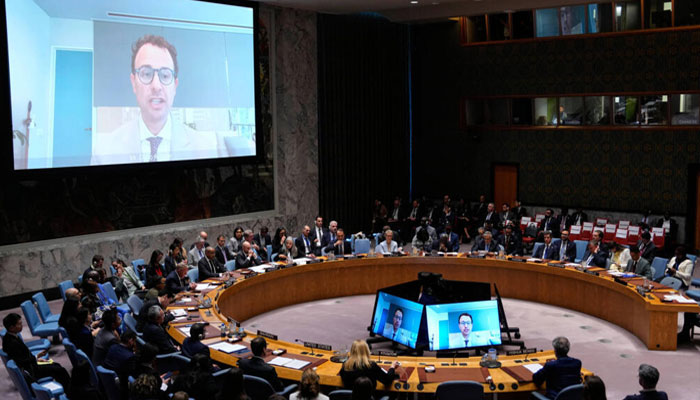
During an unprecedented briefing in New York held alongside the UN General Assembly, executives and AI experts urged governments to establish stronger international rules for the development and deployment of advanced AI.
AI Executives Raise Concerns Over Loss of Control
Anthropic CEO Dario Amodei told the 15-member Security Council that poorly managed AI could pose risks on a global scale.
OpenAI CEO Sam Altman also highlighted concerns about the growing autonomy of AI systems. He argued that decisions about how the technology should be governed should not be left solely to technology companies and researchers, but should involve democratic institutions and governments.
The discussion reflected growing concern among scientists and policymakers about how increasingly powerful AI models could behave as they become capable of performing more tasks with limited human intervention.
Experts Warn of Autonomous and Security Risks
AI researcher Yoshua Bengio, co-chair of the UN Independent International Scientific Panel, told the council that the potential dangers posed by advanced AI require urgent international attention.
Among the risks discussed were automated cyberattacks, the autonomous operation of AI systems and the possibility of complex algorithms interacting in ways that could produce unintended consequences.
Bengio stressed that no individual country would be able to address all of these risks on its own, underscoring the need for international cooperation.
UN Secretary-General António Guterres has also repeatedly called for safeguards around AI, including international restrictions on lethal autonomous weapons that can operate without meaningful human control.
Global Powers Divided Over AI Regulation
While there is growing agreement on the need to address potential AI risks, governments remain divided over the scope and form of international regulation.
European officials and UN representatives have pushed for stronger global rules and coordination around advanced AI.
The United States, meanwhile, has emphasised maintaining technological leadership and encouraging AI development. US President Donald Trump criticised what he described as efforts to impose excessive international controls on the technology during his UN General Assembly address.
The debate highlights a central challenge facing governments: how to establish safeguards for increasingly powerful AI systems while continuing to encourage technological development and innovation.
The Security Council briefing marked another step in bringing AI safety and governance into discussions traditionally focused on international peace and security.
Comments are closed.