
Midnight badminton: Asian Games shuttlers battle punishing schedule in Japan

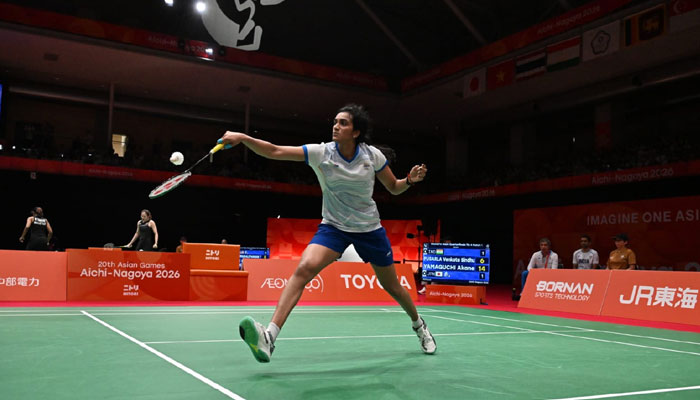
Midnight matches and brutal turnarounds: Asian Games shuttlers battle Japan’s punishing schedule
PV Sindhu’s third-round match against Japan’s Tomoka Miyazaki began at 12:07 am on Sunday.
By then, most players at the Asian Games had long gone to bed.
For Sindhu and Miyazaki, however, it was their second match of the day.
The late-night contest, which Sindhu won 21-9, 21-13, has become one of several examples of a scheduling problem that has left badminton players and fans questioning the organisation of the sport at the Aichi-Nagoya Asian Games.
The team events were held from September 20 to 24, with the individual competition beginning on September 25. The badminton programme is scheduled to conclude on September 29, even though the Asian Games continue until October 4.
That compressed window has resulted in some players being asked to play twice in a day — something that has drawn strong criticism from players, particularly because recovery is crucial in a physically demanding sport such as badminton.
Prannoy: ‘I feel it is cruel’
HS Prannoy, who was part of India’s bronze-medal-winning team event campaign before returning home, was among the first to publicly question the scheduling.
Speaking to the Badminton Association of India on YouTube, Prannoy said players were being forced into unreasonable routines.
He recalled that the team-event medal ceremony had ended late, with the Indian team leaving the stadium at around 11:15 pm. The journey back to the hotel took another hour, leaving players with little time to eat and recover.
“All the players came back and then had a meal at 12:30 or 1 am. I remember Dhruv and Tanisha had their first match at 9 am. What if it was against a top seed or probably a higher seed? It would have been very taxing,” Prannoy said.
“I think it’s so unfair on a lot of players. I feel it’s cruel. Everybody is aiming for a good Asian Games. It comes once every four years. Just because of your problem, it shouldn’t be happening like this.”
Prannoy also questioned why badminton had to finish on September 29 when the Games continue for another five days.
“Definitely, having two singles matches in a day, I have not seen that in ages,” he said.
“Nobody was told anything. It’s just sad.”
Two matches, one day, little recovery
Saturday, September 26, produced one of the most demanding schedules, with singles players required to play two matches on the same day.
Lakshya Sen exited in the men’s singles second round after losing to Singapore’s Loh Kean Yew. Ayush Shetty also played twice, beating Kazakhstan’s Makhsut Tajibullayev before losing to Chou Tien Chen in a gruelling three-game contest.
Sindhu, meanwhile, was back on court late at night.
Her second match against higher-ranked Miyazaki began shortly after midnight. The two-time Olympic medallist handled the unusual timing comfortably enough, winning in straight games.
But the recovery window was hardly generous.
Sindhu’s quarter-final against world No. 4 Chen Yufei was scheduled for around 1 pm the following day — leaving her only about 13 hours between matches.
Adding to the criticism was the fact that the quarter-final was scheduled on Court 4, which did not have a broadcast feed.
The problem was not limited to India
The scheduling concerns were not restricted to Indian players.
Thailand’s mixed doubles pair Dechapol Puavaranukroh and Supissara Paewsampran, ranked fifth in the world, were scheduled to play at 9 am after Dechapol had reportedly remained at the venue until around 11:30 pm the previous night for the team-event medal ceremony.
They lost their opening-round match to Japan’s Yuta Watanabe and Maya Taguchi.
Watanabe and Taguchi then had to play again in the second round later the same day and were eliminated.
Indian doubles stars Satwiksairaj Rankireddy and Chirag Shetty also spoke about the difficulty of moving directly from the team competition into the individual event.
The pair, who had been instrumental in India’s team campaign and had beaten world champions Liang Wei Keng and Wang Chang of China, suffered a first-round upset against Thailand’s Peeratchai Sukphun and Pakkapon Teeraratsakul.
“I know these situations will happen. It will get tense because it will be tricky because we are playing continuously in the team event, and we were here last night till 12 o’clock, and right away we are playing one of the good matches. So it’s not going to be easy, but we prepared,” Satwik had said.
Prannoy questions the Asian Games experience
Prannoy’s criticism extended beyond the badminton schedule.
He also questioned the accommodation and transport arrangements, particularly the decision not to have a traditional centralised Games Village.
For the first time at the Asian Games, athletes have been accommodated across hotels in Aichi-Nagoya, along with temporary container accommodation on a cruise ship stationed at the city’s port.
Prannoy said the arrangement diminished the traditional multi-sport experience.
“Never felt we were playing the Asian Games. It felt like we were playing the Japan Open,” he said.
He pointed to the opportunity to interact with athletes from other sports as one of the defining features of a multi-sport event, something he felt was missing in Japan.
Prannoy contrasted the experience with the 2022 Hangzhou Asian Games, held in 2023, which he described as his best experience at a multi-sport event.
“Then, in the next edition, in three or four years, you expect things to be better, but it just went downwards. A lot of them had difficult experiences in terms of accommodation and transport,” he said.
“It was a mediocre event, to be honest.”
Indian challenge continues
Despite the scheduling concerns, India’s badminton campaign remains alive.
Sindhu will face China’s Chen Yufei in the women’s singles quarter-final, while Unnati Hooda takes on Japanese star Akane Yamaguchi.
Unnati produced one of the biggest results of the tournament so far, beating world No. 7 Putri Kusuma Wardani on Saturday.
In women’s doubles, Gayatri Gopichand and Treesa Jolly continued their impressive run by defeating Japan’s world No. 3 Yuki Fukushima and Mayu Matsumoto in straight games.
It was their second victory over the Japanese pair in the same Asian Games, following their win in the team event earlier in the week.
The Indian duo will face Malaysia’s fifth-ranked pair Pearly Tan and Thinaah Muralitharan in the quarter-finals.
For the shuttlers still chasing medals, the challenge now extends beyond opponents across the net. They must also contend with late-night matches, long journeys and short recovery windows — conditions that have made scheduling one of the biggest talking points of badminton at the Aichi-Nagoya Asian Games.
Comments are closed.